
Alexis Carrel Biography Quotes 20 Report mistakes
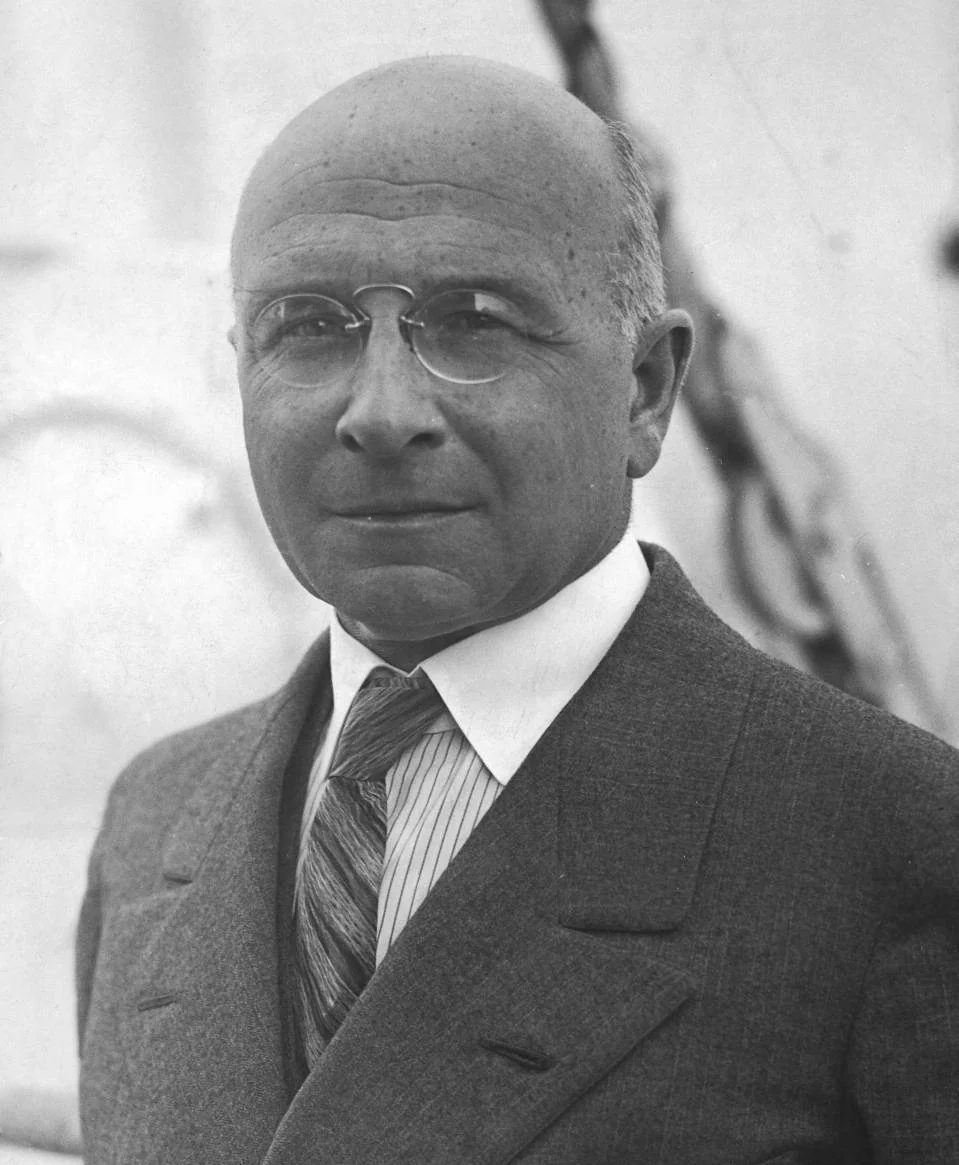
| 20 Quotes | |
| Occup. | Scientist |
| From | France |
| Born | June 28, 1873 |
| Died | November 5, 1944 |
| Aged | 71 years |
| Cite | |
Citation Formats
APA Style (7th ed.)
Alexis carrel biography, facts and quotes. (2026, February 11). FixQuotes. https://fixquotes.com/authors/alexis-carrel/
Chicago Style
"Alexis Carrel biography, facts and quotes." FixQuotes. February 11, 2026. https://fixquotes.com/authors/alexis-carrel/.
MLA Style (9th ed.)
"Alexis Carrel biography, facts and quotes." FixQuotes, 11 Feb. 2026, https://fixquotes.com/authors/alexis-carrel/. Accessed 7 Mar. 2026.
Early Life and Background
Alexis Carrel was born on June 28, 1873, in Sainte-Foy-les-Lyon, a suburb of Lyon in France, into the solid provincial world of the early Third Republic. His father died when Carrel was young, leaving his upbringing largely to his mother, a circumstance that helped form the mixture of self-reliance and moral earnestness that would mark his later writings. Lyon in the 1870s and 1880s was a city where Catholic tradition, republican modernity, and a vigorous medical culture coexisted uneasily - an atmosphere that encouraged both technical ambition and metaphysical questioning.He came of age as surgery and bacteriology were transforming medicine, but also as France wrestled with crises of confidence after the Franco-Prussian War and amid the social tensions that culminated in the Dreyfus era. The young Carrel absorbed the age's faith in laboratories and its fascination with "regeneration" - of bodies, of nations, of character. Those preoccupations, paired with an intense, private temperament, would later surface in his conviction that scientific method and spiritual life were not enemies but rival languages describing the same human mystery.
Education and Formative Influences
Carrel studied medicine at the University of Lyon, training in surgery and anatomy at a time when vascular surgery remained crude and often fatal. A widely cited formative shock was the 1894 assassination of French President Sadi Carnot in Lyon: surgeons could not repair Carnot's severed portal vein, and the event helped fix in Carrel an obsession with blood-vessel repair. Another pivotal episode came in 1902, when Carrel traveled with sick pilgrims to Lourdes and witnessed the controversial recovery of Marie Bailly; the experience did not make him a conventional devotee, but it deepened his interest in the limits of measurement and in the psychology of belief, themes he would later press into philosophical and social arguments.Career, Major Works, and Turning Points
After struggling to secure advancement in the French academic system, Carrel left for North America, first working at the University of Chicago and then, from 1906, at the Rockefeller Institute for Medical Research in New York City, where his technical ingenuity flourished. He perfected methods of vascular suturing, pioneered organ transplantation techniques, and developed tissue-culture practices that became emblematic of modern experimental biology; his work on blood-vessel surgery and transplantation physiology earned him the 1912 Nobel Prize in Physiology or Medicine. During World War I he collaborated with chemist Henry Dakin on the Carrel-Dakin method of antiseptic wound irrigation, a practical response to industrialized slaughter that reinforced his belief in disciplined technique as an ethical duty. His later career shifted from bench triumph to cultural authority: he published the bestseller "L'Homme, cet inconnu" ("Man, the Unknown", 1935), and during World War II returned to Vichy France to direct the Fondation Francaise pour l'Etude des Problemes Humains (1941-1944), a project entangled with the authoritarian state's technocratic and eugenic ambitions; after Liberation, investigations and public condemnation shadowed his final months before his death in Paris on November 5, 1944.Philosophy, Style, and Themes
Carrel's inner life was powered by a dual appetite: for exact technique and for ultimate meaning. As a laboratory scientist he championed patient empiricism, warning that “A few observation and much reasoning lead to error; many observations and a little reasoning to truth”. - a line that reads like self-discipline turned into epistemology, the craftsman's suspicion of grand theories unmoored from repeated trials. Yet the same mind was restless before what he considered the irreducible elements of consciousness, will, and moral experience. His prose often moves from the operating table to the soul in a single stride, as if the human body, exquisitely repairable by sutures, forced him to ask what in the person could not be stitched.That tension made him unusually persuasive to interwar readers anxious about mechanization and spiritual exhaustion. He insisted that “In man, the things which are not measurable are more important than those which are measurable”. , turning the prestige of science toward an argument for humility and inwardness. Carrel cast human development as an ordeal of self-making rather than mere progress, writing that “Man cannot remake himself without suffering, for he is both the marble and the sculptor”. Psychologically, the statement mirrors a life of renunciations - leaving France, remaking his identity in American science, then returning to a compromised France - and it also reveals his attraction to austerity, selection, and "hard conditions" as engines of character. The danger in this moral style was its readiness to slide from personal asceticism into social prescription: his call to improve humanity could sound like compassion disciplined into coercion.
Legacy and Influence
Carrel's legacy is therefore split, and still instructive. In medicine and biology, his vascular techniques, transplantation groundwork, and wartime wound-care innovations helped shape twentieth-century surgery and experimental physiology, while his Rockefeller-era methods influenced generations of researchers. In public thought, "Man, the Unknown" became a global touchstone for readers seeking a synthesis of science, ethics, and spirituality, even as many of its social proposals - especially its flirtations with eugenic and authoritarian solutions - damaged his reputation and complicate commemoration. He endures as a case study in the power and peril of scientific authority when it crosses into moral governance: a brilliant technician of life who wanted, passionately and sometimes rashly, to be its philosopher.Our collection contains 20 quotes written by Alexis, under the main topics: Motivational - Ethics & Morality - Wisdom - Art - Meaning of Life.
Alexis Carrel Famous Works
- 1941 Reflections on Life (Book)
- 1938 The Culture of Organs (Book)
- 1935 Man, The Unknown (Book)