
Alexis de Tocqueville Biography Quotes 38 Report mistakes
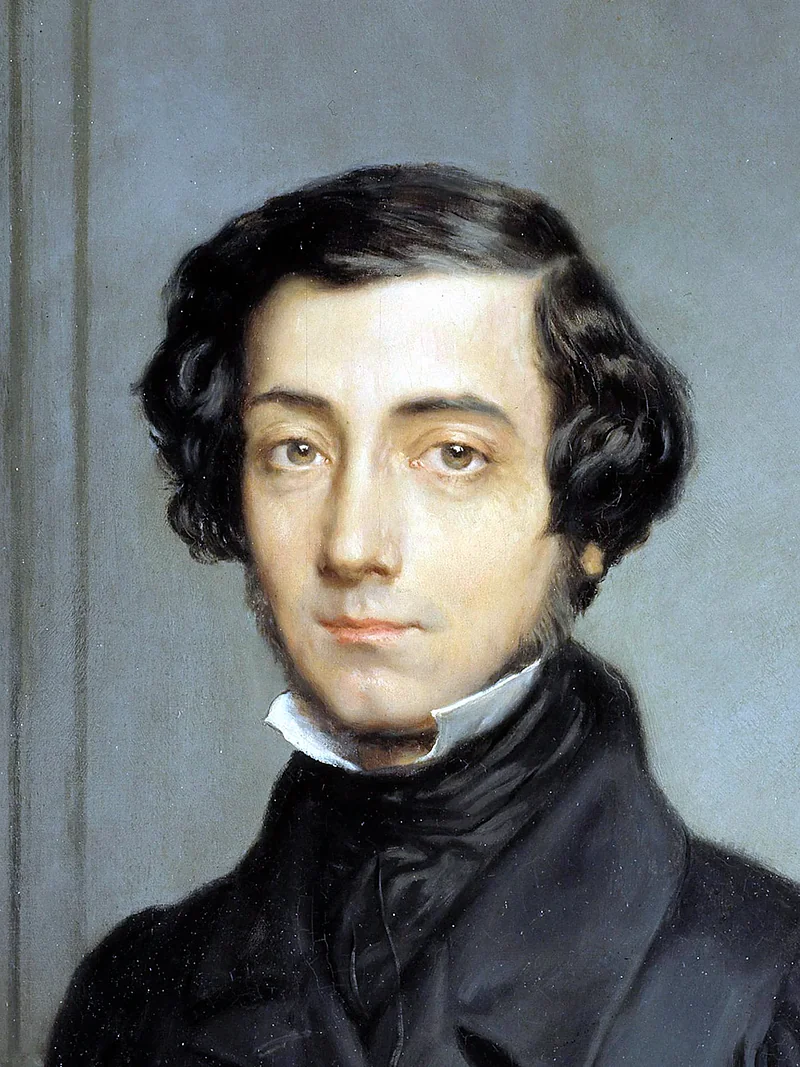
Attr: History.com
| 38 Quotes | |
| Born as | Alexis Charles Henri Clerel de Tocqueville |
| Occup. | Historian |
| From | France |
| Born | July 29, 1805 Paris, France |
| Died | April 16, 1859 Cannes, France |
| Aged | 53 years |
| Cite | |
Citation Formats
APA Style (7th ed.)
Alexis de tocqueville biography, facts and quotes. (2026, February 3). FixQuotes. https://fixquotes.com/authors/alexis-de-tocqueville/
Chicago Style
"Alexis de Tocqueville biography, facts and quotes." FixQuotes. February 3, 2026. https://fixquotes.com/authors/alexis-de-tocqueville/.
MLA Style (9th ed.)
"Alexis de Tocqueville biography, facts and quotes." FixQuotes, 3 Feb. 2026, https://fixquotes.com/authors/alexis-de-tocqueville/. Accessed 6 Mar. 2026.
Early Life and Background
Alexis Charles Henri Clerel de Tocqueville was born on July 29, 1805, in Paris, into an old Norman aristocratic family marked by the Revolution's violence and reversals. His parents, Herve de Tocqueville and Louise Le Peletier de Rosanbo, carried the memory of imprisonment during the Terror; several relatives were executed. That inheritance of precarious status shaped his lifelong fascination with how societies legitimize power, and how quickly political ideals harden into coercion.He grew up under Napoleon's aftermath and the Bourbon Restoration, in a France trying to reconcile monarchy, liberal aspirations, Catholic revival, and the spread of bourgeois life. Tocqueville's temperament blended patrician reserve with acute curiosity; he distrusted abstract certainties and watched institutions rather than slogans. From early on he cultivated an inner discipline - a desire to look past party fervor to the social conditions underneath it - even as he wrestled privately with melancholy, fragile health, and a fear that modernity might shrink the human spirit while enlarging comfort.
Education and Formative Influences
Educated in the classical tradition, Tocqueville read the moralists and historians who taught him to treat politics as a study of character and habits, not merely laws. He trained for public service and entered the magistracy, where legal routines sharpened his eye for procedure and precedent. The July Revolution of 1830 was a formative shock: he accepted the new regime in principle but sensed that the deeper story was not dynastic change but the irreversible rise of equality. His friendship with Gustave de Beaumont became decisive; together they sought a comparative vantage point that France itself could not provide.Career, Major Works, and Turning Points
In 1831-1832 Tocqueville and Beaumont traveled to the United States on a mission to study prisons, producing Du systeme penitentiaire aux Etats-Unis et de son application en France (1833), but Tocqueville's larger harvest was Democracy in America, published in two parts (1835 and 1840). He became the era's most penetrating analyst of democratic society: local government, religion, civic associations, the press, slavery, and the hazards of majority power. Elected to the Chamber of Deputies in 1839, he moved uneasily within party politics, supporting liberal reforms while warning against centralization. After 1848 he briefly served as foreign minister of the Second Republic (1849), then withdrew from public life after Louis-Napoleon's coup in 1851. His later masterwork, The Old Regime and the Revolution (1856), argued that the Revolution accelerated administrative centralization already built by the monarchy. Tuberculosis shadowed his last years; he died on April 16, 1859, in Cannes.Philosophy, Style, and Themes
Tocqueville's central problem was how freedom survives in an age of equality. He admired democracy's energy yet feared its subtle tyrannies: conformity, short-term thinking, and a paternal state that offers comfort in exchange for initiative. His method fused travel observation, historical comparison, and psychological portraiture; he watched town meetings and courtrooms as carefully as constitutions. In America he saw a culture able to correct itself through institutions and mores, crystallizing his belief that “The greatness of America lies not in being more enlightened than any other nation, but rather in her ability to repair her faults”. That sentence reveals his inner hope: progress is not purity but self-revision, and liberty depends on habits that let citizens admit error without humiliation.His anxieties ran deeper than policy. He sensed that modern societies might become cautious to the point of paralysis, warning, "I cannot help fearing that men may reach a point where they look on every new theory as a danger, every innovation as a toilsome trouble, every social advance as a
Our collection contains 38 quotes written by Alexis, under the main topics: Motivational - Ethics & Morality - Wisdom - Justice - Freedom.
Other people related to Alexis: Nassau William Senior (Economist), Francois Guizot (Historian), Richard Reeves (Writer), Louis Blanc (Politician)