
Alfred Adler Biography Quotes 31 Report mistakes
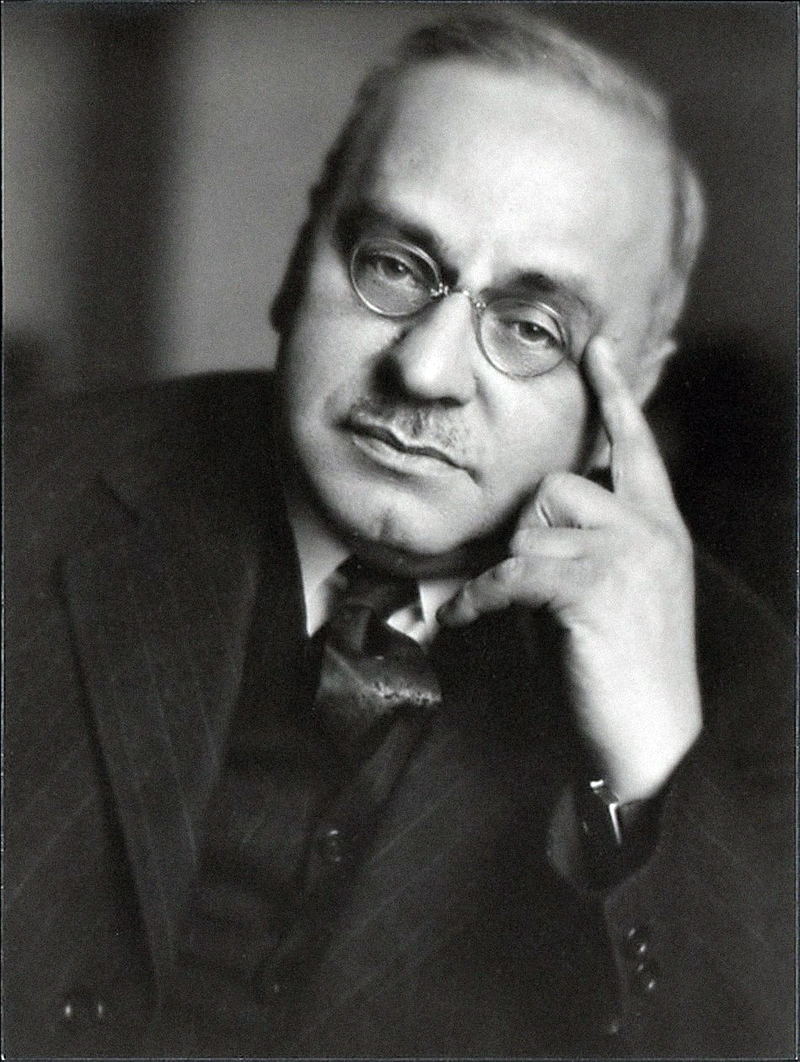
Attr: meisterdrucke.us
| 31 Quotes | |
| Occup. | Psychologist |
| From | Austria |
| Born | February 7, 1870 Vienna, Austria-Hungary |
| Died | May 28, 1937 Aberdeen, Scotland |
| Cause | heart attack |
| Aged | 67 years |
| Cite | |
Citation Formats
APA Style (7th ed.)
Alfred adler biography, facts and quotes. (2026, February 11). FixQuotes. https://fixquotes.com/authors/alfred-adler/
Chicago Style
"Alfred Adler biography, facts and quotes." FixQuotes. February 11, 2026. https://fixquotes.com/authors/alfred-adler/.
MLA Style (9th ed.)
"Alfred Adler biography, facts and quotes." FixQuotes, 11 Feb. 2026, https://fixquotes.com/authors/alfred-adler/. Accessed 6 Mar. 2026.
Early Life and Background
Alfred Adler was born on February 7, 1870, in Vienna, then the nerve center of the Austro-Hungarian Empire - a city where modern medicine, politics, and art collided with anxieties about class, nationalism, and decline. He grew up in the Leopoldstadt district in a Jewish family whose everyday life was shaped by urban commerce and the subtle ceilings imposed by prejudice. Vienna offered him both opportunity and a constant reminder that social rank is never merely personal - it is an atmosphere people breathe.Childhood illness left him with an early intimacy with vulnerability. He suffered rickets and, in early years, a severe pneumonia that brought him close to death; he also lived in the shadow of an admired older brother, a rivalry that sharpened his sensitivity to comparison. These experiences did not simply injure him - they educated him in what he later treated as a universal human drama: the pressure to compensate, to matter, to be equal in a world that measures.
Education and Formative Influences
Adler studied medicine at the University of Vienna, receiving his medical degree in 1895, and trained amid the rise of scientific positivism and the era's fascination with nerves, sexuality, and degeneration. He began as an ophthalmologist, then shifted to general practice in working-class neighborhoods, where poverty made "character" inseparable from housing, labor, and childhood conditions. In those clinics he absorbed socialist ideas and a public-health sensibility that never left his psychology: the individual could not be understood without the community that rewarded, punished, or ignored them.Career, Major Works, and Turning Points
By the early 1900s Adler entered Sigmund Freud's circle, becoming president of the Vienna Psychoanalytic Society in 1910, yet he increasingly rejected a libido-centered account of motivation in favor of a broader theory of striving, compensation, and social embeddedness. The break with Freud in 1911 was decisive; Adler founded Individual Psychology and built an independent institutional base through lectures, journals, and training. His key books - The Neurotic Constitution (1912), The Practice and Theory of Individual Psychology (1920), Understanding Human Nature (1927), and What Life Should Mean to You (1931) - translated clinical observations into a civic psychology aimed at teachers, parents, and physicians. After World War I he helped establish child-guidance clinics linked to Vienna's school reforms, arguing that prevention and education were as important as therapy. In the 1920s and 1930s he taught and lectured widely, including extended periods in the United States, until he died suddenly on May 28, 1937, while on a lecture tour in Aberdeen, Scotland.Philosophy, Style, and Themes
Adler recast psychological suffering as a problem of direction and belonging rather than a hidden engine of forbidden desire. His signature concept - the inferiority feeling and its compensations - did not mean simple low self-esteem; it named the ache produced by limitation and comparison, and the creative (or destructive) solutions people devise. He stated the mechanism bluntly: “The greater the feeling of inferiority that has been experienced, the more powerful is the urge to conquest and the more violent the emotional agitation”. In Adler's hands, symptoms became strategies - ways to secure safety, superiority, or exemption from life's tasks. He insisted that meaning-making is active: “Meanings are not determined by situations, but we determine ourselves by the meanings we give to situations”. - a line that reveals his psychological optimism and his moral strictness, because choice implies responsibility.His prose and lectures aimed at common language, not priestly mystery. He treated personality as a "style of life" formed early, guided by a largely coherent goal, and constantly tested in three arenas: work, friendship, and love. Yet this was not rugged individualism. “The science of the mind can only have for its proper goal the understanding of human nature by every human being, and through its use, brings peace to every human soul”. For Adler, mental health required Gemeinschaftsgefuhl - social interest - the felt reality that one's striving gains dignity only when it contributes to others. The inner life, therefore, was never merely interior; it was a plan for living with people.
Legacy and Influence
Adler's influence radiated less through a single school than through the modern vocabulary of development and counseling: inferiority and compensation, goal-directed behavior, birth order (often simplified in popular culture), and the insistence that encouragement and belonging are therapeutic forces. His child-guidance work anticipated community mental health and school psychology, and his social-interest ethic offered a humane counterpoint to the century's authoritarian temptations. Though overshadowed for decades by Freudian and later biomedical paradigms, Adler returned as clinicians and researchers rediscovered the power of meaning, relationships, and purpose. He remains a psychologist of democracy - arguing, in effect, that private suffering and public life are braided, and that the most durable cure is learning to matter with others rather than over them.Our collection contains 31 quotes written by Alfred, under the main topics: Witty One-Liners - Motivational - Ethics & Morality - Wisdom - Truth.
Other people related to Alfred: Abraham Maslow (Psychologist), Viktor E. Frankl (Psychologist)