
Alfred Hitchcock Biography Quotes 34 Report mistakes
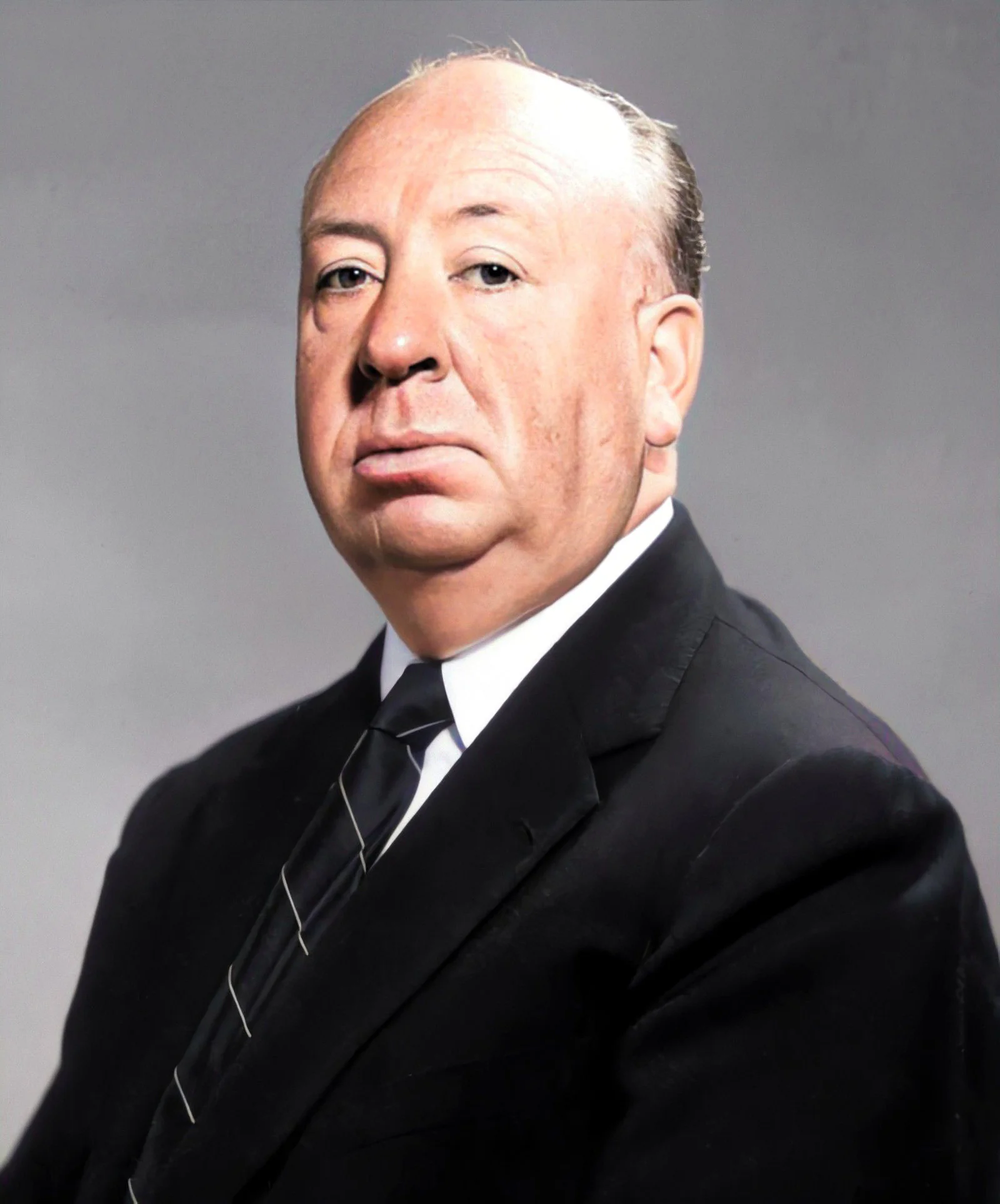
Attr: Ante Brkan
| 34 Quotes | |
| Born as | Alfred Joseph Hitchcock |
| Occup. | Director |
| From | United Kingdom |
| Born | August 13, 1899 London, England |
| Died | April 29, 1980 Bel Air, Los Angeles, California, USA |
| Cause | Natural causes |
| Aged | 80 years |
| Cite | |
Citation Formats
APA Style (7th ed.)
Alfred hitchcock biography, facts and quotes. (2026, February 11). FixQuotes. https://fixquotes.com/authors/alfred-hitchcock/
Chicago Style
"Alfred Hitchcock biography, facts and quotes." FixQuotes. February 11, 2026. https://fixquotes.com/authors/alfred-hitchcock/.
MLA Style (9th ed.)
"Alfred Hitchcock biography, facts and quotes." FixQuotes, 11 Feb. 2026, https://fixquotes.com/authors/alfred-hitchcock/. Accessed 5 Mar. 2026.
Early Life and Background
Alfred Joseph Hitchcock was born on August 13, 1899, in Leytonstone, Essex (now part of London), the youngest child of William Hitchcock, a greengrocer, and Emma Jane Whelan. Raised in a strict Roman Catholic household, he absorbed early lessons about guilt, surveillance, and punishment that later surfaced as recurring moral shadows in his films. He grew up amid the sensory bustle of markets and street life, but also with an inward, watchful temperament - a boy who learned to study people from the edges rather than join them at the center.His most famous childhood anecdote - being sent to a police station with a note that led to a brief confinement - became, in his retelling, a primal scene: authority as arbitrary, fear as instantaneous, and innocence as fragile. Whether embellished or not, it aligns with the emotional architecture of his work, where ordinary routines are one accusation away from catastrophe. The Edwardian world he was born into dissolved through World War I, and Hitchcock came of age in a Britain newly accustomed to mass anxiety, modern transport, and the sense that fate could change in a moment.
Education and Formative Influences
Hitchcock attended St Ignatius College in Stamford Hill and later studied engineering and navigation at the London County Council School of Engineering and Navigation. The technical rigor mattered: he learned systems, timing, and the logic of mechanical processes, all of which translated into his later precision with camera placement and narrative cause-and-effect. In the early 1920s he entered film through design and typography at Famous Players-Lasky in London, then moved into intertitles and art direction at Islington Studios, where German Expressionism and the new grammar of montage offered him a blueprint for turning inner dread into visual form.Career, Major Works, and Turning Points
Hitchcock rose from assistant director to major talent in British cinema with The Lodger (1927), an early fusion of urban rumor, sexual menace, and subjective camera work that helped define him. After Blackmail (1929), one of Britain's first successful sound features, he refined his trademark "wrong man" and chase structures in The 39 Steps (1935) and The Lady Vanishes (1938). Moving to Hollywood in 1939, he made Rebecca (1940) and then a run of defining works - Shadow of a Doubt (1943), Notorious (1946), Strangers on a Train (1951), Rear Window (1954), Vertigo (1958), North by Northwest (1959), Psycho (1960), and The Birds (1963) - while crafting a public persona via television and cameos. A crucial turning point was his partnership with Alma Reville, his editor and closest critic: her practical intelligence anchored his more baroque impulses, helping him balance cruelty with clarity. Later films such as Marnie (1964) and Frenzy (1972) showed a director still probing taboo and compulsion as the culture around him grew more explicit, and he remained active until Family Plot (1976).Philosophy, Style, and Themes
Hitchcock treated cinema as an engineered experience, not a neutral record. He insisted, “If it's a good movie, the sound could go off and the audience would still have a perfectly clear idea of what was going on”. That conviction underwrote his visual storytelling: expressive blocking, readable objects (keys, glasses, rings), and cutting patterns that make thought visible. He used suspense as a moral instrument - not to soothe, but to implicate - and he was candid about that desire: “Always make the audience suffer as much as possible”. The suffering was rarely random; it came from knowledge withheld or given too early, forcing viewers to inhabit dread as a form of intimate participation.His themes orbit control and exposure: the self watched, misread, or split against itself. Voyeurism in Rear Window becomes both plot and confession; Vertigo turns desire into a project of reconstruction; Psycho turns domestic space into a trapdoor to the id. Even his humor functioned like a scalpel, cutting social ritual down to its animal impulses - a temperament distilled in his infamous provocation, “I never said all actors are cattle; what I said was all actors should be treated like cattle”. Behind the cruelty is a psychology of mastery: Hitchcock sought to dominate the set and, by extension, the spectator's nerves, perhaps to reverse the childhood feeling of being at the mercy of sudden authority. His "cool" surfaces - elegant blondes, composed frames, polite banter - are skins stretched over panic.
Legacy and Influence
Hitchcock died on April 29, 1980, in Los Angeles, but his methods became a permanent toolkit for world cinema. He professionalized suspense into a teachable craft - the set piece as pure narrative logic - while also leaving modern filmmakers a map of obsession, guilt, and desire rendered through camera grammar. From Brian De Palma to David Fincher, from giallo to contemporary thrillers and prestige television, his influence persists in the idea that point of view is destiny and that editing can make a heartbeat audible even in silence. More than a director of shocks, he remains a biographer of fear - not as spectacle alone, but as an everyday condition of modern life.Our collection contains 34 quotes written by Alfred, under the main topics: Witty One-Liners - Dark Humor - Movie - Mental Health - Police & Firefighter.
Other people related to Alfred: Cary Grant (Actor), Francois Truffaut (Director), Shirley MacLaine (Actress), Tallulah Bankhead (Actress), Maureen O'Hara (Actress), Leslie Banks (Actor), Brian Moore (Novelist), Bruce Dern (Actor), Brian De Palma (Director), Jacques Rivette (Director)
Source / external links