
Alfred L. Kroeber Biography Quotes 1 Report mistakes
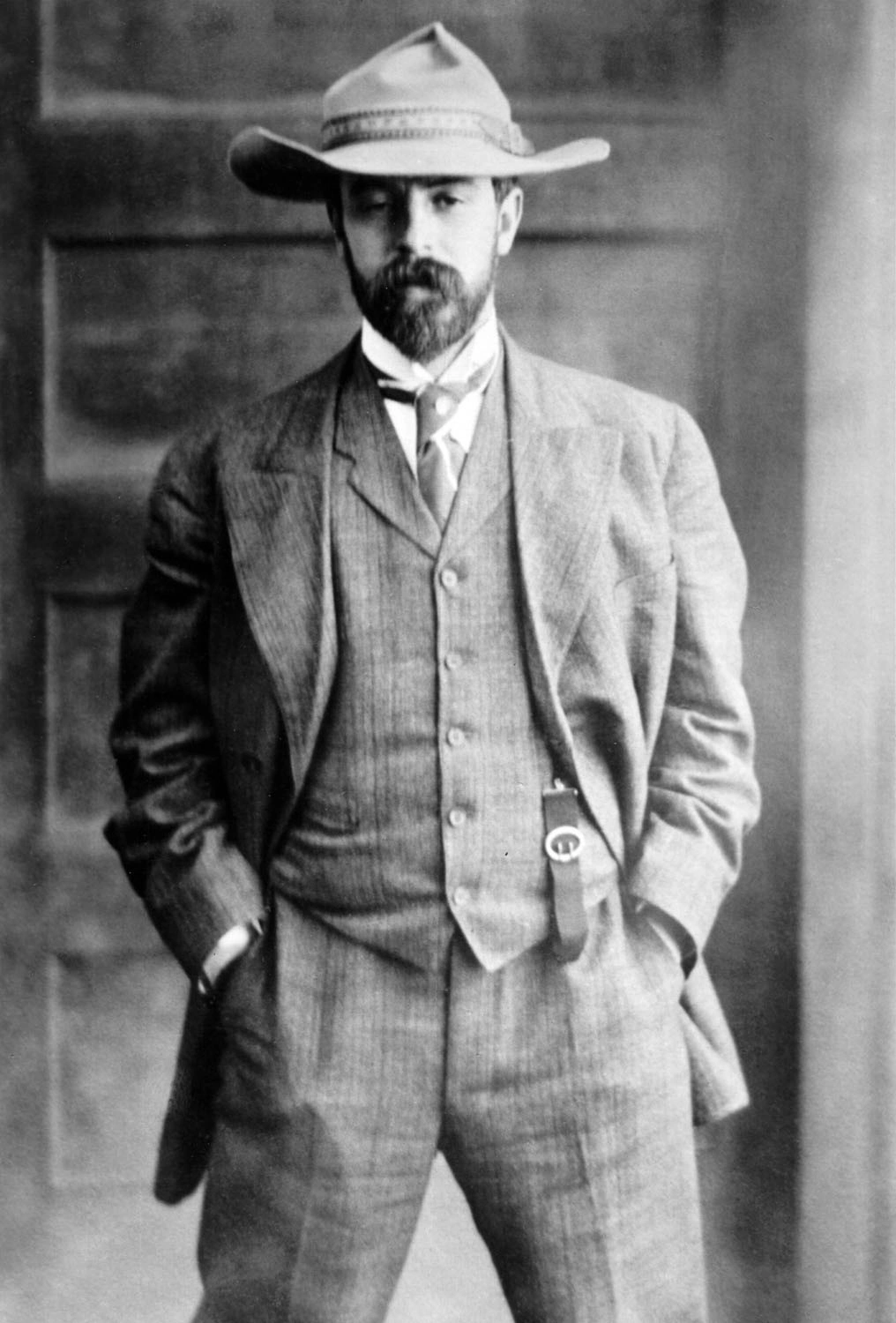
| 1 Quotes | |
| Born as | Alfred Louis Kroeber |
| Occup. | Scientist |
| From | USA |
| Born | June 11, 1876 Hoboken, New Jersey |
| Died | October 5, 1960 Paris, France |
| Aged | 84 years |
| Cite | |
Citation Formats
APA Style (7th ed.)
Alfred l. kroeber biography, facts and quotes. (2026, February 11). FixQuotes. https://fixquotes.com/authors/alfred-l-kroeber/
Chicago Style
"Alfred L. Kroeber biography, facts and quotes." FixQuotes. February 11, 2026. https://fixquotes.com/authors/alfred-l-kroeber/.
MLA Style (9th ed.)
"Alfred L. Kroeber biography, facts and quotes." FixQuotes, 11 Feb. 2026, https://fixquotes.com/authors/alfred-l-kroeber/. Accessed 28 Mar. 2026.
Early Life and Background
Alfred Louis Kroeber was born on June 11, 1876, in Hoboken, New Jersey, to German Jewish immigrant parents whose household prized languages, literature, and the disciplined self-making typical of late-19th-century bourgeois America. He came of age as the United States industrialized and expanded westward, when "race", evolution, and empire were often treated as scientific common sense. That climate - confident, classificatory, and frequently cruel in its assumptions - formed the background against which Kroeber would later argue for culture as a historical, learned domain rather than a biological destiny.In the 1890s he moved intellectually toward the new social sciences taking shape on the East Coast, while the nation around him was remaking Indigenous lives through reservation policy and boarding schools. Kroeber's later career would be deeply entangled with that contradiction: an era that was both documenting Native languages and suppressing them. The tension produced in him a lifelong mixture of scholarly restraint and moral unease, visible in his careful prose, his preference for large patterns over personal testimony, and his determination to salvage records of worlds being dismantled in real time.
Education and Formative Influences
Kroeber studied at Columbia University, earning a PhD in 1901 under Franz Boas, the central architect of American cultural anthropology. Boas trained him to distrust armchair theorizing, to treat language and material life as evidence, and to see each society as historically made rather than ranked on a single evolutionary ladder. In that seminar room, Kroeber absorbed a method and a posture: patient empiricism joined to a principled skepticism toward biological determinism, along with the belief that the ethnographic record - if rigorously gathered - could stand as a counterweight to the racial ideologies of the age.Career, Major Works, and Turning Points
In 1901 Kroeber became the first professor of anthropology at the University of California, Berkeley, and soon helped build what would become the Museum of Anthropology (now the Phoebe A. Hearst Museum). For decades he organized and interpreted massive fieldwork across California, publishing foundational syntheses such as Handbook of the Indians of California (1925) and advancing comparative concepts including "culture area" and the "superorganic" (his term for culture as an emergent level not reducible to individual psychology or biology). His personal life carried tragedy and complication: his first wife, Henriette Rothschild, died in 1913 shortly after childbirth; he later married Theodora Kracaw, who would become a writer and later author of Ishi in Two Worlds (1961). Kroeber's association with Ishi - the Yahi man who emerged in 1911 and lived at the UC museum - became a defining, contested episode, emblematic of salvage anthropology's intimacy and its power imbalance. In later years Kroeber broadened his reach into historical and civilizational comparison, culminating in Configurations of Culture Growth (1944), while also shaping the discipline through teaching, professional leadership, and widely used texts, notably Anthropology (1923, later editions).Philosophy, Style, and Themes
Kroeber's inner life reads through his methodological preferences: he sought forms larger than the self. His "superorganic" argument was not a cold dismissal of persons, but a bid to protect culture from reduction - a way to insist that languages, styles, and institutions have histories of their own. He often wrote like a cartographer of human possibility, balancing Boasian particularism with an appetite for broad comparison. In that balance sits his most quoted conviction: “Anthropology is the most humanistic of the sciences and the most scientific of the humanities”. The sentence functions as self-portrait: a man who wanted feeling disciplined by evidence, and evidence dignified by humane interpretation.His themes recur with a steady pulse: diffusion and regional patterning; the historical contingency of customs; the stubborn creativity of form in art, kinship, and speech; and the ethical urgency of recording. Yet he maintained a controlled tone, avoiding confessional writing and keeping sentiment at arm's length even when the subject demanded it. That restraint can be read as generational, but also psychological - a defense against the grief and ambiguity surrounding lives like Ishi's and the rapid unraveling of Indigenous California under American rule. Kroeber's anthropology sought to make loss legible without converting it into melodrama, and to make difference intelligible without reducing it to hierarchy.
Legacy and Influence
Kroeber died on October 5, 1960, after helping institutionalize anthropology as a major American research field. His influence persists in California ethnography, linguistic documentation, museum practice, and the comparative study of cultural patterning; so do debates he helped provoke, especially about salvage anthropology, representation, and the ethics of collecting human remains and cultural property. As the father of novelist Ursula K. Le Guin, he also left an indirect cultural imprint through a household steeped in cross-cultural imagination. Today Kroeber is remembered as a builder of institutions and concepts - a scholar who tried, within the limits of his era, to give culture the explanatory dignity that race once claimed, and to place human variety at the center of serious knowledge.Our collection contains 1 quotes written by Alfred, under the main topics: Knowledge.
Alfred L. Kroeber Famous Works
- 1984 The Inca and Aztec States, 1400-1800 (Academic Work)
- 1952 The Nature of Culture (Book)
- 1944 Configurations of Culture Growth (Book)
- 1939 Cultural and Natural Areas of Native North America (Book)
- 1925 Handbook of the Indians of California (Book)
- 1923 Anthropology (Book)
- 1917 Zuni Kin and Clan (Book)
Source / external links