
Alfred Lord Tennyson Biography Quotes 40 Report mistakes
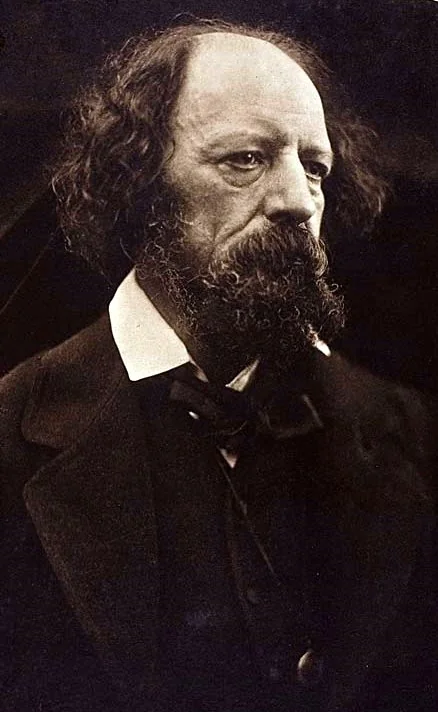
| 40 Quotes | |
| Occup. | Poet |
| From | England |
| Born | August 6, 1809 |
| Died | October 6, 1892 |
| Aged | 83 years |
| Cite | |
Citation Formats
APA Style (7th ed.)
Alfred lord tennyson biography, facts and quotes. (2026, February 1). FixQuotes. https://fixquotes.com/authors/alfred-lord-tennyson/
Chicago Style
"Alfred Lord Tennyson biography, facts and quotes." FixQuotes. February 1, 2026. https://fixquotes.com/authors/alfred-lord-tennyson/.
MLA Style (9th ed.)
"Alfred Lord Tennyson biography, facts and quotes." FixQuotes, 1 Feb. 2026, https://fixquotes.com/authors/alfred-lord-tennyson/. Accessed 5 Mar. 2026.
Early Life and Background
Alfred Tennyson was born on August 6, 1809, at Somersby in rural Lincolnshire, one of many children in the household of the Rev. George Clayton Tennyson, an Anglican rector whose learning and volatility left a deep mark on the family. The rectory was a place of books, music, and anxious weather - a father whose disappointments and drinking could chill the domestic air, and a mother, Elizabeth Fytche Tennyson, who steadied it. The landscape of the Wolds - wide skies, lanes, churchyards, and the slow grind of agricultural life - became his earliest imaginative homeland, later reappearing as pastoral surface and metaphysical depth.From early on he wrote with his brothers, especially Charles and Frederick, treating poetry as both game and refuge. Yet refuge was necessary: financial insecurity, family conflict, and the sense that a gifted child might be trapped by circumstance produced a lifelong alternation between public ambition and private withdrawal. The young Tennyson learned to observe emotion as weather - changeable, overpowering, and capable of sudden calm - and this habit of inner surveillance would later give his lyrics their distinctive mixture of confession and control.
Education and Formative Influences
After schooling at Louth and tutoring at home, he entered Trinity College, Cambridge, in 1827, where he found a peer group equal to his intensity and doubts. He joined the Apostles, absorbed Romantic inheritance (Wordsworth, Keats, Byron) while testing it against classical form, and won the Chancellor's Gold Medal in 1829 for "Timbuctoo". At Cambridge he met Arthur Henry Hallam, whose intellect and moral ardor became Tennyson's most intimate friendship and the central formative shock of his life; Hallam's death in Vienna in 1833 did not merely sadden him but rearranged his imaginative universe, forcing him to ask how love survives time, how faith survives science, and how a poet can speak for an age without falsifying his own grief.Career, Major Works, and Turning Points
Tennyson's early volumes, Poems, Chiefly Lyrical (1830) and Poems (1832), showed startling gifts but also mannered experiment, and harsh reviews helped drive him into a long period of revision and near-silence. The 1842 Poems, in two volumes, was the comeback that proved his range: lyrics, dramatic studies, and the first clear signs of a national voice. In 1850 he published In Memoriam A.H.H., a vast elegy built from short stanzas that track grief as argument, prayer, relapse, and hard-won acceptance; the same year he married Emily Sellwood after a prolonged, financially anxious courtship, and was appointed Poet Laureate on Wordsworth's death. Public duties and public triumphs followed: "The Charge of the Light Brigade" (1854) met the Crimean War with clipped urgency; Maud (1855) gave a fractured, psychologically risky monodrama; and the long labor on Idylls of the King (from 1859 onward) recast Arthurian legend into a Victorian parable of desire, power, and decay. Late honors culminated in a peerage in 1884, yet he remained a man of guarded temperament, happiest at Farringford on the Isle of Wight or at Aldworth in Sussex, walking, brooding, revising. He died on October 6, 1892, and was buried in Westminster Abbey, his private rhythms absorbed into national ritual.Philosophy, Style, and Themes
Tennyson wrote in the pressure chamber of the Victorian era: expanding empire, industrial unrest, and scientific shocks that made inherited belief feel both necessary and precarious. His poems repeatedly dramatize the mind trying to keep moving when metaphysics stalls, as if action itself were a form of salvation: “I must lose myself in action, lest I wither in despair”. This is not mere stoicism but self-management - a psychological strategy against the ruminative spiral, and a clue to why so many of his speakers pace, travel, enlist, or quest. Even when he celebrates heroism, he registers the cost: discipline can be a cure, but it can also be a mask.His style marries sensuous surface to argumentative depth: vowel-rich music, sculpted syntax, and images that seem to arrive already lit by meaning. He was preoccupied with time - geological, historical, personal - and with the moral danger of consolations that are too neat. The famous imperative “Ring out the false, ring in the true”. captures his desire for ethical clarity, yet his art rarely stops at simple certainty; it tests truth against grief, doubt, and desire. In the late lyric gesture of endurance - “To strive, to seek, to find, and not to yield”. - he shaped a secular scripture for perseverance, one that comforts because it does not promise resolution, only forward motion.
Legacy and Influence
Tennyson became the emblematic poet of high Victorian Britain, not because he flattered the age, but because he gave its anxieties a language that could be spoken in parlors, pulpits, and Parliament. His lines entered common speech, his cadences influenced poets from the Georgians to early moderns even when they rebelled against him, and his Arthurian reimagining set a template for later fantasy and historical romance. More enduringly, In Memoriam remains one of the West's defining meditations on bereavement in an age of scientific uncertainty, proving how a private wound can become a public form - and how a poet can turn inner weather into national music without pretending the storm was never there.Our collection contains 40 quotes written by Alfred, under the main topics: Witty One-Liners - Motivational - Ethics & Morality - Wisdom - Truth.
Alfred Lord Tennyson Famous Works
- 1889 Crossing the Bar (Poem)
- 1859 Idylls of the King (Poem)
- 1855 Maud (Poem)
- 1854 The Charge of the Light Brigade (Poem)
- 1850 In Memoriam A.H.H. (Poem)
- 1842 Ulysses (Poem)
- 1832 The Lady of Shalott (Poem)
Source / external links