
Alfred North Whitehead Biography Quotes 48 Report mistakes
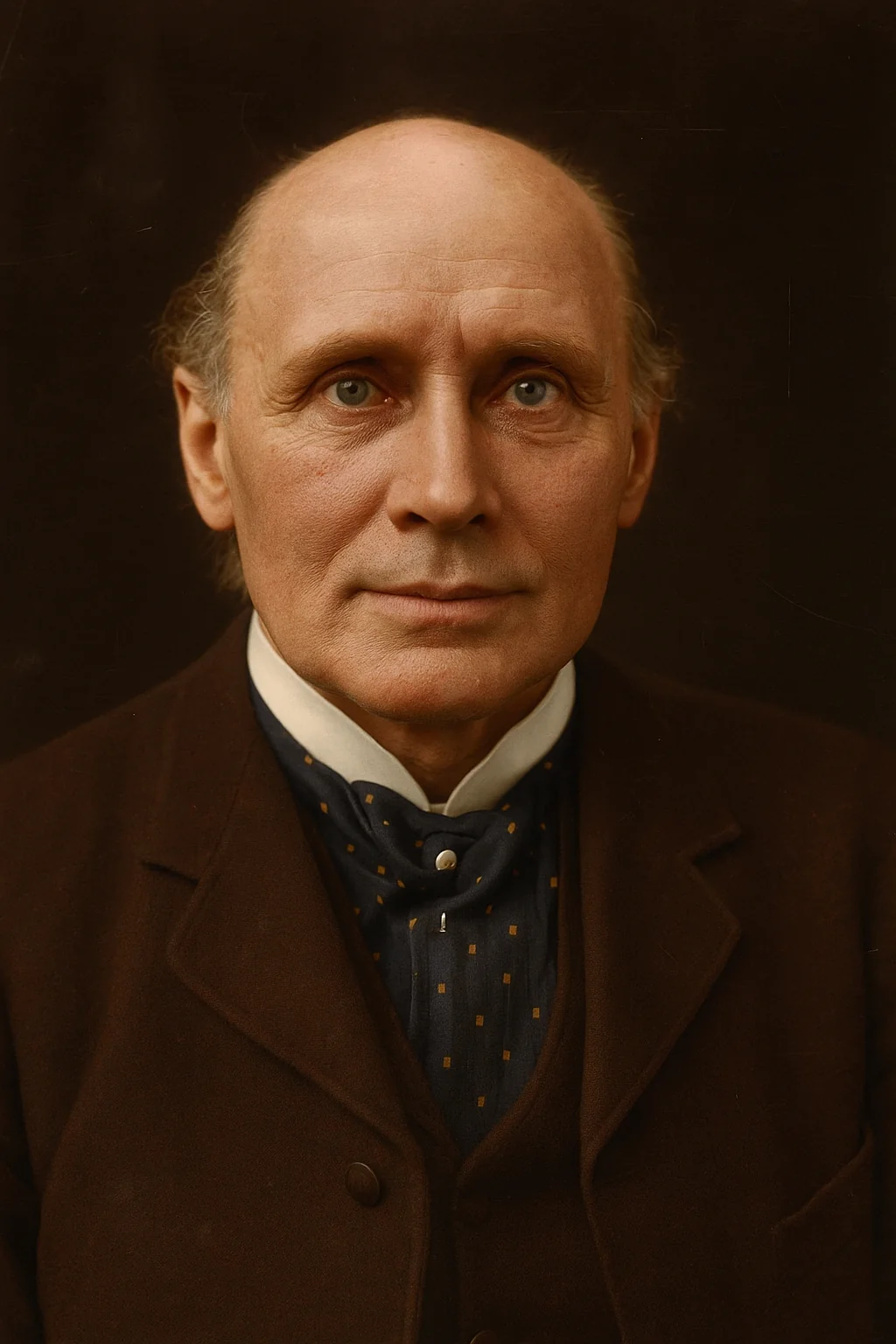
| 48 Quotes | |
| Occup. | Mathematician |
| From | England |
| Born | February 15, 1861 Ramsgate, Kent, England |
| Died | December 30, 1947 Cambridge, Massachusetts, U.S. |
| Aged | 86 years |
| Cite | |
Citation Formats
APA Style (7th ed.)
Alfred north whitehead biography, facts and quotes. (2026, February 3). FixQuotes. https://fixquotes.com/authors/alfred-north-whitehead/
Chicago Style
"Alfred North Whitehead biography, facts and quotes." FixQuotes. February 3, 2026. https://fixquotes.com/authors/alfred-north-whitehead/.
MLA Style (9th ed.)
"Alfred North Whitehead biography, facts and quotes." FixQuotes, 3 Feb. 2026, https://fixquotes.com/authors/alfred-north-whitehead/. Accessed 22 Mar. 2026.
Early Life and Background
Alfred North Whitehead was born on February 15, 1861, in Ramsgate, Kent, into the morally serious, bookish world of Victorian Nonconformity. His father, Alfred Whitehead, was an Anglican clergyman and schoolmaster; his mother, Maria Sarah Buckmaster, came from a family with strong educational ambitions. The household joined piety to disciplined study, giving him an early sense that ideas were not ornaments but instruments for living. From the beginning he watched how institutions - church, school, empire - shaped character through routine, habit, and authority.The England of his childhood was still confident in progress yet increasingly haunted by the costs of industrial modernity: mechanization, urban crowding, and a growing tension between religious inheritance and scientific explanation. Whitehead absorbed that atmosphere as a psychological problem. He would later spend much of his intellectual energy asking how order arises without turning life into mere repetition, and how novelty can be real without dissolving into chaos.
Education and Formative Influences
Whitehead was educated at Sherborne School and entered Trinity College, Cambridge, in 1880, becoming a Fellow of Trinity in 1884. He trained in the exacting Cambridge tradition of mathematical rigor, where the ideal was clarity purchased through proof. Yet he also became sensitive to the metaphysical assumptions hidden inside technical work: the nature of continuity, the meaning of abstraction, and what counts as an "entity" in a scientific description. Early teaching and writing, including A Treatise on Universal Algebra (1898), reveal a mind trying to reconcile symbolic technique with the deeper question of how symbols connect to the world they claim to describe.Career, Major Works, and Turning Points
From the 1880s through 1910 he taught at Cambridge while developing logic and the foundations of mathematics; the decisive turning point was his collaboration with Bertrand Russell on Principia Mathematica (1910-1913), a monumental attempt to derive mathematics from logical principles. The project displayed Whitehead's capacity for austere construction, but it also sharpened his awareness that formal systems, however powerful, do not by themselves explain experience. After leaving Cambridge, he worked in London in academic administration and wrote on science and education, then moved to the United States in 1924 to teach at Harvard. There, in rapid succession, he produced Science and the Modern World (1925), Religion in the Making (1926), Process and Reality (1929), and Adventures of Ideas (1933), completing his turn from mathematician-logician to philosopher of nature and culture.Philosophy, Style, and Themes
Whitehead's mature philosophy is a revolt against what he called the "bifurcation of nature" - the split between a value-free physical world and a subjective world of qualities. Drawing on relativity, evolutionary thinking, and his own experience with abstraction, he argued that reality is not made of inert substances but of events - "actual occasions" - whose essence is process, relation, and becoming. His prose can feel like a laboratory of concepts: he coins terms, revises them, and insists that thinking must be both exact and fallible. The famous maxim “Seek simplicity but distrust it”. captures his psychological stance - a disciplined hunger for order paired with suspicion that any neat formula may conceal what matters most: time, change, and the textures of lived experience.The inner drama of his work is the effort to honor civilization's need for reliable routines without surrendering the future to routine alone. When he writes, “Civilization advances by extending the number of important operations which we can perform without thinking of them”. , he is diagnosing both progress and danger: habit liberates attention, but it can also anesthetize inquiry. Against that sleepwalking he sets a vision of life as creative resistance: “Life is an offensive, directed against the repetitious mechanism of the Universe”. That sentence is not mere rhetoric; it is the emotional key to his metaphysics, where novelty is not an illusion but the pulse of reality, and where reason's task is to make room for creativity without letting it collapse into irrationality.
Legacy and Influence
Whitehead died on December 30, 1947, in Cambridge, Massachusetts, having built one of the 20th century's most ambitious alternatives to mechanistic materialism. His process philosophy seeded "process theology" and influenced thinkers such as Charles Hartshorne and later John Cobb, while his critiques of scientific abstraction shaped debates in philosophy of science, ecology, and systems thinking. In mathematics, Principia Mathematica became a landmark for logicism even as later work exposed its limits; in the humanities, his insistence that ideas have consequences encouraged interdisciplinary reflection on education, culture, and technology. He endures because he treated modernity's central anxiety - how to live meaningfully in a world explained by science - not as a culture-war slogan but as a precise, lifelong inquiry into what reality must be like for experience, value, and change to be real.Our collection contains 48 quotes written by Alfred, under the main topics: Motivational - Ethics & Morality - Wisdom - Art - Writing.
Other people related to Alfred: Willard Van Orman Quine (Philosopher), Susanne Langer (Philosopher), William Ernest Hocking (Philosopher)
Alfred North Whitehead Famous Works
- 1947 Essays in Science and Philosophy (Collection)
- 1938 Modes of Thought (Collection)
- 1933 Adventures of Ideas (Book)
- 1929 Process and Reality (Book)
- 1929 The Function of Reason (Book)
- 1929 The Aims of Education and Other Essays (Collection)
- 1927 Symbolism, Its Meaning and Effect (Book)
- 1926 Religion in the Making (Book)
- 1925 Science and the Modern World (Book)
- 1920 The Concept of Nature (Book)
- 1919 The Principles of Natural Knowledge (Book)
- 1911 An Introduction to Mathematics (Book)
- 1910 Principia Mathematica (Book)
- 1898 A Treatise on Universal Algebra (Book)