
Alfred Noyes Biography Quotes 4 Report mistakes
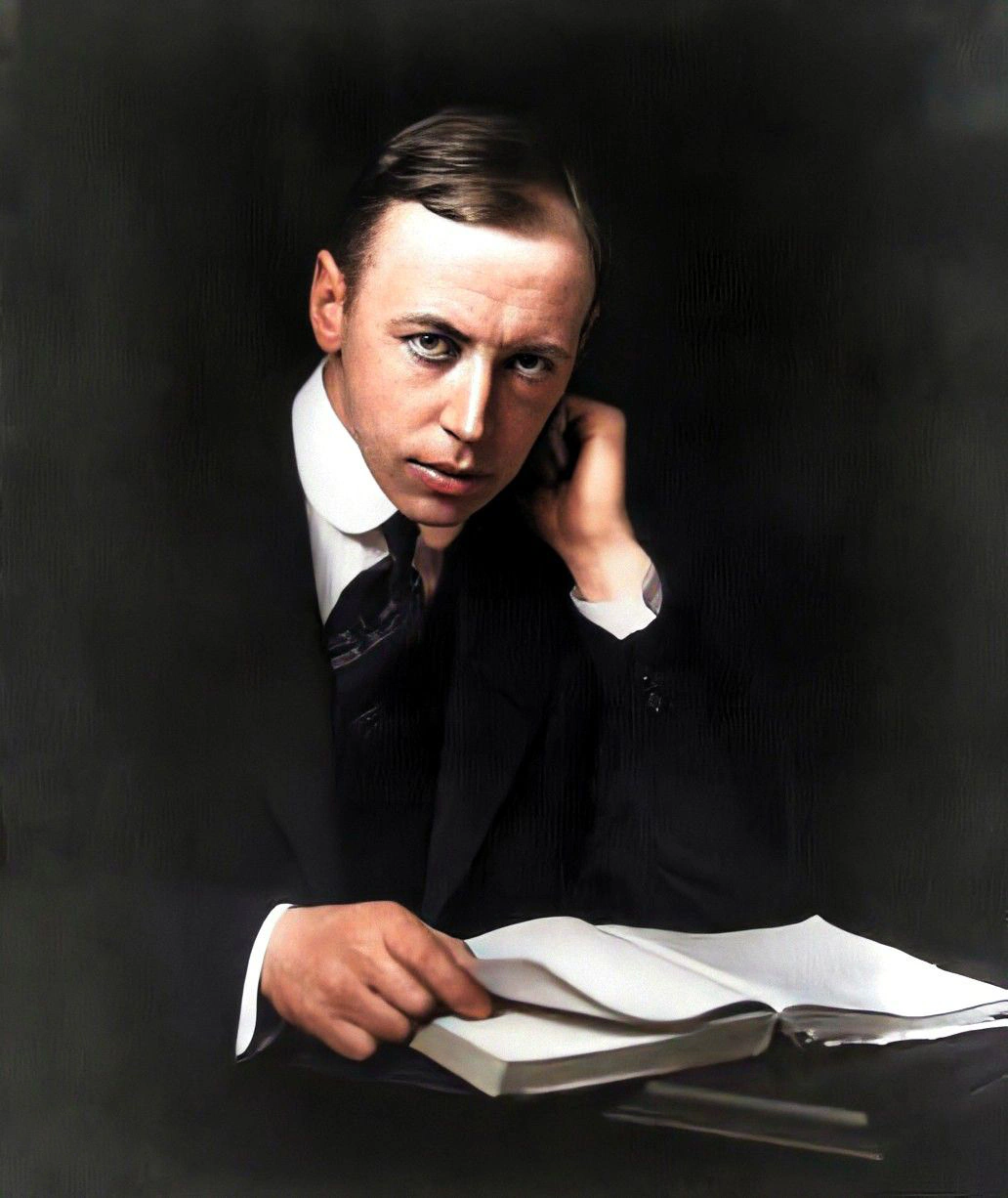
| 4 Quotes | |
| Occup. | Poet |
| From | England |
| Born | September 16, 1880 Wolverhampton, England |
| Died | June 28, 1958 |
| Aged | 77 years |
| Cite | |
Citation Formats
APA Style (7th ed.)
Alfred noyes biography, facts and quotes. (2026, February 11). FixQuotes. https://fixquotes.com/authors/alfred-noyes/
Chicago Style
"Alfred Noyes biography, facts and quotes." FixQuotes. February 11, 2026. https://fixquotes.com/authors/alfred-noyes/.
MLA Style (9th ed.)
"Alfred Noyes biography, facts and quotes." FixQuotes, 11 Feb. 2026, https://fixquotes.com/authors/alfred-noyes/. Accessed 26 Mar. 2026.
Early Life and Background
Alfred Noyes was born on September 16, 1880, in Wolverhampton, Staffordshire, into the self-confident, mobile English middle class of late-Victorian Britain - a society certain of its empire yet already haunted by industrial unrest, secular doubt, and a new mass readership. His father, also named Alfred Noyes, was a schoolmaster, and the family moved in step with appointments and opportunities. That pattern - provincial roots, then the pull of larger cultural centers - helped shape Noyes into a poet who could sound at once local and national, accessible and elevated, and who would spend much of his life negotiating between popular songlike narrative and the claims of high seriousness.He grew up as the old century waned into the Edwardian period, when the optimism of progress lived beside anxieties about modernity, war, and belief. Noyes absorbed the rhythms of English speech and the moral atmosphere of Anglican culture, but he also inherited the era's tension between romance and realism. Even in youth he was drawn to story and cadence - the poem as something spoken aloud, memorable, and public - a sensibility that later made him one of the most widely read poets in the English-speaking world in the years around the First World War.
Education and Formative Influences
Noyes was educated at Exeter College, Oxford, where he did not complete a degree but found what mattered more to him: an apprenticeship in literary tradition and the confidence to publish early. Oxford in the 1890s offered both the prestige of classics and the living pressure of new writing; Noyes took from it a lasting allegiance to narrative clarity and musical form rather than experimental fragmentation. He read widely in the English Romantics and Victorians, and in the Bible and Christian writers that would later surface in his prose and religious verse, and he learned to think of poetry not as a private code but as a civic art meant for a large audience.Career, Major Works, and Turning Points
Publishing while still young, Noyes quickly became known for lyrics and narrative poems that combined strong meter with pictorial immediacy, a style suited to magazines and public recitation. His fame crystallized with "The Highwayman" (1906), a ballad whose dramatic pace and refrain lodged in popular memory; it was followed by collections such as Tales of the Mermaid Tavern (1913), which romanticized literary fellowship through story-poems and helped position him as a keeper of an English heritage of song. In 1914 he married Garnett Daniels; he also taught and lectured in the United States for periods, including at Princeton University, becoming an Anglo-American literary figure as transatlantic culture tightened. The First World War and its aftermath altered the climate in which he had flourished: modernism rose, irony hardened, and the old bardic confidence sounded to many like a relic. Noyes responded not by reinventing his technique but by deepening his moral and religious preoccupations, producing essays, criticism, and religiously inflected works that sought continuity rather than rupture, and he maintained a public presence well into the 1930s and 1940s, even as critical fashion moved away from him.Philosophy, Style, and Themes
Noyes's inner life can be read in the tension between his craving for enchantment and his insistence on order. He distrusted the idea that modern consciousness must be fragmented to be truthful; instead he returned to the old instruments - rhyme, refrain, narrative sequence - to argue that human experience, however violent, could still be shaped into meaning. His best-known images often fuse beauty with menace, as if imagination were a lantern carried through darkness. “The moon was a ghostly galleon tossed upon cloudy seas”. The sentence is not merely decorative: it reveals a psyche that sees the world as theater, where terror is made bearable by splendor, and where the poet's job is to give fear a form the mind can ride.At the same time, Noyes's later writing shows an anxious apologetic impulse: an urge to secure belief against skepticism by appealing to tradition, testimony, and the long memory of the church. “Of the sayings of Christ in the Synoptic Gospels that can be compared to those in the fourth Gospel, there are one or two which I venture to think can only have been recorded on the authority of St. John”. That careful, almost legal phrasing points to a temperament that wanted faith to be intellectually defensible, not only emotionally consoling. His moral imagination often rises toward a teleological vision of history in which humanity strains upward toward transcendence: “At a certain stage in his evolution, man himself had been able to lay hold upon a higher order of things, which raised him above the level of the beasts that perish, and enabled him to see, at least in the distance, the shining towers of the City of God”. Read alongside the swashbuckling fatalism of his ballads, it shows the full arc of his themes - from romance as escape to romance as metaphysical longing.
Legacy and Influence
Alfred Noyes died on June 28, 1958, after a long career that spanned the confident high noon of late Victorian verse, the shattering of two world wars, and the ascendancy of modernist aesthetics. His critical reputation narrowed as literary taste favored ambiguity and experiment, yet his cultural footprint endured through sheer memorability: "The Highwayman" remained a gateway poem for generations of readers, proof that narrative music can outlive fashion. Noyes stands now as a case study in the twentieth century's divided literary conscience - a poet who refused to surrender clarity, song, and spiritual hunger, and who preserved, in an age of disillusion, the older belief that verse could still be public speech with a moral center.Our collection contains 4 quotes written by Alfred, under the main topics: Poetry - God - Bible.
Alfred Noyes Famous Works
- 1913 The Wine Press: A Tale of War (Novel)
- 1913 Tales of the Mermaid Tavern (Poem)
- 1911 The Open Road: A Book for Wayfarers (Book)
- 1908 Drake: An English Epic (Poem)
- 1906 The Highwayman (Poem)
- 1902 The Loom of Years (Poem)
Source / external links