
Alfred Russel Wallace Biography Quotes 22 Report mistakes
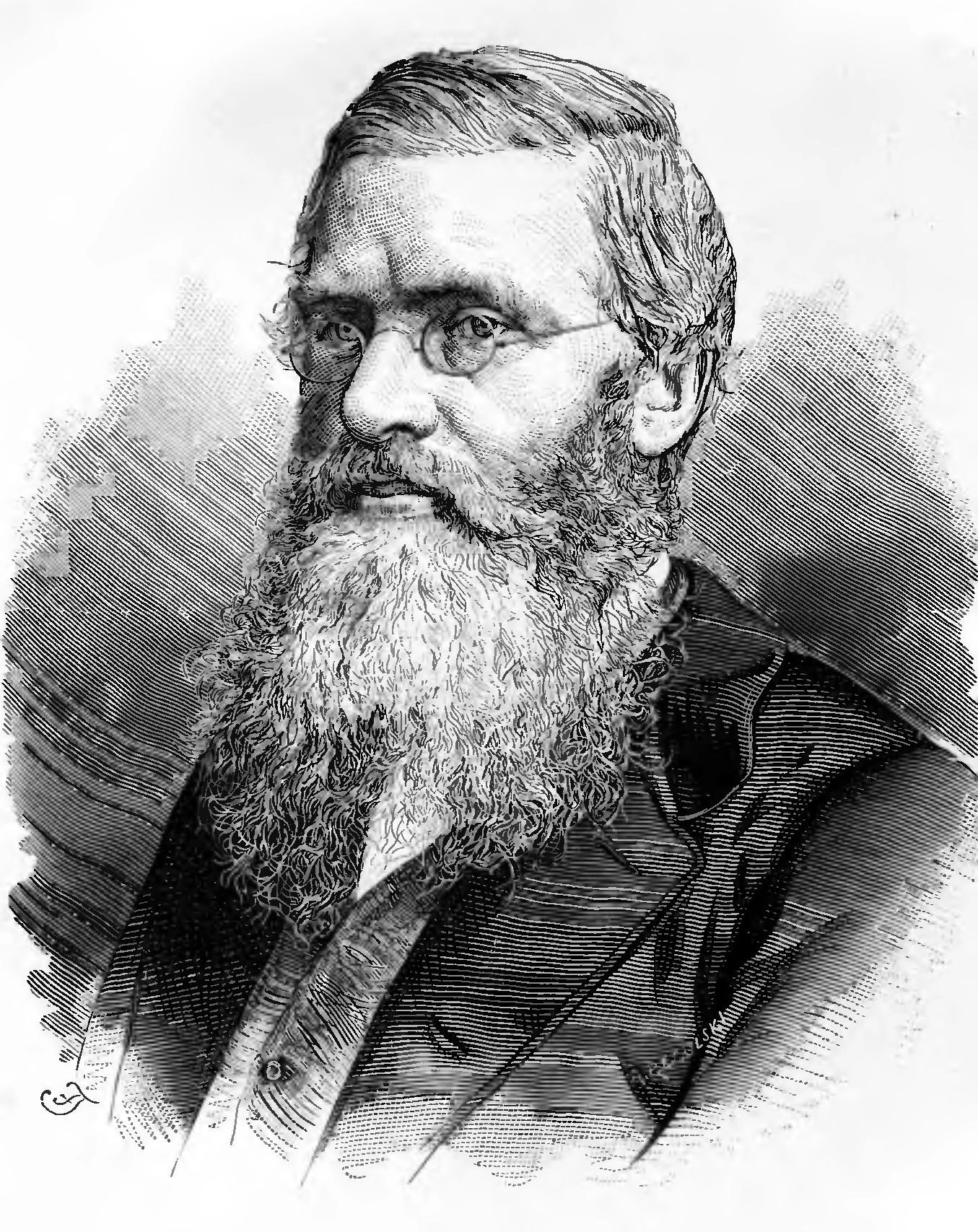
| 22 Quotes | |
| Occup. | Scientist |
| From | United Kingdom |
| Born | January 8, 1823 Usk, Monmouthshire, Wales, United Kingdom |
| Died | November 7, 1913 Broadstone, Dorset, England |
| Aged | 90 years |
| Cite | |
Citation Formats
APA Style (7th ed.)
Alfred russel wallace biography, facts and quotes. (2026, February 11). FixQuotes. https://fixquotes.com/authors/alfred-russel-wallace/
Chicago Style
"Alfred Russel Wallace biography, facts and quotes." FixQuotes. February 11, 2026. https://fixquotes.com/authors/alfred-russel-wallace/.
MLA Style (9th ed.)
"Alfred Russel Wallace biography, facts and quotes." FixQuotes, 11 Feb. 2026, https://fixquotes.com/authors/alfred-russel-wallace/. Accessed 27 Mar. 2026.
Early Life and Background
Alfred Russel Wallace was born on 8 January 1823 in Llanbadoc, near Usk in Monmouthshire, Wales, into a large, financially unsteady family whose fortunes slid during the long aftermath of the Napoleonic era. The insecurity mattered: it trained him to treat knowledge not as a genteel ornament but as a livelihood, and it pushed him toward the practical borderlands between working-class self-help culture and the expanding Victorian republic of science.Raised largely in Hertford, he grew up amid the contradictions of early industrial Britain - new railways and old rural poverty, Dissenting debate and Anglican respectability. He absorbed the period's confidence in improvement while learning its costs firsthand, an experience that later made him unusually attentive, for a major naturalist of his class and time, to land, labor, and social justice as scientific and moral questions rather than mere background.
Education and Formative Influences
Wallace left formal schooling young and trained as a surveyor, a trade that taught him to read terrain with a mapmaker's precision; it also brought him into daily contact with working people and the economics of land. In the 1840s he educated himself through mechanics' institutes and omnivorous reading, and he was electrified by the argument for transmutation in Robert Chambers' Vestiges and by travel narratives that made the tropics feel like a laboratory. His friendship with the young entomologist Henry Walter Bates turned curiosity into vocation, and by the late 1840s the two were planning to fund science through collecting - a hard, speculative business that rewarded stamina and an eye for variation.Career, Major Works, and Turning Points
In 1848 Wallace and Bates sailed for the Amazon, where Wallace learned field natural history at scale before disaster struck: returning in 1852, his ship caught fire and sank, destroying most of his collections and notes. He recovered by leaving again in 1854 for the Malay Archipelago, spending eight years across Borneo, Sulawesi, the Moluccas, and New Guinea and sending back tens of thousands of specimens while thinking relentlessly about geographic distribution and the origin of species. In 1858, feverish on Ternate, he drafted the idea of natural selection and sent it to Charles Darwin; their ideas were jointly presented at the Linnean Society, and Darwin's On the Origin of Species (1859) soon became the era's pivot text. Wallace then built an independent career through major books - The Malay Archipelago (1869), Contributions to the Theory of Natural Selection (1870), Island Life (1880), Darwinism (1889) - while also courting controversy through spiritualism, critiques of vaccination, and outspoken land reform.Philosophy, Style, and Themes
Wallace's science was shaped by a surveyor's habit of connecting small differences to large patterns. He was a master of the telling detail - a bill shape, a boundary strait, an altitudinal band - and he used particulars to rebuild wholes: islands became arguments, and fauna became history. His most durable conceptual legacy after natural selection itself was biogeographic reasoning, including the line later named for him that runs between Bali and Lombok and marks a sharp faunal transition. Yet his temperament was never narrowly technical. He wrote as a man trained by precariousness, travel, and solitude to see the natural world as both mechanism and moral theater, with human inequality and ecological constraint belonging to the same continuum of causes.In his own account, the inward life mattered as much as the outward itinerary: “In my solitude I have pondered much on the incomprehensible subjects of space, eternity, life and death”. That habit of metaphysical reflection helps explain why he eventually split from Darwin over the human mind, insisting that consciousness and higher faculties could not be fully reduced to selection on random variation: “There is, I conceive, no contradiction in believing that mind is at once the cause of matter and of the development of individualised human minds through the agency of matter”. Even in his hard-headed empiricism, he distrusted complacent consensus, treating scientific knowledge as an ethical practice that demanded endurance: “Truth is born into this world only with pangs and tribulations, and every fresh truth is received unwillingly”. Across his best work the themes recur - adaptation and constraint, the creative power of natural selection, the mapping of life onto geography - but also the insistence that explanation is incomplete if it ignores the experiencer, the sufferer, the citizen.
Legacy and Influence
Wallace died on 7 November 1913 in Broadstone, Dorset, revered but not fully absorbed into the Darwin-centered public myth of evolution. Over the twentieth and twenty-first centuries his reputation widened: biologists returned to his foundational role in natural selection and to his pioneering biogeography and island thinking, while historians found in him a revealing Victorian composite - radical in politics, empirical in method, heterodox in metaphysics. His enduring influence lies in that combination: he showed how a collector from the margins could redraw the intellectual map of nature, and he left a model of scientific life in which field observation, theory, and conscience remain in permanent conversation.Our collection contains 22 quotes written by Alfred, under the main topics: Truth - Justice - Nature - Deep - Meaning of Life.
Other people related to Alfred: Henry Walter Bates (Environmentalist)
Alfred Russel Wallace Famous Works
- 1889 Darwinism
- 1880 Island Life
- 1876 The Geographical Distribution of Animals
- 1869 The Malay Archipelago (Book)
- 1858 On the Tendency of Varieties to Depart Indefinitely from the Original Type
Source / external links