
Alice James Biography Quotes 11 Report mistakes
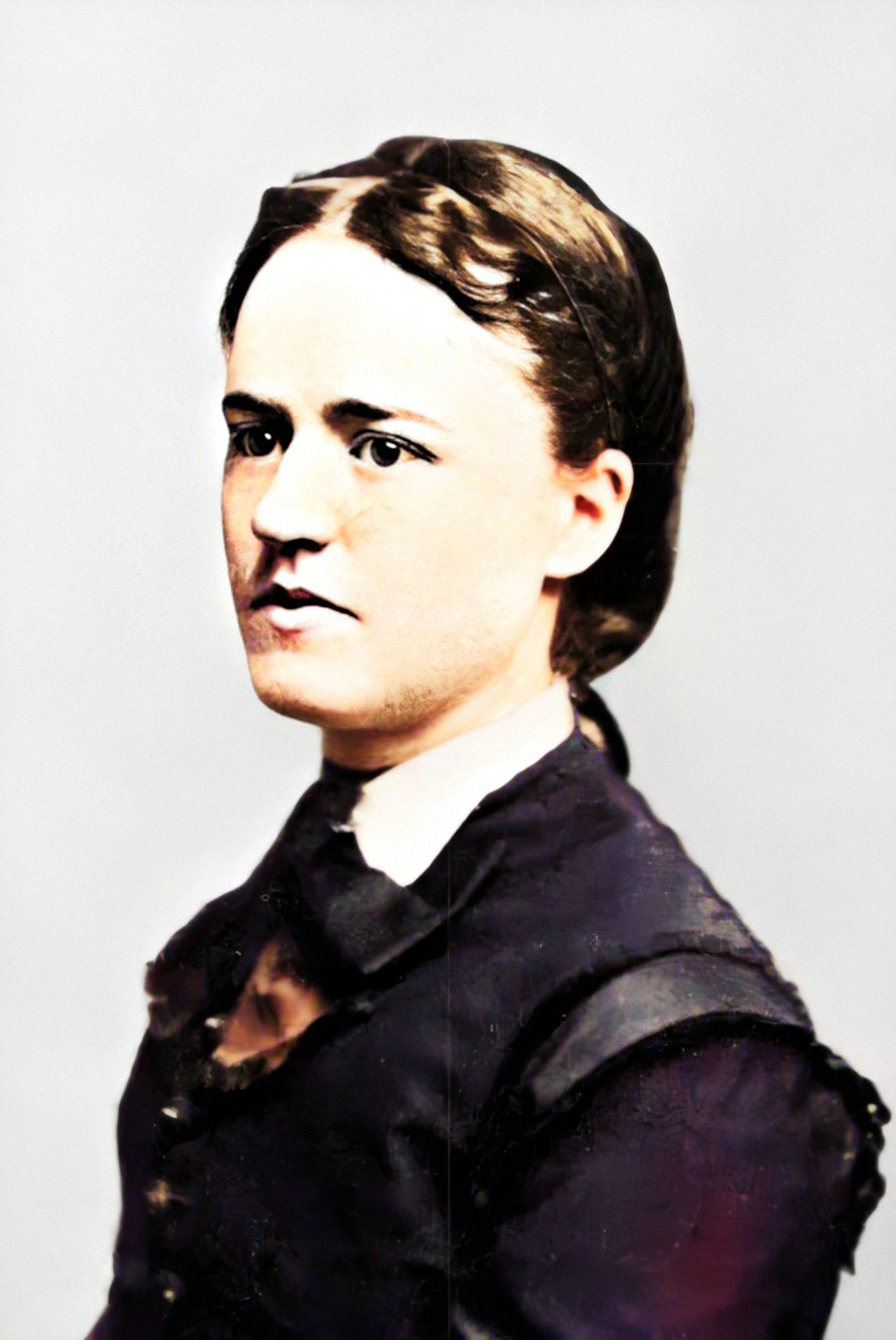
| 11 Quotes | |
| Occup. | Writer |
| From | USA |
| Born | August 7, 1848 New York City, New York, U.S. |
| Died | March 6, 1892 |
| Aged | 43 years |
| Cite | |
Citation Formats
APA Style (7th ed.)
Alice james biography, facts and quotes. (2026, February 11). FixQuotes. https://fixquotes.com/authors/alice-james/
Chicago Style
"Alice James biography, facts and quotes." FixQuotes. February 11, 2026. https://fixquotes.com/authors/alice-james/.
MLA Style (9th ed.)
"Alice James biography, facts and quotes." FixQuotes, 11 Feb. 2026, https://fixquotes.com/authors/alice-james/. Accessed 27 Mar. 2026.
Early Life and Background
Alice James was born on August 7, 1848, in the United States into the restless, intellectually charged James family, whose life was shaped by transatlantic movement and the moral ferment of mid-19th-century reform culture. She was the youngest of five children of Henry James Sr., a Swedenborgian-leaning theologian and critic of orthodox piety, and Mary Robertson Walsh James, whose own stamina and illnesses set an early template for how bodily vulnerability could govern a household. Alice grew up in the shadow of brothers who would become emblematic American minds - philosopher William James and novelist Henry James - and she learned early that brilliance could be both a birthright and a burden, especially for a daughter in a family that prized conversation, reading, and argument yet assumed women would convert gifts into agreeable domesticity.From childhood she faced recurrent ill health, which the era often translated into the language of "nerves", hysteria, and feminine fragility. The family moved between American cities and Europe, seeking climate, stimulation, and cures; for Alice, travel could mean enrichment, but also the destabilizing sense of being perpetually managed. The Civil War and Reconstruction formed the backdrop of her youth, years when public life in the United States was being violently renegotiated while private life still enforced narrow scripts for women. Her earliest surviving voice is already marked by sharp observation and a hunger for agency inside a body and a culture that repeatedly told her to endure.
Education and Formative Influences
Alice James received an irregular education typical of well-off girls of her circle - schooling, tutors, wide reading, and the informal pedagogy of family talk - but without the sustained institutional training her brothers enjoyed. The James household substituted salons for classrooms: ideas about religion, psychology, and character were tested aloud, and Alice absorbed the tools of analysis even as she was denied a public outlet for them. Periods in Europe exposed her to cosmopolitan manners and to the medical marketplace of the 19th century, where fashionable diagnoses offered both explanation and confinement; her formative influences were thus double-edged, combining a fierce intellectual inheritance with a daily apprenticeship in what it meant to be interpreted by others.Career, Major Works, and Turning Points
Alice James is known primarily for her Diary, kept in the late 1880s and early 1890s, an incandescent record written as her health deteriorated and as she settled in England with her companion Katherine (Katharyne) Loring. Living largely outside the conventional endpoints of marriage and motherhood, she made a life in letters, visits, and the disciplined craft of noticing, turning limited physical freedom into moral and psychological range. Her decisive turning point was not a public debut but the private decision to write as if her perceptions mattered, even when her body failed - a choice that converted the role of "invalid" into a vantage point from which to dissect family dynamics, medical authority, and the theater of social virtue. She died on March 6, 1892, in London, and her posthumous reputation grew as readers recognized her as more than a footnote to her famous brothers.Philosophy, Style, and Themes
Alice James wrote with a compressed, epigrammatic wit that could pivot from comedy to metaphysical bleakness in a line, and her philosophy is inseparable from her experience of being observed, diagnosed, and improved. Her skepticism toward institutional medicine was not mere complaint but a critique of power: “One has a greater sense of degradation after an interview with a doctor than from any human experience”. That sentence reveals a psychology alert to the ways expertise can become humiliation, especially for women whose suffering was treated as both spectacle and evidence of flawed character. She understood that pain was not simply sensation but an ethical environment - who gets to name it, who profits from it, who is made smaller by it.Her Diary returns obsessively to the problem of value: what counts as a life when production, public achievement, and robust health are the metrics. “Though I have no productive worth, I have a certain value as an indestructible quantity”. The humor is defensive and defiant at once, a way to insist on ontological dignity when culture offers pity instead of respect. She also distrusted sentimental narratives of female contentment, skewering the gendered rationing of appetite: “You must remember that a woman, by nature, needs much less to feed upon than a man, a few emotions and she is satisfied”. Her finest pages expose how such "nature" talk polices ambition, and how virtue can become a cage - her moral imagination is that of a rebel forced to practice rebellion inwardly, through style.
Legacy and Influence
Alice James endures as one of the most penetrating American diarists of the 19th century, a writer who transformed constrained circumstances into a literature of consciousness that anticipates modern memoir, feminist critique, and the psychology of illness. Read beside William James's pragmatism and Henry James's fiction, her Diary offers a bracing counter-angle: not the theory of experience or the novel of manners, but the lived friction between mind, body, and social expectation. Her influence lies less in a school of followers than in the permission she gives - to distrust coercive "care", to treat wit as moral intelligence, and to claim a self even when the world assigns you none.Our collection contains 11 quotes written by Alice, under the main topics: Witty One-Liners - Ethics & Morality - Wisdom - Dark Humor - Love.
Other people related to Alice: Leon Edel (Critic)
Alice James Famous Works
- 1934 The Diary of Alice James (Book)
Source / external links