
Alice Meynell Biography Quotes 11 Report mistakes
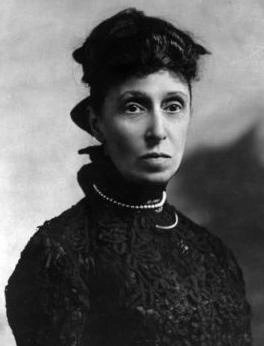
| 11 Quotes | |
| Born as | Alice Christiana Gertrude Meynell |
| Occup. | Poet |
| From | England |
| Spouse | Wilfrid Meynell |
| Born | September 22, 1847 London, England |
| Died | November 27, 1922 London, England |
| Cause | Natural Causes |
| Aged | 75 years |
| Cite | |
Citation Formats
APA Style (7th ed.)
Alice meynell biography, facts and quotes. (2026, February 11). FixQuotes. https://fixquotes.com/authors/alice-meynell/
Chicago Style
"Alice Meynell biography, facts and quotes." FixQuotes. February 11, 2026. https://fixquotes.com/authors/alice-meynell/.
MLA Style (9th ed.)
"Alice Meynell biography, facts and quotes." FixQuotes, 11 Feb. 2026, https://fixquotes.com/authors/alice-meynell/. Accessed 27 Mar. 2026.
Early Life and Background
Alice Christiana Gertrude Meynell was born Alice Thompson on 1847-09-22 in London, into a family whose rhythms were continental as much as English. Her father, Thomas James Thompson, was a painter and art teacher; her mother, Christiana (Weller) Thompson, was of Italian descent. The household did not offer the settled security of the Victorian professional classes so much as an artist's precarious mobility, and Alice's earliest sense of the world was formed amid travel and temporary rooms rather than rooted acres.That itinerant childhood took her for long periods to Italy and France, where Catholic ritual, Renaissance art, and the cadences of other languages entered her imagination before English literary institutions did. She learned early how easily a life can be remade by circumstance - illness, money, a move, a death - and how private steadiness must be self-made. The poet she became would distrust noisy self-advertisement and prefer the interior register: conscience, perception, attention.
Education and Formative Influences
Her education was irregular but unusually rich: instruction at home, long exposure to galleries and churches, and wide reading that included the English Romantics, French prose, and devotional writing. Returning to England as a young woman, she wrote poems and reviews while moving in circles attentive to Pre-Raphaelite aesthetics and to the era's revived interest in Catholic thought. Conversion to Roman Catholicism (a decisive Victorian social marker as well as a spiritual one) gave her a disciplined moral framework and a community of intellectual friendships that would later include Coventry Patmore and other writers concerned with the relation between art, duty, and the life of the mind.Career, Major Works, and Turning Points
In 1877 she married the journalist and editor Wilfrid Meynell, and their partnership became both domestic and literary: together they helped shape late-Victorian Catholic letters and edited periodicals central to that milieu, notably Merry England. Meynell published poems from the 1870s onward and gathered her reputation through the spare, exact volume Poems (1893), whose compressed music stood apart from the era's more declamatory verse; she also became a formidable essayist in collections such as The Rhythm of Life (1893), whose prose is as wrought as her line breaks. In the 1890s and after, her public standing grew as she wrote criticism, portraits of writers and painters, and social commentary that was reformist in sympathy yet resistant to slogans - a writer whose authority came from temperament and craft more than from platforms.Philosophy, Style, and Themes
Meynell's inner life was governed by the conviction that experience is filtered - even constituted - by attention. Her Catholicism did not make her otherworldly; it made her exacting about how the visible world is handled by language, and about the ethical consequences of perception. She distrusted the Victorian habit of equating a good life with a string of favorable events, insisting instead on inward weather: “Happiness is not a matter of events, it depends upon the tides of the mind”. That sentence is not a consoling maxim so much as a diagnosis of her psychology - the awareness that mood, memory, and conscience continually revise what "happened", and that spiritual discipline is partly the governance of those tides.Her style mirrors that ethic of inward control: small compass, high finish, and a preference for implication over spectacle. She writes as if the bravest act is restraint, and as if the truest color is the one kept under the skin: “The true color of life is the color of the body, the color of the covered red, the implicit and not explicit red of the living heart and the pulses. It is the modest color of the unpublished blood”. Even when addressing social change, she tended to puncture modern restlessness by asking what change is for, and what it does to the inner measure of a person: “Our fathers valued change for the sake of its results; we value it in the act”. Across her poems and essays, childhood appears not as nostalgia but as metaphysical distance, a reminder that time makes strangers of our own selves; nature is never merely scenery but a moral and sacramental text; and love, grief, and civic responsibility are treated as arenas where the soul's precision is tested.
Legacy and Influence
Alice Meynell died on 1922-11-27, having lived through the long Victorian afternoon into the sharp light of modernity, and her influence endures less as a school than as a standard. Later poets and critics admired her fusion of lyrical compression with intellectual clarity, her ability to make essays sound like composed music, and her example of a public conscience conducted without rhetorical inflation. In an age increasingly tempted by speed, publicity, and the thrill of novelty, Meynell remains a model of the opposite virtues - attention, reticence, and moral exactitude - and a reminder that a writer can be both socially awake and stylistically severe, with inner weather shaping outer art.Our collection contains 11 quotes written by Alice, under the main topics: Witty One-Liners - Mortality - Life - Embrace Change - Happiness.
Alice Meynell Famous Works
- 1917 Hearts of Controversy (Essay Collection)
- 1909 Ceres' Runaway & Other Essays (Essay Collection)
- 1899 The Spirit of Place and Other Essays (Essay Collection)
- 1898 London Impressions (Essay Collection)
- 1893 Poems (Poetry Collection)
- 1893 The Rhythm of Life (Essay)
- 1875 Preludes (Poetry Collection)
Source / external links