
Alice Roosevelt Longworth Biography Quotes 8 Report mistakes
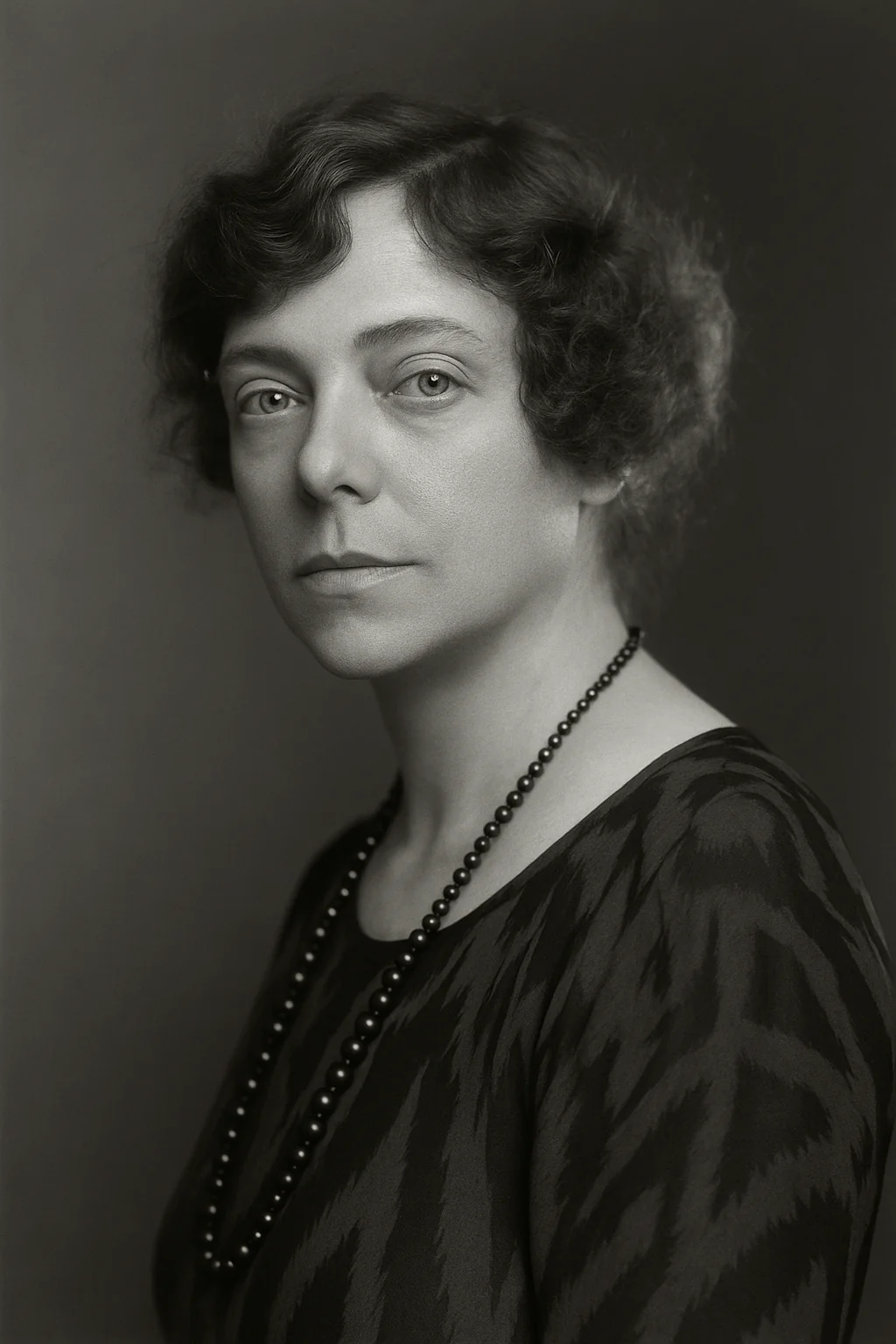
| 8 Quotes | |
| Born as | Alice Lee Roosevelt |
| Occup. | Author |
| From | USA |
| Born | February 12, 1884 New York City, New York, United States |
| Died | February 20, 1980 Washington, D.C., United States |
| Cause | Pneumonia |
| Aged | 96 years |
| Cite | |
Citation Formats
APA Style (7th ed.)
Alice roosevelt longworth biography, facts and quotes. (2026, February 11). FixQuotes. https://fixquotes.com/authors/alice-roosevelt-longworth/
Chicago Style
"Alice Roosevelt Longworth biography, facts and quotes." FixQuotes. February 11, 2026. https://fixquotes.com/authors/alice-roosevelt-longworth/.
MLA Style (9th ed.)
"Alice Roosevelt Longworth biography, facts and quotes." FixQuotes, 11 Feb. 2026, https://fixquotes.com/authors/alice-roosevelt-longworth/. Accessed 28 Mar. 2026.
Early Life and Background
Alice Lee Roosevelt was born on February 12, 1884, in New York City into the private, moneyed world of old Manhattan, and from the start her life carried the charged symbolism of inheritance and loss. Her father, Theodore Roosevelt, was a rising reform-minded politician with a muscular ideal of duty; her mother, Alice Hathaway Lee, came from a Boston-descended family whose social confidence matched Roosevelt ambition. Two days after Alice's birth, her mother died of kidney disease, and in the same house, on the same day, Roosevelt's mother also died. The double bereavement shaped family memory into something like legend, and Theodore Roosevelt, nearly broken, retreated into grief and distance.Raised largely by her maternal aunt, Anna "Bamie" Roosevelt, Alice grew up with a father who adored her but was often away and, at times, emotionally unavailable. When Theodore married Edith Kermit Carow in 1886, the household became more structured, more morally supervised, and more crowded with half-siblings. Alice resisted discipline as a form of self-definition, earning a reputation for audacity that was partly temperament and partly strategy: a girl with no living mother learned early to hold attention with wit, risk, and theatrical candor.
Education and Formative Influences
Alice was educated privately in New York and Washington, D.C., and came of age amid the transition from Gilded Age certainties to Progressive Era agitation, when women's roles were being contested in salons, newspapers, and streets. The White House years after 1901 placed her at the center of national spectacle just as mass-circulation journalism was turning politics into celebrity. Etiquette, photo opportunities, and public morale became tools of governance, and Alice absorbed them as a native language, learning to read rooms, manage correspondents, and turn social life into a stage where power could be teased, tested, and exposed.Career, Major Works, and Turning Points
As Theodore Roosevelt's eldest child and most famous offspring, Alice became an unofficial White House attraction, traveling, entertaining, and baiting the press with a mix of charm and defiance that scandalized guardians of respectability and delighted a public hungry for personality. In 1906 she married Ohio Congressman Nicholas Longworth, tying herself to Republican establishment power even as her marriage became increasingly strained and, eventually, largely separate in practice; her suspected later relationship with Senator William Borah, and the birth of her daughter Paulina in 1925, deepened the sense that she lived by her own rules. After Nicholas Longworth's death in 1931, she emerged as Washington's mordant grande dame, a political hostess whose dinner table was a listening post and a weapon. Her chief literary monument, Crowded Hours (1933), distilled a lifetime of proximity to presidents, diplomats, and gossip into a voice that was both memoir and performance - shrewd about motive, ruthless about vanity, and keenly aware that public life runs on appetite as much as ideals.Philosophy, Style, and Themes
Longworth's writing and aphorisms reveal a psychology trained by early loss and sustained by control of the social narrative. She treated society as a laboratory where the currency was attention, and her humor - bright, abrasive, and perfectly timed - served as self-defense and dominance. Her most quoted line, “If you haven't got anything nice to say about anybody, come sit next to me”. , is not merely a joke; it is a declaration that intimacy can be forged through shared skepticism, and that truth, for her, was often best delivered as a sting. In Crowded Hours and in countless reported quips, she turned observation into leverage, exposing the gap between public posture and private impulse.Beneath the glamour was a hard-earned realism about time, consequence, and the limits of reinvention. “You can't make a souffle rise twice”. captures her sense that reputation, love, and political momentum are governed by physics as much as by will - a sober lesson from watching careers bloom and collapse in Washington. Yet she also embraced a cultivated refusal to grow obedient: “The secret of eternal youth is arrested development”. That paradox - worldly cynicism paired with a deliberate, almost childlike contrarian freedom - shaped her themes: the theater of power, the erotic charge of defiance, and the way a sharp tongue can become a lifelong instrument for staying unowned.
Legacy and Influence
Alice Roosevelt Longworth died on February 20, 1980, in Washington, D.C., having outlived the Progressive Era that made her, the New Deal that reoriented her party, and the television age that resembled the press culture she mastered early. She endures as one of the most vivid chroniclers of American high politics from the inside: not a policy architect, but a witness with a scalpel, preserving the textures of ambition, boredom, vanity, and charm that official histories flatten. Her influence persists in the model she established - the political insider as author-celebrity, the hostess as strategist, the woman who refuses moral prettiness in favor of diagnostic wit - and in the enduring lesson of her life: that personality, relentlessly practiced, can become a form of power.Our collection contains 8 quotes written by Alice, under the main topics: Witty One-Liners - Father.
Frequently Asked Questions
- Alice Roosevelt Longworth books: Crowded Hours (1933).
- Alice Roosevelt Sturm: Refers to her family’s link to the Sturm name via her daughter Paulina Longworth Sturm.
- Alice Roosevelt Longworth cause of death: Complications of pneumonia and emphysema.
- Alice Roosevelt Lobotomy: No, no lobotomy is associated with her.
- Alice Roosevelt husband: Nicholas Longworth III (Speaker of the U.S. House).
- Paulina Longworth Sturm: Alice’s daughter; married Alexander McCormick Sturm; mother of Joanna; died in 1957.
- Alice Roosevelt Longworth died: February 20, 1980, in Washington, D.C.
- How old was Alice Roosevelt Longworth? She became 96 years old
Alice Roosevelt Longworth Famous Works
- 1913 Crowded Hours (Memoir)
Source / external links