
Allan Pinkerton Biography Quotes 1 Report mistakes
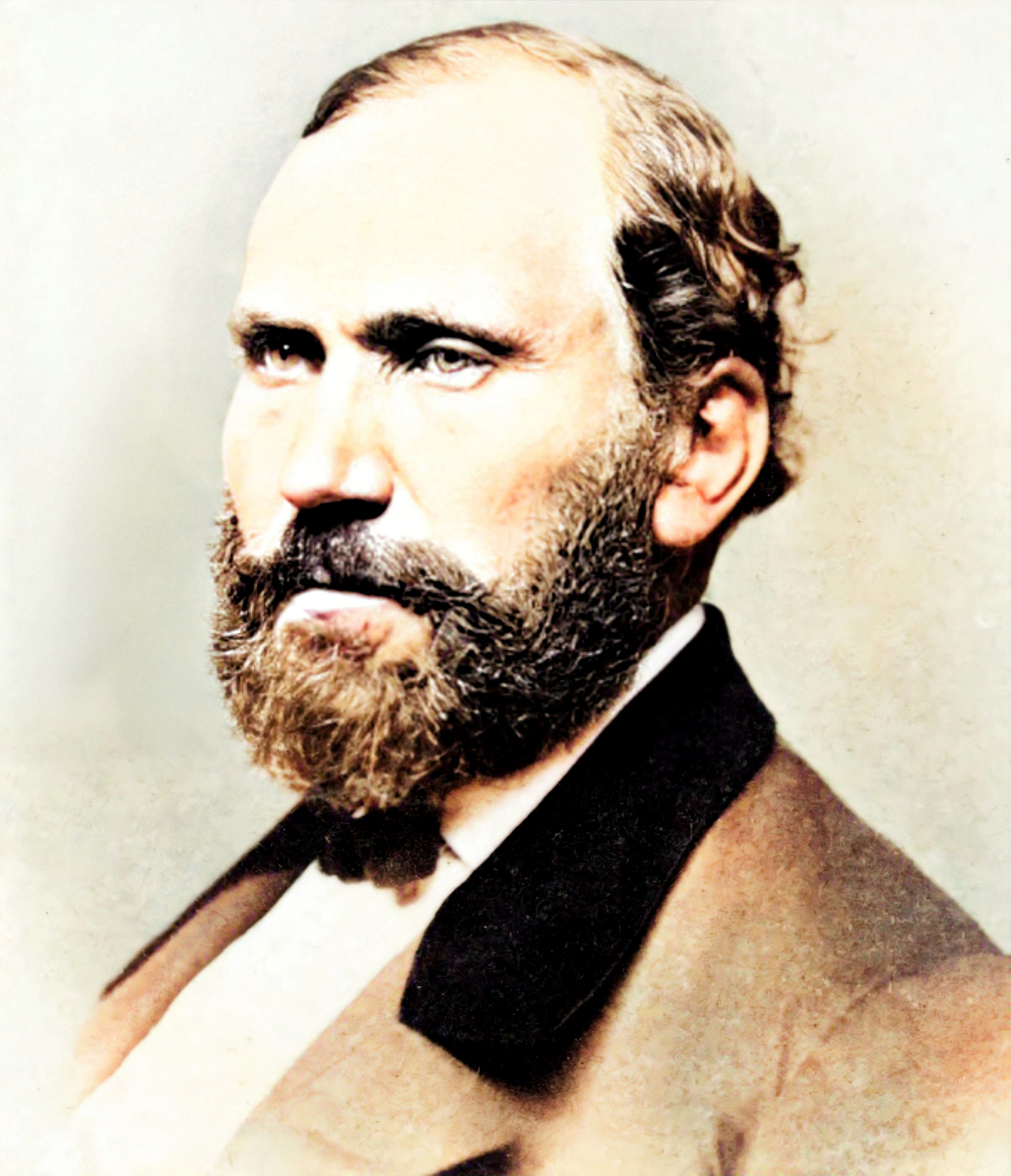
| 1 Quotes | |
| Known as | The Father of the American Detective Agency |
| Occup. | Businessman |
| From | USA |
| Spouse | Joan Carfrae (1842) |
| Born | August 25, 1819 Glasgow, Scotland, United Kingdom |
| Died | July 1, 1884 Chicago, Illinois, United States |
| Cause | Stroke |
| Aged | 64 years |
| Cite | |
Citation Formats
APA Style (7th ed.)
Allan pinkerton biography, facts and quotes. (2026, February 11). FixQuotes. https://fixquotes.com/authors/allan-pinkerton/
Chicago Style
"Allan Pinkerton biography, facts and quotes." FixQuotes. February 11, 2026. https://fixquotes.com/authors/allan-pinkerton/.
MLA Style (9th ed.)
"Allan Pinkerton biography, facts and quotes." FixQuotes, 11 Feb. 2026, https://fixquotes.com/authors/allan-pinkerton/. Accessed 25 Mar. 2026.
Early Life and Background
Allan Pinkerton was born on 1819-08-25 in the Gorbals district of Glasgow, Scotland, into the hard arithmetic of industrial poverty. His father, a police sergeant who died when Allan was young, left a family exposed to the volatility of early-19th-century urban life - crowded tenements, precarious wages, and political ferment. Pinkerton learned early that order could be either protection or oppression, depending on who held it.As a young cooper, he moved through the tradesman world of barrel-making and shipping, then into the radical circles that pushed for parliamentary reform. The Chartist movement, with its mass meetings and police surveillance, shaped his sense of how institutions watch people - and how people resist being watched. In 1842, amid economic strain and political pressure, he emigrated with his wife, Joan Carfrae, to the United States, settling first near Chicago in the small community of Dundee, Illinois, where frontier opportunity and lawlessness coexisted.
Education and Formative Influences
Pinkerton had little formal schooling; his education came from craft discipline, political agitation, and an unusually observant temperament sharpened by necessity. The cooper's habit of noticing defects and inconsistencies translated into a detective's attention to detail, while Chartist organizing taught him networks, secrecy, and the value of information. In Illinois he absorbed the American contradictions of the 1840s and 1850s - rapid commercial growth, weak local policing, and the moral crisis of slavery - and he began to see detection not only as a trade but as a private institution that could compete with the state.Career, Major Works, and Turning Points
Pinkerton's career in detection began with a chance discovery of counterfeiters near Dundee, which led to work as a deputy sheriff and, soon after, a position as Chicago's first police detective. In 1850 he founded the North-Western Police Agency, later known as the Pinkerton National Detective Agency, marketing reliability to railroads, banks, and express companies as the United States industrialized. His biggest early fame came from pursuing train robbers and counterfeiters and from the agency's emblem - the all-seeing eye and the motto "We Never Sleep" - a brand that promised vigilance in an era of porous jurisdictions. In 1861 he organized a protective detail for President-elect Abraham Lincoln, gathering intelligence on secessionist threats and helping shepherd Lincoln through Baltimore; the episode burnished Pinkerton's reputation even as critics later debated the severity of the danger. During the Civil War he ran Union intelligence operations for Gen. George B. McClellan, producing estimates often criticized as inflated, a turning point that revealed both his energy and his vulnerability to the fog of war. After the war, his firm expanded into a national private security enterprise, and Pinkerton himself wrote popular accounts such as The Expressman and the Detective and The Molly Maguires and the Detectives, blending self-justification, cautionary tale, and brand-building until his death on 1884-07-01 in Chicago.Philosophy, Style, and Themes
Pinkerton's inner life was organized around a moral binary that made his work feel like a calling rather than a business. He cast himself as “A friend to honesty and a foe to crime”. The sentence reads like advertising, but it also exposes a psychological need for clean categories - honest versus criminal, sentinel versus threat - in a country where the market was generating new forms of fraud, and where the law often lagged behind mobility and money.His style joined surveillance with storytelling. The agency's methods - informants, undercover work, meticulous files, coordinated pursuit across state lines - were modern responses to modern crime, but Pinkerton framed them as virtues of character: patience, vigilance, self-control. “A friend to honesty and a foe to crime”. repeats as a kind of self-hypnosis, insisting that private detection could be ethically pure even when it operated in the gray space between public authority and private profit. In his memoir-like books he portrayed criminals as both cautionary figures and narrative engines, while presenting the detective as a disciplined reader of signs - a man who seeks certainty in clues because the wider world, from wartime intelligence to corporate theft, kept producing ambiguity.
Legacy and Influence
Pinkerton's enduring influence lies less in any single case than in the institutional model he built: the national private detective agency as an extension of corporate America and a competitor to fragmented local policing. The Pinkertons helped professionalize investigative techniques and popularized the image of the tireless detective, shaping later police practice and American crime literature alike. Yet the same apparatus that protected railroads and tracked outlaws also fed a long controversy over private power, especially as the agency became associated, after Pinkerton's lifetime, with labor conflict and strikebreaking - a reminder that the "friend" and "foe" categories he loved could shift depending on who was being watched.Our collection contains 1 quotes written by Allan, under the main topics: Honesty & Integrity.
Other people related to Allan: David J. Cook (Celebrity)
Allan Pinkerton Famous Works
- 1883 The Spy of the Rebellion: Being a True History of the Spy System of the United States Army During the Late Rebellion (Book)
- 1876 The Model Town and the Detectives, Byron as a Detective (Book)
- 1875 The Somnambulist and the Detective (Book)
- 1874 The Expressman and the Detective (Book)
Source / external links