
Allen Ginsberg Biography Quotes 18 Report mistakes
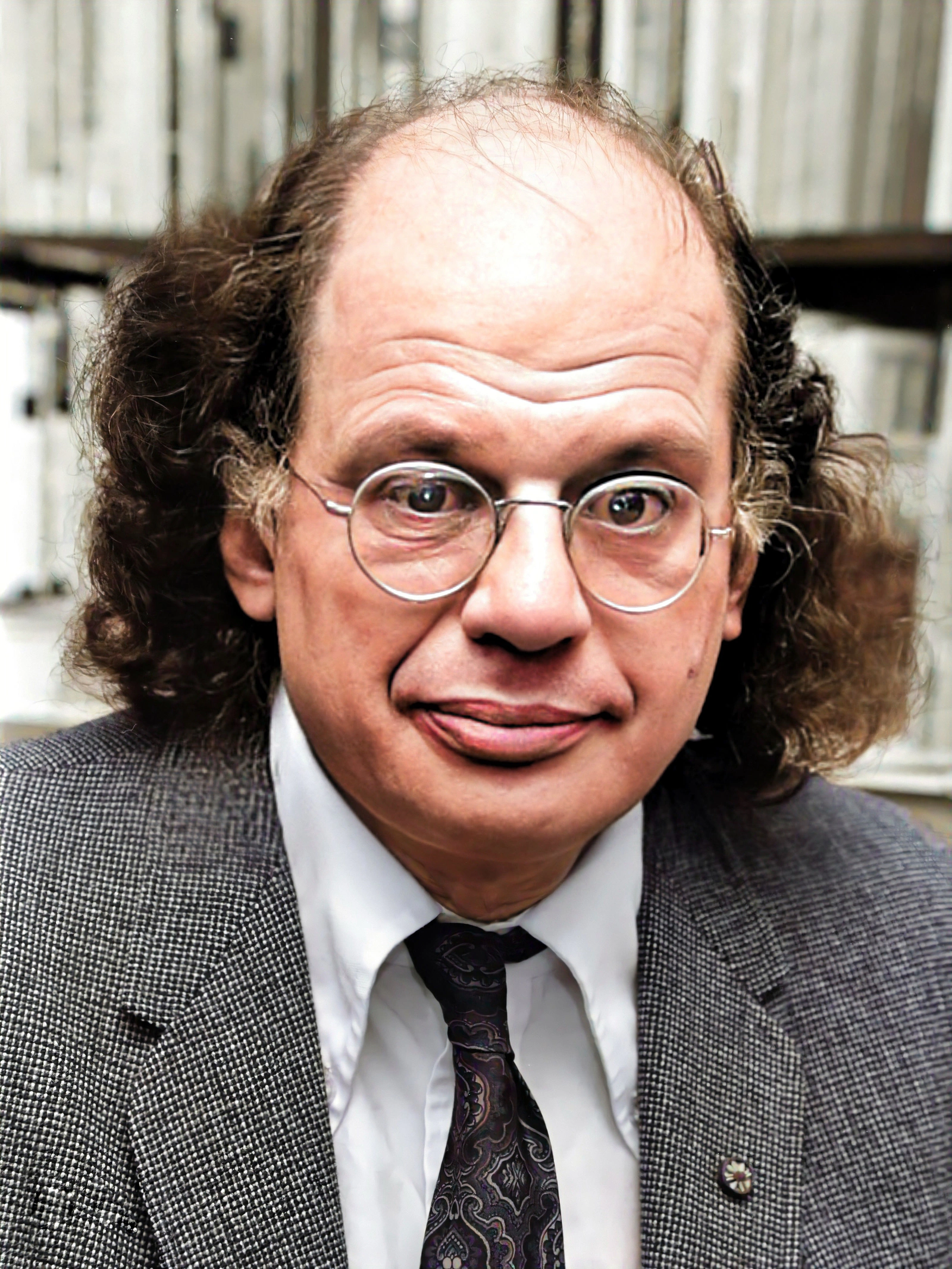
| 18 Quotes | |
| Born as | Irwin Allen Ginsberg |
| Occup. | Poet |
| From | USA |
| Spouse | Peter Orlovsky |
| Born | June 3, 1926 Newark, New Jersey, USA |
| Died | April 5, 1997 New York City, New York, USA |
| Cause | Liver cancer |
| Aged | 70 years |
| Cite | |
Citation Formats
APA Style (7th ed.)
Allen ginsberg biography, facts and quotes. (2026, February 11). FixQuotes. https://fixquotes.com/authors/allen-ginsberg/
Chicago Style
"Allen Ginsberg biography, facts and quotes." FixQuotes. February 11, 2026. https://fixquotes.com/authors/allen-ginsberg/.
MLA Style (9th ed.)
"Allen Ginsberg biography, facts and quotes." FixQuotes, 11 Feb. 2026, https://fixquotes.com/authors/allen-ginsberg/. Accessed 22 Mar. 2026.
Early Life and Background
Irwin Allen Ginsberg was born on 1926-06-03 in Newark, New Jersey, and grew up in nearby Paterson in a Jewish, working-to-middle-class household shaped by immigrant memory and American political argument. His father, Louis Ginsberg, taught English and wrote formal verse, offering the young Allen an early sense that poetry could be a public craft as well as a private discipline. His mother, Naomi, a Russian-born Marxist with recurring mental illness, filled the home with alternating tenderness and crisis - a domestic rhythm that later made him unusually attentive to the edges between insight, delusion, and the ways families keep moving through both.The era pressed in: Depression hardship, the shadow of fascism abroad, and wartime patriotism at home, followed by the tightening ideological screws of the early Cold War. In adolescence he absorbed both the promise and the coercions of American life, learning how quickly a "normal" surface can conceal fear, surveillance, and stigma. Those contradictions - love of the country as landscape and language, distrust of its conformist machinery - became the emotional motor of his lifelong work.
Education and Formative Influences
After entering Columbia University in New York City in 1943, Ginsberg fell into a combustible circle that would become the Beat Generation: Jack Kerouac, William S. Burroughs, Lucien Carr, and later Neal Cassady. Columbia gave him the canon, but the city gave him the underground - jazz, queer life, radical politics, and the postwar appetite for risk. Encounters with Allen Tate and, crucially, William Carlos Williams pushed him away from academic polish toward an American line that could hold talk, breath, and street-level detail; Blakean mysticism and the shock of modernist collage offered him permission to treat revelation and reportage as the same instrument.Career, Major Works, and Turning Points
Ginsberg worked odd jobs and wrote steadily through the late 1940s and early 1950s, while arrests, psychiatric observation, and the precariousness of being openly homosexual in that period sharpened his sense of what America punished. The decisive turning point came in San Francisco: his 1955 reading at the Six Gallery unveiled "Howl", and Lawrence Ferlinghetti published it with City Lights in 1956, triggering the 1957 obscenity trial that ended in a landmark victory for literary freedom. "Kaddish" (1961) transformed private grief for Naomi into a raw, documentary elegy, while later books such as The Fall of America (1972, National Book Award) mapped highways, war news, and mantra into an unsettled travelogue of empire. From the 1960s on, he became a public poet-activist - against the Vietnam War, for free speech, for queer visibility - and a transnational seeker through Buddhism, mantra, and the disciplined attention of meditation, until his death in New York City on 1997-04-05.Philosophy, Style, and Themes
His style is built from breath: long Whitmanesque lines, catalogues that accelerate like thought, and a camera-eye for urban reality - sweat, sirens, sex, prayer, and policy in the same frame. "Howl" begins as diagnosis and lament - “I saw the best minds of my generation destroyed by madness, starving hysterical naked”. - and that sentence doubles as autobiography, witness statement, and manifesto. Ginsberg did not romanticize breakdown; he treated it as both personal wound and social symptom, insisting that the culture that demanded composure often produced the very despair it condemned.Yet his work is not only a cry - it is a method for turning the private interior into shared civic speech. “Poetry is the one place where people can speak their original human mind. It is the outlet for people to say in public what is known in private”. That belief guided his candor about queer desire, guilt, tenderness, and spiritual hunger, and it explains his shock-tactic plainness: he wanted confession not as exhibitionism but as solidarity. He also framed sanity as a widened capacity rather than a narrow compliance - “Follow your inner moonlight; don't hide the madness”. - a credo that joined his compassion for the afflicted with his refusal to let the state, the clinic, or the censor dictate what kinds of consciousness were permitted.
Legacy and Influence
Ginsberg endures as the poet who made postwar American subjectivity audible at full volume - mixing prophecy with reportage, erotic honesty with political anger, and Buddhist equanimity with streetwise humor. His role in the "Howl" trial helped reset the legal boundaries for American literature, while his performances, recordings, and workshops made poetry a living, social act rather than a library artifact. Later generations of spoken-word artists, confessional poets, queer writers, and activist musicians inherited his insistence that a poem can be both document and prayer, a critique of power and an embrace of the outcast, and that a nation's language is most truthful when it risks telling what it prefers to hide.Our collection contains 18 quotes written by Allen, under the main topics: Art - Justice - Sarcastic - Deep - Live in the Moment.
Other people related to Allen: Walt Whitman (Poet), John Clellon Holmes (Writer), Sharon Olds (Poet), Adrian Mitchell (Poet), Caleb Carr (Novelist), Gary Snyder (Poet), Paul Bowles (Composer), Richard Eberhart (Poet), Gregory Corso (Poet)
Allen Ginsberg Famous Works
- 1986 White Shroud Poems (Poetry Collection)
- 1973 The Fall of America: Poems of These States, 1965-1971 (Poetry Collection)
- 1968 Planet News (Poetry Collection)
- 1963 Reality Sandwiches (Poetry Collection)
- 1961 Kaddish (Poem)
- 1956 Howl (Poem)
Source / external links