
Alois Brunner Biography Quotes 2 Report mistakes
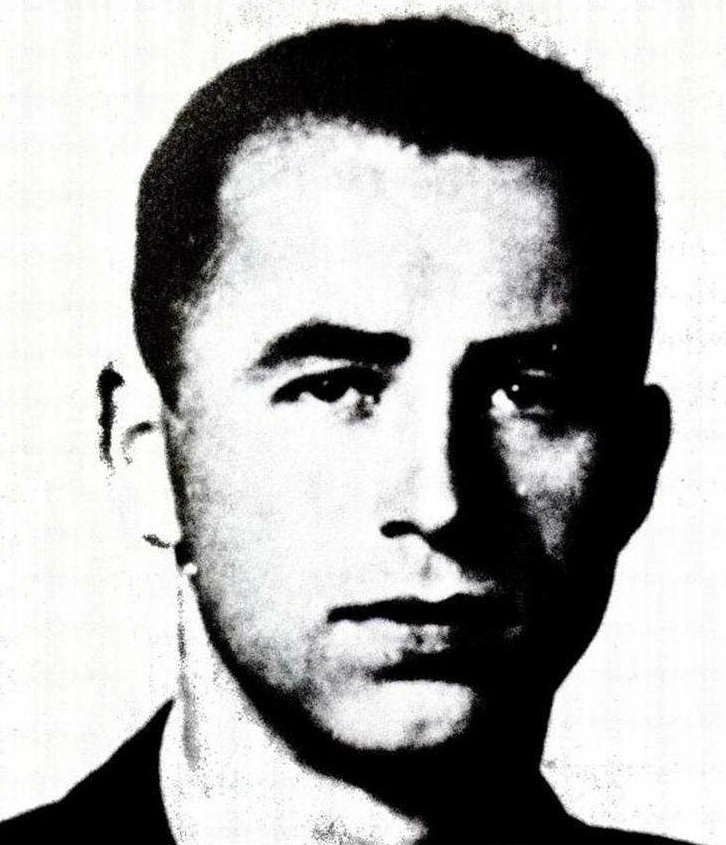
| 2 Quotes | |
| Occup. | Criminal |
| From | Austria |
| Born | April 8, 1912 Nádkút, Vas, Austria-Hungary (now Rohrbrunn, Burgenland, Austria) |
| Died | 1996 |
| Aged | 113 years |
| Cite | |
Citation Formats
APA Style (7th ed.)
Alois brunner biography, facts and quotes. (2026, March 4). FixQuotes. https://fixquotes.com/authors/alois-brunner/
Chicago Style
"Alois Brunner biography, facts and quotes." FixQuotes. March 4, 2026. https://fixquotes.com/authors/alois-brunner/.
MLA Style (9th ed.)
"Alois Brunner biography, facts and quotes." FixQuotes, 4 Mar. 2026, https://fixquotes.com/authors/alois-brunner/. Accessed 27 Mar. 2026.
Early Life and Background
Alois Brunner was born on 8 April 1912 in the Burgenland region of Austria, a borderland shaped by the collapse of the Habsburg Empire, postwar privation, and the rise of militant nationalism. The atmosphere of the First Austrian Republic - marked by ideological street violence, economic insecurity, and fierce contests over identity - formed a generation for whom politics could become a substitute for stability and belonging. Brunner emerged from this world as an early adherent of Nazism, adopting its racial mythology not as abstract doctrine but as a practical ladder into power.
His personal life is sparsely documented compared with the paper trails he later generated as a functionary of mass deportation. What can be said with confidence is that he was an Austrian who aligned himself with the German National Socialist movement before the 1938 Anschluss, and that the union of Austria with the Third Reich opened a career path for ambitious, ruthless men. In Brunner's case, the appeal was not only ideological. The SS bureaucracy rewarded hardness, obedience, and initiative - traits he displayed in excess.
Education and Formative Influences
Public records do not support a detailed account of higher education or a professional trade; Brunner's real formation occurred inside the SS and its security apparatus, where administrative skill was fused to exterminatory purpose. He entered the SS and the Sicherheitsdienst orbit and came under the influence of Adolf Eichmann's Vienna-based "Central Office for Jewish Emigration", a misnamed engine of coercion that pioneered methods of forced expulsion, property seizure, and later deportation. In Vienna, and in the wider radicalization of Nazi policy from persecution to annihilation, Brunner absorbed a lesson that would define him: paperwork and logistics could be weapons as lethal as bullets.
Career, Major Works, and Turning Points
Brunner rose as one of Eichmann's most trusted subordinates and became a key organizer of deportations from multiple European centers. In Vienna he helped refine the machinery that stripped Jews of rights and assets; in Prague and later in Greece he played a similar role as German power expanded. His most notorious tenure came in occupied France: as an SS-Hauptsturmfuehrer he served in and around Drancy, the transit camp outside Paris, and was involved in successive deportation actions that sent Jews - including children - to Auschwitz and other killing sites. After the war he evaded capture and, through clandestine routes used by many former Nazis, reached the Middle East. By the mid-1950s he was in Syria, protected by a regime that valued his security expertise. He became a long-term fugitive, linked to advising Syrian intelligence, surviving assassination attempts and letter-bomb attacks, and remaining beyond extradition as France and others sought him for crimes against humanity. Reports placed his death around 1996, but the lack of a confirmed grave became part of his grim afterlife - a symbol of unfinished justice.
Philosophy, Style, and Themes
Brunner left no philosophy in the literary sense, but he did leave a psychological record in his statements and in the chilling consistency of his actions. He exemplified the SS managerial type: ideologically committed, procedurally meticulous, and proud of "efficiency" even when the end product was human annihilation. His style was not charismatic leadership but bureaucratic domination - compiling lists, enforcing quotas, extracting confessions and valuables, moving human beings as cargo. In the Nazi system, such men made genocide scalable; they turned hatred into schedules, transports, and stamped forms.
What distinguishes Brunner is the nakedness of his moral self-report. “I have no bad conscience”. The sentence is not defensive; it is an assertion of identity, the claim that conscience itself is irrelevant when the victim group is defined as subhuman. Even more revealing is his boastful reiteration of intent: “The Jews deserved to die. I have no regrets. If I had the chance, I would do it again!” That posture shows a psyche that sought not only obedience to authority but retrospective authorship - a desire to own the crime as personal achievement. In this sense his inner life mirrors the era's worst temptation: to replace ethics with belonging, and to convert administrative competence into a license to destroy.
Legacy and Influence
Brunner's legacy is inseparable from the mechanics of the Holocaust and from the postwar world that allowed major perpetrators to disappear into protected exile. He became a case study in how mid-level organizers - not only top leaders - made mass murder function day to day, and how Cold War politics, weak international enforcement, and sympathetic patrons could shield criminals for decades. The continuing uncertainty around his death date, and the long failure to bring him to trial, sharpened public memory of Drancy, the deportations from France, and the broader European collaboration and coercion that fed the camps. His name endures not for ideas or achievements, but as a warning about the lethal combination of ideology, bureaucracy, and unrepentant will.
Our collection contains 2 quotes written by Alois, under the main topics: Ethics & Morality - Human Rights.
Source / external links