
Ambrose Bierce Biography Quotes 125 Report mistakes
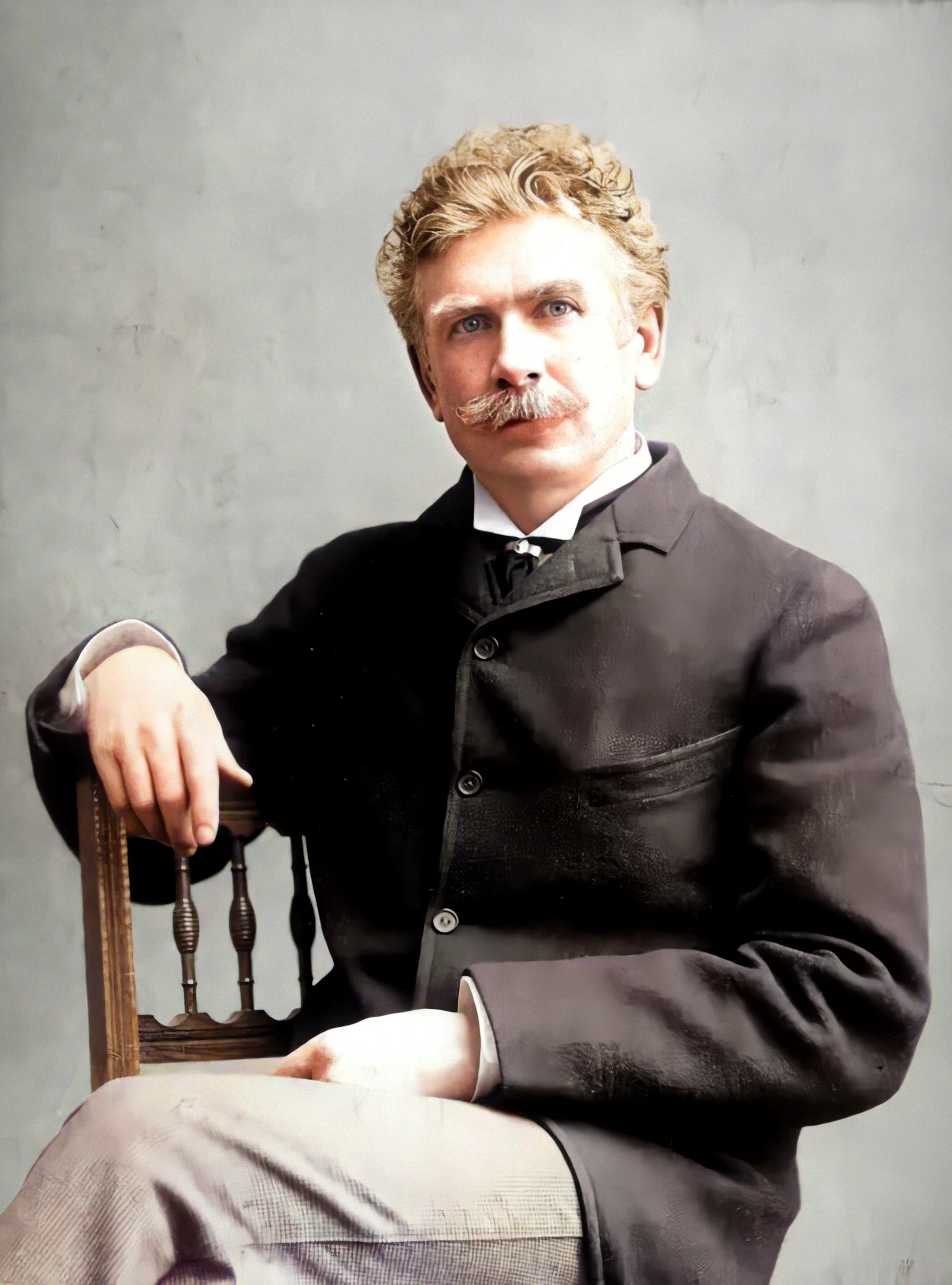
| 125 Quotes | |
| Born as | Ambrose Gwinnett Bierce |
| Occup. | Journalist |
| From | USA |
| Born | June 24, 1842 Meigs County, Ohio, United States |
| Died | December 26, 1914 Disappeared, Unknown |
| Aged | 72 years |
| Cite | |
Citation Formats
APA Style (7th ed.)
Ambrose bierce biography, facts and quotes. (2026, February 1). FixQuotes. https://fixquotes.com/authors/ambrose-bierce/
Chicago Style
"Ambrose Bierce biography, facts and quotes." FixQuotes. February 1, 2026. https://fixquotes.com/authors/ambrose-bierce/.
MLA Style (9th ed.)
"Ambrose Bierce biography, facts and quotes." FixQuotes, 1 Feb. 2026, https://fixquotes.com/authors/ambrose-bierce/. Accessed 27 Mar. 2026.
Early Life and Background
Ambrose Gwinnett Bierce was born on June 24, 1842, in Horse Cave Creek, Meigs County, Ohio, the tenth of thirteen children in a family that soon moved to Kosciusko County, Indiana. His parents, Marcus Aurelius Bierce and Laura Sherwood Bierce, gave their children classical names and a stern, bookish household; Bierce later credited the family library for his earliest education and blamed the surrounding rural pieties for his lifelong allergy to cant.Restless and quick to take offense, he left home as a teenager to work in printing and writing - trades that suited his sharp eye and sharper tongue. The national crisis of 1861 offered both escape and a cause, and he enlisted in the Union Army, entering adulthood in a country where idealism, industrial acceleration, and political corruption collided.
Education and Formative Influences
Bierce was largely self-taught, formed by voracious reading, newspaper work, and the brutal apprenticeship of the Civil War rather than formal schooling. Serving in the 9th Indiana Infantry, he fought at Shiloh (1862), Chickamauga (1863), and other engagements, rising to topographical engineer and staff roles; in 1864 he suffered a severe head wound at Kennesaw Mountain that left lasting neurological and psychological scars. The war gave him his lifelong subjects - fear, chance, leadership, and the distance between official rhetoric and what bodies endure - and it trained him to write with the authority of someone who had watched men die without meaning.Career, Major Works, and Turning Points
After the war he drifted to San Francisco, becoming a central, feared voice in Western journalism: columnist, editor, and critic at papers including the News Letter and the San Francisco Examiner. His satirical column "The Prattler" and his persona "Dod Grile" made him famous for surgical ridicule, while his political writing attacked corruption in the Gilded Age, notably the railroad interests and the "Big Four" of the Central Pacific. In parallel he wrote fiction that turned battlefield experience into modern horror: "An Occurrence at Owl Creek Bridge" (1890), "Chickamauga" (1889), and many stories later gathered in Tales of Soldiers and Civilians (1891) and Can Such Things Be? (1893). His aphoristic masterpiece, The Devil's Dictionary, appeared in pieces for decades (notably in The Cynic's Word Book, 1906; expanded later), distilling his worldview into definitions that read like verdicts. Late in life, after personal losses and deepening bitterness, he left the United States in 1913, traveled into revolutionary Mexico, and vanished after late 1913; he was legally declared dead in 1914, his end remaining one of American letters' most durable mysteries.Philosophy, Style, and Themes
Bierce wrote as if sentiment were a fraud the powerful used to launder violence. His style fused battlefield realism with a pitiless, almost mathematical irony: tight setups, abrupt reversals, and endings that convert certainty into dread. In his war tales, heroism is often a misreading of luck; command is fallible; and the mind, under stress, invents consoling narratives that collapse at the moment of impact. The same temper drove his journalism - he treated public language as evidence in a trial, cross-examining euphemism until it confessed.Psychologically, Bierce was a diagnostician of self-deception, including his own. “All are lunatics, but he who can analyze his delusions is called a philosopher”. That is not a joke about madness so much as a method: he distrusted moral certainty because he had seen how quickly certainty becomes permission. His suspicion of modern power concentrated on institutions that diffuse guilt: “Corporation: An ingenious device for obtaining profit without individual responsibility”. And his contempt for national innocence was forged in the 1860s, when patriotism and slaughter shared the same marching cadence: “War is God's way of teaching Americans geography”. Across satire and fiction, the recurring theme is accountability - the scarce kind that survives ideology, bureaucracy, and the stories people tell themselves to sleep.
Legacy and Influence
Bierce endures as a hinge figure between nineteenth-century realism and the psychological modernism that followed: his compressed plotting, unreliable perceptions, and moral bleakness anticipate writers from Stephen Crane to Ernest Hemingway, and his twist-ending mastery fed later horror and speculative fiction. As a journalist, he helped set a template for the American polemicist who treats politics as character and hypocrisy as news; as a stylist, he proved that a sentence can function like a blade. The unanswered riddle of his disappearance has sometimes eclipsed his work, but his lasting influence lies in the harder gift: a literature that refuses comfort when comfort would be a lie.Our collection contains 125 quotes written by Ambrose, under the main topics: Witty One-Liners - Truth - Wisdom - Dark Humor - Justice.
Other people related to Ambrose: Gelett Burgess (Author), William Randolph Hearst (Publisher)
Ambrose Bierce Famous Works
- 1906 The Devil's Dictionary (Book)
- 1893 Can Such Things Be? (Short Story Collection)
- 1891 Tales of Soldiers and Civilians (Short Story Collection)
- 1890 An Occurrence at Owl Creek Bridge (Short Story)
Source / external links