
Anais Nin Biography Quotes 39 Report mistakes
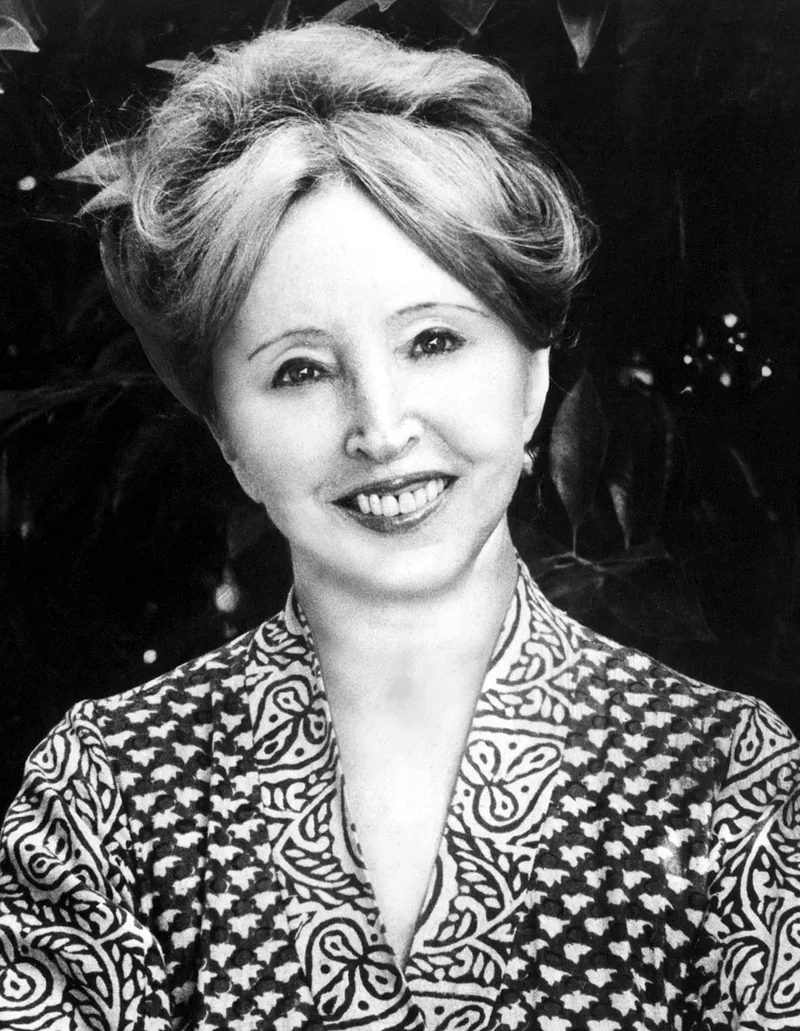
Attr: Britannica
| 39 Quotes | |
| Occup. | Author |
| From | USA |
| Born | February 21, 1903 Neuilly-sur-Seine, France |
| Died | January 14, 1977 Los Angeles, California, USA |
| Aged | 73 years |
| Cite | |
Citation Formats
APA Style (7th ed.)
Anais nin biography, facts and quotes. (2026, February 11). FixQuotes. https://fixquotes.com/authors/anais-nin/
Chicago Style
"Anais Nin biography, facts and quotes." FixQuotes. February 11, 2026. https://fixquotes.com/authors/anais-nin/.
MLA Style (9th ed.)
"Anais Nin biography, facts and quotes." FixQuotes, 11 Feb. 2026, https://fixquotes.com/authors/anais-nin/. Accessed 6 Mar. 2026.
Early Life and Background
Anais Nin was born Angela Anais Juana Antolina Rosa Edelmira Nin y Culmell on February 21, 1903, in Neuilly-sur-Seine, outside Paris, into a cosmopolitan, performing family marked by artistry and rupture. Her father, Joaquin Nin, was a Cuban-Spanish pianist and composer; her mother, Rosa Culmell, was a Cuban-French singer. When her father left the family, the abandonment became an early psychological axis for Nin - a wound she would revisit as scene, symbol, and motive, and a spark for the meticulous self-scrutiny that later defined her diaries.In 1914, as Europe slid into World War I, Nin traveled with her mother and brothers from France to New York City, arriving as an adolescent immigrant in a nation at the crest of modernity and anxiety. The dislocation sharpened her sense of identity as something constructed across languages and roles, and she began the diary that would become her life-long instrument - at first a letter-like attempt to reach her absent father, soon a private laboratory where memory, desire, and performance could be revised into meaning.
Education and Formative Influences
Nin was largely self-educated, shaped less by formal institutions than by voracious reading, music, and the inward discipline of daily writing; she also studied dance, cultivating a bodily intelligence that later informed her sensuous prose. In the 1920s she moved back to Paris, married banker Hugh Guiler (later an uncredited editor and supporter), and entered the expatriate world of studios, salons, and small presses where modernism, psychoanalysis, and sexual politics collided - influences that encouraged her to treat the self not as a fixed character but as a shifting, narratable psyche.Career, Major Works, and Turning Points
A key turning point came in the early 1930s when Nin met and championed Henry Miller, helping publish his work through the press she helped fund, and when she undertook psychoanalysis - first with Rene Allendy and later, controversially, with Otto Rank, whose focus on creativity and will resonated with her drive to convert experience into art. She wrote the early "House of Incest" (1936) and later the connected novellas "Cities of the Interior" (including "Ladders to Fire" and "Children of the Albatross"), but her widest readership arrived later, when selections from her long diary began to be published in the 1960s. In the same period she wrote erotica for a private collector - work later issued as "Delta of Venus" and "Little Birds" - and lived between New York and California, lecturing and gathering a new audience in the era of second-wave feminism and sexual candor. She died in Los Angeles on January 14, 1977, leaving behind multiple versions of her life story: the public books and the far larger, more complex archive of unexpurgated diaries.Philosophy, Style, and Themes
Nin's central project was the making of a self through language, not as confession alone but as deliberate composition. She treated perception as a moral and aesthetic act, insisting that inner life shapes the outer world we claim to describe: “We don't see things as they are, we see them as we are”. This is less a slogan than a method - her narrators observe how fear, longing, and vanity tint every scene, turning biography into a study of consciousness. Her fascination with psychoanalysis and dream logic allowed her to write desire as both personal fact and symbolic weather, where the diary becomes a stage on which the psyche auditions possible lives.Her style blends lyrical intensity with analytic self-interrogation, often circling the same event until it yields a deeper motive. She repeatedly dramatizes the cost of self-protection versus growth, casting transformation as a bodily risk rather than an abstract decision: “And the day came when the risk to remain tight in a bud was more painful than the risk it took to blossom”. That line captures her recurring plot - the passage from secrecy to articulation - and also her psychology, poised between control and surrender. Finally, she argued for writing as the articulation of what social speech cannot bear, a credo that explains her devotion to the diary and to taboo subjects: “The role of a writer is not to say what we all can say, but what we are unable to say”. In Nin, that inability is never merely sexual; it is the broader human difficulty of naming contradiction, dependency, and the hunger to be witnessed without being reduced.
Legacy and Influence
Nin's enduring influence lies in how she legitimized interiority as serious literature and made the diary a modern art form rather than a private ledger. Her published journals helped expand what could be said about female desire, creative ambition, and emotional multiplicity, offering later writers a model of selfhood as layered narrative rather than stable identity. At the same time, the posthumous availability of more complete diaries complicated her myth, revealing the extent of revision, omission, and persona-building - complexities that now form part of her legacy, not as scandal, but as evidence of her lifelong thesis: that a life, like a book, is authored under pressure, and the self is always both the material and the maker.Our collection contains 39 quotes written by Anais, under the main topics: Motivational - Wisdom - Truth - Art - Friendship.
Anais Nin Famous Works
- 1979 Little Birds (Collection)
- 1977 Delta of Venus (Collection)
- 1971 The Diary of Anaïs Nin, 1939–1944 (Autobiography)
- 1967 The Diary of Anaïs Nin, 1934–1939 (Autobiography)
- 1966 The Diary of Anaïs Nin, 1931–1934 (Autobiography)
- 1961 Seduction of the Minotaur (Novel)
- 1954 A Spy in the House of Love (Novel)
- 1944 Under a Glass Bell (Collection)
- 1939 The Winter of Artifice (Collection)
- 1936 The House of Incest (Novella)