
Anatoli Boukreev Biography Quotes 17 Report mistakes
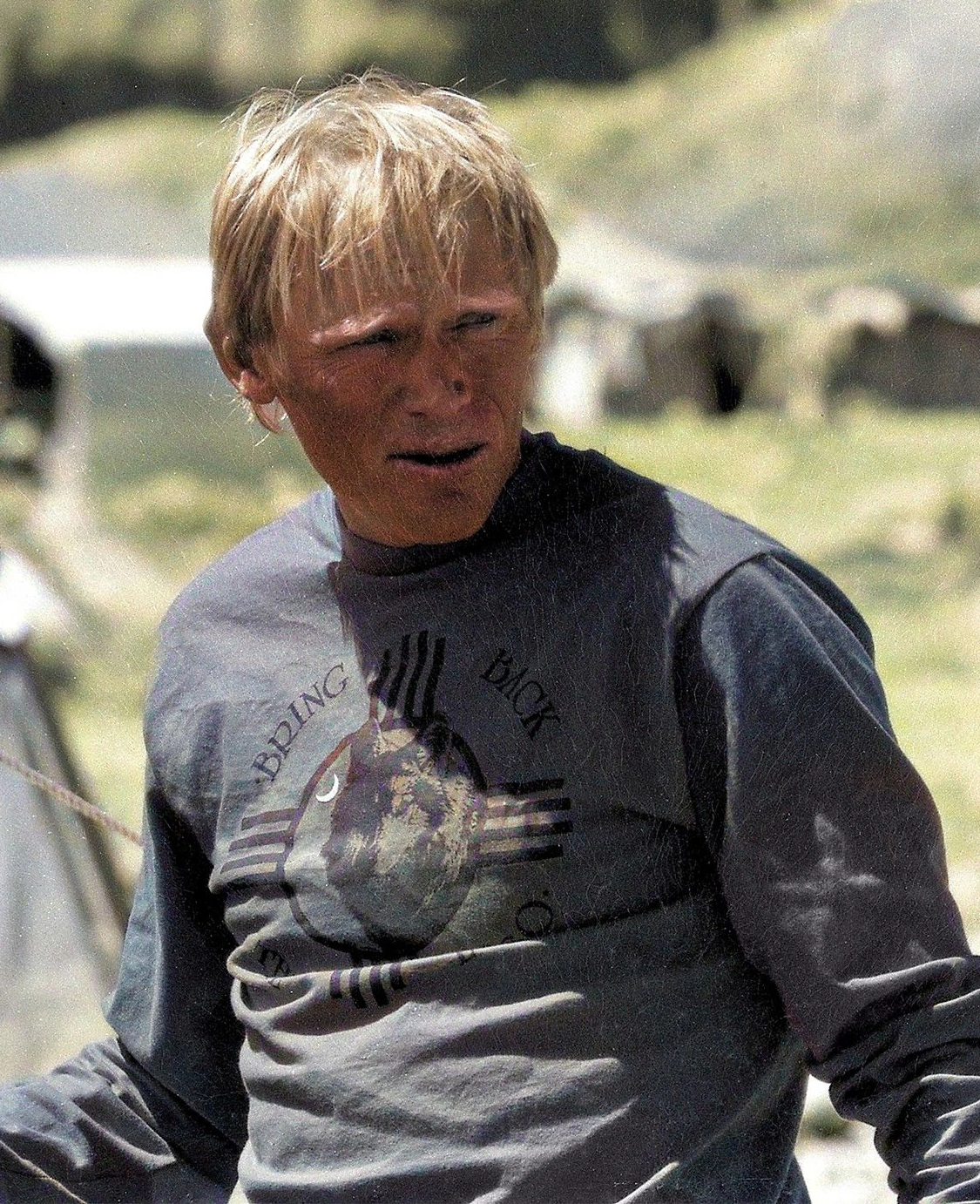
| 17 Quotes | |
| Born as | Anatoli Nikolaevich Boukreev |
| Occup. | Athlete |
| From | Russia |
| Born | January 16, 1958 Korkino, Russian SFSR, USSR |
| Died | December 25, 1997 Annapurna I, Nepal |
| Cause | Avalanche |
| Aged | 39 years |
| Cite | |
Citation Formats
APA Style (7th ed.)
Anatoli boukreev biography, facts and quotes. (2026, February 11). FixQuotes. https://fixquotes.com/authors/anatoli-boukreev/
Chicago Style
"Anatoli Boukreev biography, facts and quotes." FixQuotes. February 11, 2026. https://fixquotes.com/authors/anatoli-boukreev/.
MLA Style (9th ed.)
"Anatoli Boukreev biography, facts and quotes." FixQuotes, 11 Feb. 2026, https://fixquotes.com/authors/anatoli-boukreev/. Accessed 26 Mar. 2026.
Early Life and Background
Anatoli Nikolaevich Boukreev was born on January 16, 1958, in Korikino in Russia's Ural region, in the late-Soviet world where sport and endurance were both personal aspiration and state project. He came of age amid the hard physical culture of provincial mining towns and the disciplined ethos of Soviet athletics, an environment that rewarded stamina, precision, and the ability to suffer quietly - traits that would later define both his strengths and the controversies attached to his name.Long before he became associated with Everest, Boukreev learned to read weather, terrain, and fatigue the way others read words. Friends and later teammates described him as restrained, intensely self-reliant, and emotionally private - the kind of man who could spend days in harsh conditions without dramatizing them. That inwardness was not a lack of feeling so much as a trained containment: he trusted competence over talk, and he tended to measure people by how they moved under load.
Education and Formative Influences
Boukreev studied at the Chelyabinsk State Institute of Physical Culture, training as a coach while deepening his commitment to mountaineering and ski touring. In the Soviet system, such institutes blended pedagogy with elite sport, and he absorbed its emphasis on method: acclimatization schedules, pacing, nutrition, and the psychology of effort. He also entered the Kazakh mountaineering scene around Alma-Ata, where technical climbing and high-altitude objectives were pursued with seriousness rather than spectacle; by the 1980s and early 1990s he was a strong high-altitude alpinist with major Pamir and Tian Shan experience and a growing reputation for moving fast at extreme elevation.Career, Major Works, and Turning Points
After the Soviet Union collapsed, Boukreev navigated the new marketplace of expedition guiding, working as a high-altitude guide on major 8000-meter peaks and becoming widely known through the 1996 Everest season. On May 10, 1996, amid overcrowding, delayed summit schedules, and a storm, multiple climbers died in what became the era-defining Everest disaster. Boukreev, guiding with Scott Fischer's Mountain Madness, reached the summit without supplemental oxygen and descended ahead of clients, later making repeated night rescues from the South Col area and helping save several lives. The aftermath turned him into a contested public figure: praised by survivors and some peers for extraordinary rescue work, criticized in accounts such as Jon Krakauer's Into Thin Air for decisions about oxygen and descent timing, and defended vigorously in Boukreev's own book, The Climb (1997), co-written with G. Weston DeWalt, which framed his actions as calculated preparation for assistance rather than abandonment.Philosophy, Style, and Themes
Boukreev's inner life, as it emerges in interviews and his writing, is anchored in a craftsman's identity: competence, economy, and respect for the mountain as an impersonal force. He did not romanticize guiding as hospitality; he understood it as performance under risk, a domain where the body is both tool and limit. “Climbing is what I do”. The simplicity of that statement reads less like bravado than a self-definition forged in places where explanations are a luxury and outcomes are immediate.He also recognized - with unusual clarity for the mid-1990s - that commercial Everest was changing the moral weather of high altitude. “I am not sure the others are as committed as Rob Hall and Scott Fischer. I think there is more business now, and I know it will be impossible to stop this Everest business”. In that assessment, Boukreev sounds both prescient and uneasy: he valued disciplined teams and coherent leadership, yet he saw how money could fragment responsibility. His contested decision to descend during the storm was framed in his own logic of preparedness and triage rather than optics: “Concerned that others were not coming onto the summit and because I had no radio link to those below me, I began to wonder if there were difficulties down the mountain. I made the decision to descend”. Psychologically, this reveals a man who trusted situational inference over group consensus, and who acted early to preserve agency - a trait that can look like coldness until it is understood as a strategy for later intervention.
Legacy and Influence
Boukreev died on December 25, 1997, in an avalanche on Annapurna in Nepal while climbing with Simone Moro and Dmitry Sobolev, a death that sealed his image as a man who lived in the thin margins he studied. His legacy is double-edged but enduring: a benchmark for high-altitude strength without oxygen, a case study in the ethics of guiding, and a symbol of the 1990s turning point when Everest became both global narrative and global business. The debate around him - sharpened by competing eyewitness accounts - helped push the climbing world toward clearer role definitions, communication standards, and more explicit client education about risk, while The Climb remains a crucial counter-text in understanding how competence, silence, and decisive action can be misread when tragedy demands villains as well as causes.Our collection contains 17 quotes written by Anatoli, under the main topics: Book - Servant Leadership - Business - Coaching - Mountain.
Source / external links