
Anderson Cooper Biography Quotes 13 Report mistakes
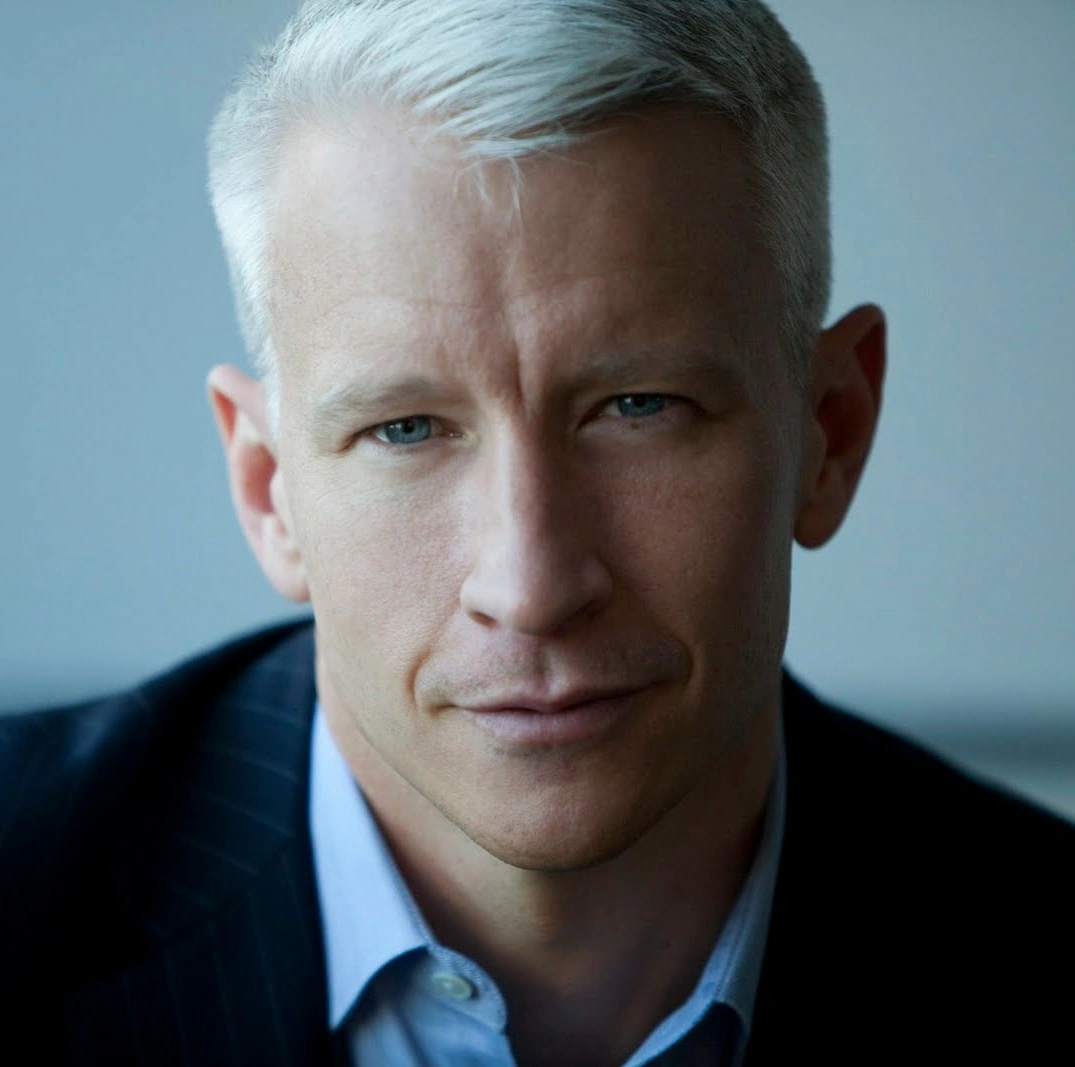
| 13 Quotes | |
| Born as | Anderson Hays Cooper |
| Occup. | Journalist |
| From | USA |
| Born | June 3, 1967 New York City, New York, United States |
| Age | 58 years |
| Cite | |
Citation Formats
APA Style (7th ed.)
Anderson cooper biography, facts and quotes. (2026, February 11). FixQuotes. https://fixquotes.com/authors/anderson-cooper/
Chicago Style
"Anderson Cooper biography, facts and quotes." FixQuotes. February 11, 2026. https://fixquotes.com/authors/anderson-cooper/.
MLA Style (9th ed.)
"Anderson Cooper biography, facts and quotes." FixQuotes, 11 Feb. 2026, https://fixquotes.com/authors/anderson-cooper/. Accessed 29 Mar. 2026.
Early Life and Background
Anderson Hays Cooper was born on June 3, 1967, in New York City, into a family where public visibility and private grief were inseparable. His mother, Gloria Vanderbilt, was a designer and heiress whose childhood became a national courtroom spectacle in the 1930s; his father, Wyatt Emory Cooper, was a writer and screenwriter who prized craft over social display. Cooper grew up amid Manhattan privilege, but also under the long shadow of being watched - an early apprenticeship in the difference between how life feels and how it photographs.The defining fractures came early. His father died in 1978 after heart surgery, leaving Cooper an adolescent with a sharpened sense of contingency. Even more searing was the 1988 suicide of his older brother, Carter Vanderbilt Cooper, a loss that Cooper has described as a permanent rearrangement of the world. In that aftermath, he learned to treat tragedy not as an abstraction but as a daily fact - and later, as a subject requiring restraint, accuracy, and human care.
Education and Formative Influences
Cooper attended the Dalton School in New York and graduated from Yale University in 1989 with a BA in political science. Yale gave him the language of institutions and power, but his real formation came from insisting on proximity to events: he traveled after college through parts of Africa and Asia, teaching himself how to move, listen, and file under pressure. That early habit of self-deployment - finding the story rather than waiting to be assigned it - foreshadowed the style that would later define his reporting: present-tense, on-scene, and emotionally literate without being sentimental.Career, Major Works, and Turning Points
Cooper entered journalism by force of will more than credentials, famously creating a makeshift press pass to report from conflict zones, then landing work with Channel One News in the early 1990s and later ABC News. His appetite for frontline reporting hardened into a signature during assignments in places like Rwanda and the Balkans, where humanitarian catastrophe demanded more than scripted distance. In 2001 he joined CNN, and after anchoring roles at CNN and brief stints at other formats, he became the face of "Anderson Cooper 360 Degrees" (2003-), building a nightly identity around verification, field presence, and interviews that rewarded candor over performance. Hurricane Katrina in 2005 was a major inflection point: his on-air confrontation with official minimization became emblematic of a post-9/11, post-Iraq-era media turning back toward accountability. Alongside television, he expanded his public voice through books including "Dispatches from the Edge" (2006), and later through widely consumed long-form conversation via "Anderson Cooper's Full Circle" and the podcast "All There Is" (2022-), which approached grief as a civic and personal subject rather than a private embarrassment.Philosophy, Style, and Themes
Cooper's work is built on a paradox he understands intimately: television confers authority while threatening the reporter's moral balance. He has warned, “The world reacts very strangely to people they see on TV, and I can begin to understand how anchor monsters are made. If you're not careful, you can become used to being treated as though you're special and begin to expect it. For a reporter, that's the kiss of death”. That sentence reads like self-surveillance - a disciplined refusal to confuse fame with insight. In practice, it shows up as a style that tries to earn trust through situational humility: he foregrounds what he saw, what he verified, and what remains uncertain, resisting the omniscient tone that cable news often rewards.His best broadcasts make space for fear, doubt, and ordinary bodily reality, not as theatrics but as a truth-telling technique. “Anyone who says they're not afraid at the time of a hurricane is either a fool or a liar, or a little bit of both”. That admission signals the psychological core of his approach: credibility is not the absence of feeling, but the honest management of it. Cooper also treats modern media as a system that must be audited in public, insisting, “I think it's a good thing that there are bloggers out there watching very closely and holding people accountable. Everyone in the news should be able to hold up to that kind of scrutiny. I'm for as much transparency in the newsgathering process as possible”. It is both a professional ethic and a defense against his own industrys temptations - the belief that transparency and accountability are the only antidotes to the seductions of screen-based power.
Legacy and Influence
Cooper helped redefine the modern American anchor as a hybrid of correspondent and interviewer - a figure expected to report from the scene, challenge officials, and still carry the audience through crisis without collapsing into spectacle. His influence is visible in the mainstreaming of field-forward prime-time coverage, in the renewed acceptability of direct moral clarity during disasters, and in a generation of journalists more willing to acknowledge uncertainty while tightening verification. Just as enduring is his cultural example: a public life shaped by inherited celebrity yet wary of its distortions, and a body of work that treats grief, accountability, and the ethics of attention as central subjects rather than side notes to the news cycle.Our collection contains 13 quotes written by Anderson, under the main topics: Witty One-Liners - Art - Sarcastic - Mortality - Honesty & Integrity.
Other people related to Anderson: Daryn Kagan (Entertainer)
Anderson Cooper Famous Works
- 2016 The Rainbow Comes and Goes (Book)
- 2006 Dispatches from the Edge (Book)
Source / external links