
Andre Gide Biography Quotes 41 Report mistakes
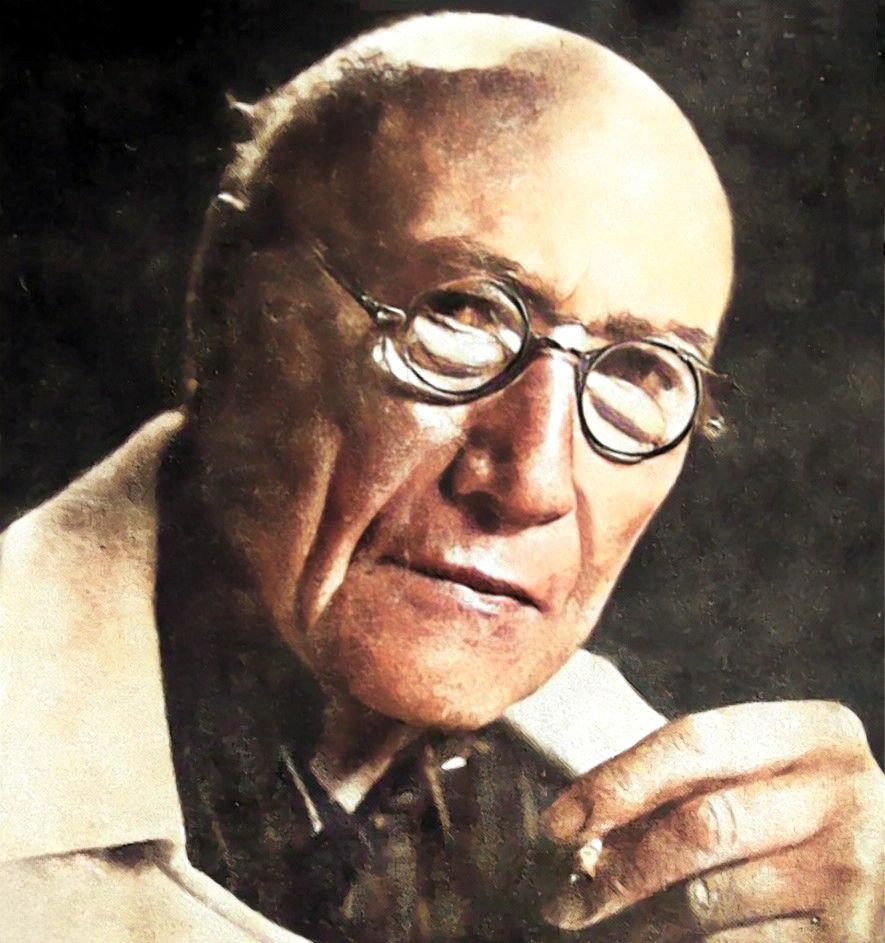
Attr: Claudio Elias
| 41 Quotes | |
| Born as | André Paul Guillaume Gide |
| Native name | André Gide |
| Occup. | Novelist |
| From | France |
| Born | November 22, 1869 Paris, France |
| Died | February 19, 1951 Paris, France |
| Aged | 81 years |
| Cite | |
Citation Formats
APA Style (7th ed.)
Andre gide biography, facts and quotes. (2026, February 11). FixQuotes. https://fixquotes.com/authors/andre-gide/
Chicago Style
"Andre Gide biography, facts and quotes." FixQuotes. February 11, 2026. https://fixquotes.com/authors/andre-gide/.
MLA Style (9th ed.)
"Andre Gide biography, facts and quotes." FixQuotes, 11 Feb. 2026, https://fixquotes.com/authors/andre-gide/. Accessed 26 Mar. 2026.
Early Life and Background
Andre Paul Guillaume Gide was born in Paris on November 22, 1869, into a bourgeois Protestant milieu that prized self-control, duty, and the authority of conscience. His father, Paul Gide, taught law; his mother, Juliette Rondeaux, came from a strict Norman family whose moral exactitude would become both refuge and cage. France in Gide's childhood was the young Third Republic, shaken by defeats, anticlerical politics, and the long argument over what modern "virtue" should look like in private life.When his father died in 1880, Gide was effectively raised under his mother's vigilant piety, and the household's seriousness deepened his introversion. Illness and nervous fragility - whether constitutional or the somatized pressure of repression - repeatedly interrupted schooling and drove him toward solitary reading, journals, and self-scrutiny. That inward habit, intensified by early awareness of desire that could not be spoken, made him at once a moralist and a rebel: he would spend his career testing how far truth could be told without destroying the self that tells it.
Education and Formative Influences
Gide studied intermittently in Paris, including at the Ecole Alsacienne, but his real education formed in the literary salons and reviews of the 1890s, where Symbolism and Decadence offered a vocabulary for inner life. He fell under the spell of Mallarme's circle and befriended writers who were remaking French prose, including Paul Valery. A decisive personal influence was his cousin Madeleine Rondeaux, whom he idealized as moral compass and unattainable sanctuary; the later strain between that ideal and his erotic truth would power his most searching work. Travel to North Africa in the 1890s, and relationships that confirmed his homosexuality, loosened the inherited Protestant discipline while sharpening his demand for sincerity.Career, Major Works, and Turning Points
Gide began with the lyrical subjectivity of The Notebooks of Andre Walter (1891) and the parable-like The Immoralist (1902), then moved toward rigorous experiment and social argument: Strait Is the Gate (1909) anatomized ascetic virtue, while The Counterfeiters (1925) and its accompanying journal turned the novel into a self-questioning machine about authenticity, education, and imitation. He helped found the Nouvelle Revue Francaise, a central institution of modern French letters, and became a public intellectual whose diaries and essays blurred private confession with civic stance. A major turning point came with his political journey leftward and his subsequent disillusionment: after visits to the Soviet Union, he published Return from the U.S.S.R. (1936) and Retouches (1937), condemning ideological coercion and the falsification of reality. His moral courage, combined with formal innovation and lifelong self-interrogation, culminated in the Nobel Prize in Literature in 1947; he died in Paris on February 19, 1951.Philosophy, Style, and Themes
Gide's inner life was a prolonged trial between inherited law and lived desire. He distrusted any ethic that demanded a performed purity, yet he also distrusted mere appetite; his books stage a drama in which sincerity must be earned, not proclaimed. Travel, risk, and rupture recur as the only credible route to self-knowledge, because the self is not a fixed object but a becoming. His recurring counsel that “One does not discover new lands without consenting to lose sight of the shore for a very long time”. is less a travel slogan than a psychological program: abandon the reassuring narrative, endure disorientation, and accept that conscience may change shape when exposed to experience.Formally, Gide wrote in clear, classical French, but he used that clarity to intensify ambiguity: parable, diary, and polyphonic novel become instruments for examining motive. He returned obsessively to the theme of possession - of people, ideals, and even happiness - and to the idea that freedom requires relinquishment, not conquest. “Complete possession is proved only by giving. All you are unable to give possesses you”. reads, in this context, as an autobiographical diagnosis of his own binds: the more he tried to hold Madeleine as moral talisman, or doctrine as certainty, the more those holdings owned him. His sense of modernity was equally unsentimental: language is never finished, and moral debate is never settled, hence his dry insistence that “Everything has been said before, but since nobody listens we have to keep going back and beginning all over again”. - a credo for the essayist who repeats not from vanity but from ethical necessity.
Legacy and Influence
Gide helped define the modern writer as a figure who experiments formally, confesses strategically, and intervenes publicly without surrendering to party discipline. His diaries, novels, and essays influenced French modernism and later debates about sexuality, authenticity, and the artist's responsibility, making him a touchstone for writers navigating between private truth and public norms. If his life sometimes appears as a sequence of contradictions - Protestant and libertine, classicist and iconoclast, fellow traveler and critic of totalitarian myth - the coherence lies in his method: he treated the self as a problem worth investigating in public, and he insisted that moral seriousness begins where self-justification ends.Our collection contains 41 quotes written by Andre, under the main topics: Witty One-Liners - Ethics & Morality - Truth - Wisdom - Art.
Other people related to Andre: Alfred A. Knopf (Publisher), Leon Blum (Politician), Georges Simenon (Writer), Julien Green (Novelist)
Andre Gide Famous Works
- 1926 If It Die (Autobiography)
- 1925 The Counterfeiters (Novel)
- 1914 Les Caves du Vatican (Novel)
- 1909 La Porte étroite (Novel)
- 1902 The Immoralist (Novel)
Source / external links