
Andre Malraux Biography Quotes 19 Report mistakes
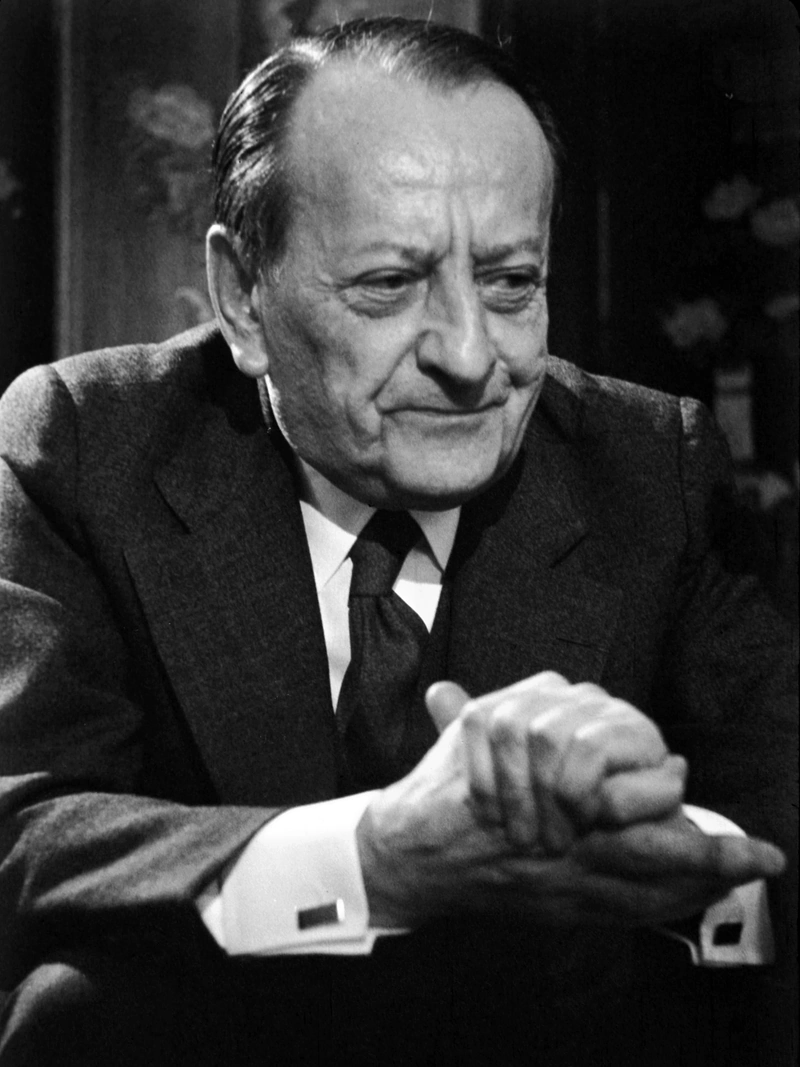
Attr: Roger Pic, Public domain
| 19 Quotes | |
| Occup. | Author |
| From | France |
| Born | November 3, 1901 Paris, France |
| Died | November 23, 1976 Creteil, France |
| Aged | 75 years |
| Cite | |
Citation Formats
APA Style (7th ed.)
Andre malraux biography, facts and quotes. (2026, February 11). FixQuotes. https://fixquotes.com/authors/andre-malraux/
Chicago Style
"Andre Malraux biography, facts and quotes." FixQuotes. February 11, 2026. https://fixquotes.com/authors/andre-malraux/.
MLA Style (9th ed.)
"Andre Malraux biography, facts and quotes." FixQuotes, 11 Feb. 2026, https://fixquotes.com/authors/andre-malraux/. Accessed 26 Mar. 2026.
Early Life and Background
Andre Malraux was born on November 3, 1901, in Paris, into the anxious, rapidly modernizing France that had been shaped by the Dreyfus Affair and was drifting toward the catastrophe of 1914. His father, Fernand Malraux, was absent and unreliable; his mother, Berthe Lamy, and his grandparents helped raise him in a household marked by financial fragility and emotional improvisation. The early fracture of the family is a key to his later fixation on what men invent to stand against fate - comradeship, art, political action - and to his lifelong suspicion that identity is never simply declared, but performed and protected.Chronic illness in childhood and a bookish temperament pushed him inward, yet he was never a cloistered intellectual. Paris offered him museums, cheap bookstalls, avant-garde journals, and a postwar generation hungry for meaning after the trenches. From the start he cultivated a persona of intensity and risk, as if life required a chosen ordeal to become real. That appetite for self-invention would later harden into a public legend: the writer who repeatedly tried to convert aesthetic insight into deeds amid revolution, war, and state power.
Education and Formative Influences
Malraux did not follow a conventional academic path; he was largely self-taught, apprenticed to the literary and artistic milieus of Paris rather than to a university. He worked with books and publishers, steeped himself in modern art, and absorbed the era's arguments about civilization and collapse, from Nietzschean heroics to the new anthropology of myth. His early fascination with Asia and archaeology mixed genuine curiosity with the period's exoticizing gaze, and it propelled him toward travel as a way to test ideas against danger - a pattern that would define both his fiction and his politics.Career, Major Works, and Turning Points
In 1923-1924 he traveled to French Indochina and was arrested in Cambodia for attempting to remove bas-reliefs from Banteay Srei, a scandal that exposed both colonial plunder and his own youthful audacity; after returning to France he redirected that energy into anti-colonial journalism and the novel. His breakthrough fictions - "The Conquerors" (1928), "The Royal Way" (1930), and especially "Man's Fate" (1933, Prix Goncourt) - fused revolutionary intrigue with metaphysical stakes, making Shanghai and the jungle into laboratories for the human will. The 1930s drew him into antifascist organizing and the Spanish Civil War, where he helped form an air squadron for the Republic and later shaped the experience into "Man's Hope" (1937). During World War II he joined the French Resistance (notably in the southwest) and emerged as a Gaullist hero; under Charles de Gaulle he became France's first Minister of Cultural Affairs (1959-1969), creating the maisons de la culture, expanding heritage policy, and staging grand acts of national memory, before finishing his late, hybrid works of art-philosophy and memoir such as "The Voices of Silence" and "Anti-Memoirs".Philosophy, Style, and Themes
Malraux wrote as if narrative were a pressure chamber: men cornered by history discover what in them cannot be negotiated. His characters do not seek comfort; they seek a stance. Revolution and war are not merely political backdrops but existential trials in which fraternity becomes an answer to mortality, however provisional. He distrusted sentimental self-portraiture and treated the inner life as something masked even from its owner, a psychology he captured with the cold clarity of, “Man is not what he thinks he is, he is what he hides”. The sentence is both diagnosis and method: Malraux's novels reveal the self indirectly, through risk, choice, and the moment one can no longer retreat into explanation.Art, for Malraux, was the other great rebellion against annihilation - a human capacity to wrest meaning from time without denying time's victory. His museum writing argued that artworks are not inert objects but living confrontations, each remade by the gaze that discovers it; his fascination with the artist's private universe aligns with his insistence that value is created under pressure, not inherited. Ethical horror also runs through him: he had seen how ideologies demand self-contempt as the price of obedience, and his moral line is drawn where dignity is systematically crushed - “The attempt to force human beings to despise themselves is what I call hell”. Yet he was no pacific optimist; he believed leadership and action require discipline and sacrifice, compressing a hard-won view of command into, “To command is to serve, nothing more and nothing less”. , a creed that rationalizes both his attraction to gaullist authority and his fear of power detached from responsibility.
Legacy and Influence
Malraux endures as a writer who tried to make the 20th century intelligible from the inside - not as a timeline of events but as a series of ordeals in which humans improvise meaning. His novels remain key documents of interwar revolutionary romanticism stripped of innocence, and his art theory helped popularize the idea of a "museum without walls", shaping how postwar France imagined culture as a public good. Politically, his life is inseparable from the contradictions of his era: anti-colonial outrage alongside early colonial transgression, antifascist militancy alongside later state grandeur. That tension, rather than diminishing him, explains his continuing fascination - a man who sought in art, comradeship, and national memory a defiant reply to mortality, and who made that search into a style of thought as much as a body of work.Our collection contains 19 quotes written by Andre, under the main topics: Motivational - Ethics & Morality - Truth - Wisdom - Art.
Other people related to Andre: Olivier Messiaen (Composer)
Andre Malraux Famous Works
- 1967 Antimémoires (Autobiography)
- 1957 La Métamorphose des dieux (Essay)
- 1951 Les Voix du silence (Essay)
- 1947 Le Musée imaginaire (Essay)
- 1939 Espoir: Sierra de Teruel (Screenplay)
- 1937 L'Espoir (Novel)
- 1933 La Condition humaine (Novel)
- 1930 La Voie royale (Novel)
- 1928 Les Conquérants (Novel)