
Andre Maurois Biography Quotes 31 Report mistakes
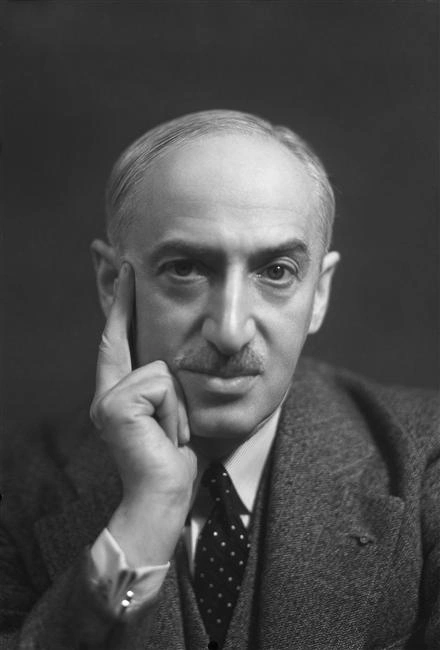
Attr: Studio Harcourt, 1936
| 31 Quotes | |
| Born as | Émile Salomon Wilhelm Herzog |
| Occup. | Writer |
| From | France |
| Born | July 26, 1885 Elbeuf, France |
| Died | October 9, 1967 Neuilly-sur-Seine, France |
| Aged | 82 years |
| Cite | |
Citation Formats
APA Style (7th ed.)
Andre maurois biography, facts and quotes. (2026, February 11). FixQuotes. https://fixquotes.com/authors/andre-maurois/
Chicago Style
"Andre Maurois biography, facts and quotes." FixQuotes. February 11, 2026. https://fixquotes.com/authors/andre-maurois/.
MLA Style (9th ed.)
"Andre Maurois biography, facts and quotes." FixQuotes, 11 Feb. 2026, https://fixquotes.com/authors/andre-maurois/. Accessed 12 Feb. 2026.
Early Life and Background
Andre Maurois was born Emile Salomon Wilhelm Herzog on July 26, 1885, in Elbeuf, Normandy, into a well-to-do Jewish family whose prosperity came from the textile trade. The mills and countinghouses of the Seine valley were his first classroom in modern capitalism, and the double awareness of belonging and otherness - French by culture, Jewish by inheritance - sharpened his lifelong interest in the way private identity is negotiated inside public systems.He grew up during the self-confident but anxious Third Republic, when the Dreyfus Affair still rumbled through French civic life and nationalism and cosmopolitanism argued in the same streets. That atmosphere trained him early to distrust absolute certainties and to prefer the temperament of the observer. Even before literature became his calling, he cultivated the stance that would define his biographies: sympathetic, lucid, and alert to the hidden springs of conduct.
Education and Formative Influences
Maurois studied philosophy at the Lycee Pierre-Corneille in Rouen and then at the Sorbonne in Paris, absorbing the French tradition of moral psychology and the essay as a tool of self-scrutiny. English literature also became a decisive influence, later deepened by repeated stays in Britain; he admired the English gift for understatement and character, and it helped him forge a voice that could discuss passion, ambition, and failure without theatricality. The tension between philosophical analysis and the practical world of industry - his family expected him to enter business - became a productive conflict rather than a rupture.Career, Major Works, and Turning Points
During World War I he served as a liaison officer with British troops, an experience that made him a mediator between cultures and gave him the material for his breakthrough, Les Silences du colonel Bramble (1918), a witty, humane portrait of British temper as seen by a Frenchman. He then established himself as one of the 20th centurys most widely read biographers and essayists, with Ariel (1923, on Shelley), and major lives of Disraeli, Byron, Voltaire, Balzac, and Proust, along with reflective fiction such as Climats (1928) and the later family chronicle Le Cercle de famille. Elected to the Academie francaise in 1938, he spent much of World War II in the United States, writing and broadcasting in support of Free France, before returning to postwar Paris to continue publishing across biography, criticism, and moral essays until his death on October 9, 1967.Philosophy, Style, and Themes
Maurois treated biography less as a monument than as an investigation into how a life gets made. His prose favors clarity, paced narrative, and the telling detail over theoretical display; yet beneath its ease lies a persistent question: how much of a persons fate is chosen, and how much is assembled by repetition, accident, and early imprinting. He wrote with the instincts of a novelist and the discipline of a philosopher, staging character as a sequence of decisions under pressure, and he returned obsessively to the way love, work, and memory edit the self.His psychology is clearest when he turns aphoristic, compressing a whole anthropology into a sentence. "If you create an act, you create a habit. If you create a habit, you create a character. If you create a character, you create a destiny". The line is not mere self-help; it echoes the moral logic behind his portraits of poets and statesmen, where small daily disciplines - or small daily evasions - thicken into public consequence. Just as importantly, he distrusted the narratives people tell about what they wanted: "If men could regard the events of their own lives with more open minds, they would frequently discover that they did not really desire the things they failed to obtain". That skepticism fuels Climats, with its anatomies of marital misunderstanding, and it animates his biographies, which often show genius not as a single blaze but as a lifetime of negotiated compromises. Finally, his recurring tenderness toward ordinary bonds surfaces in a credo that explains his attraction to family sagas as well as to the domestic letters of his subjects: "Without a family, man, alone in the world, trembles with the cold". Legacy and Influence
Maurois helped popularize modern literary biography in France by proving it could be both authoritative and readable, a bridge between scholarship and the general public without condescension. His best work influenced later biographers and essayists who aimed for psychological penetration without jargon, and his cross-Channel sensibility made him an early model of the European intellectual as translator of national temperaments. Though fashions shifted away from his urbane classicism, his books endure as an education in how to watch a life unfold: attentively, morally, and with a steady respect for the mingled dignity and self-deception that make human beings readable.
Our collection contains 31 quotes written by Andre, under the main topics: Witty One-Liners - Wisdom - Truth - Art - Love.
Other people related to Andre: Georges Duhamel (Novelist)
Andre Maurois Famous Works
- 1918 Les silences du colonel Bramble (Novel)
Source / external links
- Goodreads: The Art of Living (includes an “About the author” section for André Maurois)
- Penguin Random House: Andre Maurois (author page)
- IMDb: André Maurois (biography)
- Académie française: Discours de réception d’André Maurois (22 June 1939)
- Académie française: André Maurois (member page)
- Encyclopaedia Britannica: André Maurois
- Wikipedia (French): André Maurois
- Wikipedia (English): André Maurois