
Andy Hertzfeld Biography Quotes 22 Report mistakes
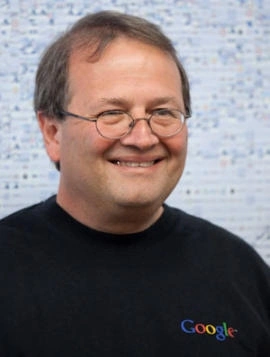
| 22 Quotes | |
| Occup. | Inventor |
| From | USA |
| Born | April 6, 1953 |
| Age | 72 years |
| Cite | |
Citation Formats
APA Style (7th ed.)
Andy hertzfeld biography, facts and quotes. (2026, March 4). FixQuotes. https://fixquotes.com/authors/andy-hertzfeld/
Chicago Style
"Andy Hertzfeld biography, facts and quotes." FixQuotes. March 4, 2026. https://fixquotes.com/authors/andy-hertzfeld/.
MLA Style (9th ed.)
"Andy Hertzfeld biography, facts and quotes." FixQuotes, 4 Mar. 2026, https://fixquotes.com/authors/andy-hertzfeld/. Accessed 27 Mar. 2026.
Early Life and Background
Andy Hertzfeld was born on April 6, 1953, in the United States, into the first generation to grow up with space-age optimism and the earliest consumer electronics. He came of age as integrated circuits migrated from labs into kits and hobby magazines, when a technically curious teenager could plausibly imagine building a machine that talked back. That cultural moment - post-Apollo confidence mixed with 1970s countercultural impatience - helped form his instinct that computers should feel personal, humane, and even playful, not merely efficient.
Before Silicon Valley became a global shorthand, the microcomputer world was a loose federation of tinkerers: swap meets, user groups, and small companies competing as much on cleverness as on capital. Hertzfeld fit that ecology well - part engineer, part storyteller - drawn to systems where constraints forced invention. The early personal-computing scene rewarded people who could make disparate pieces cohere: hardware tricks, software elegance, and the social skill to collaborate at punishing speed.
Education and Formative Influences
Hertzfeld studied computer science at Brown University, a campus with strong ties to the era's emerging ideas about human-centered computing. His undergraduate years overlapped with a broader shift in the field: from batch processing and institutional mainframes toward interactive systems, graphics, and the belief that interface design was a legitimate technical discipline. That mix of rigorous engineering and a growing respect for how humans actually use machines would later become his signature - the conviction that craftsmanship in software mattered at the level of the user's attention and emotion.
Career, Major Works, and Turning Points
He joined Apple Computer in the late 1970s and became a central member of the original Macintosh team, helping turn an audacious prototype into a shipped product in 1984. Hertzfeld wrote key portions of the early Macintosh system software - work that included fast, memory-tight code for the ROM and system components that made the machine feel responsive despite extreme hardware limits. In the Mac group's high-pressure culture he worked alongside figures like Steve Jobs, Bill Atkinson, Susan Kare, and others, contributing to a new standard for integrated hardware-software design. After the Macintosh launch he moved through subsequent ventures in and around consumer software and the web, and later became an important curator of Macintosh history through his online Folklore project, preserving first-person accounts of how the machine was built and why its internal culture mattered.
Philosophy, Style, and Themes
Hertzfeld's inner life as an inventor is clearest in his recurring focus on time, attention, and the social psychology of building. He described the Mac effort as an all-consuming wager made possible by youth and a certain monastic freedom: “Working long hours being single helps because your time is yours. Once you have a family your time isn't all yours anymore. Most of the Mac team, we were in our mid-20s, most of us were single, and we were able to essentially devote our lives to it”. The statement is not romantic nostalgia so much as a candid accounting of the human cost behind technological leaps - a recognition that epochal products often arise from temporary life arrangements, and that the mythology of lone genius is usually a story about teams that outworked their limits.
His technical style followed the same ethic: empathy where it mattered, ruthless efficiency where it did not. He argued that the deepest engineering decisions depend on understanding the user as a person, not as an abstract "operator": “People who work on the user interface side need to have empathy as a key characteristic. But if you are writing device drivers you don't really need to understand humans so well”. That division of labor, and the respect it implies for both craft and psychology, helps explain why the early Mac could feel friendly without being sloppy. Yet he also understood that culture, not just architecture, determined outcomes. Jobs functioned less as a conventional executive than as an amplifier of meaning inside the team: “Part of Steve's job was to drum into us how important what we were doing actually would be to the world”. In Hertzfeld's telling, belief became a tool - not mere hype, but a managerial technology that converted exhaustion into focus and made minute UI details feel like moral choices.
Legacy and Influence
Hertzfeld's enduring influence lies in how he helped define the modern idea of "inventor" in software: someone who fuses low-level mastery with an almost literary sensitivity to experience. The Macintosh became a template for personal computing as an integrated, design-led discipline, and his work inside it - paired with his later role as a chronicler - shaped how subsequent generations understand product teams, interface empathy, and the ethics of persuasion in technology. By preserving the Mac's origin stories in his Folklore project, he also ensured that the era would be remembered not as inevitable progress but as a contingent, human drama of constraints, convictions, and code.
Our collection contains 22 quotes written by Andy, under the main topics: Leadership - Overcoming Obstacles - Vision & Strategy - Quitting Job - Business.
Source / external links