
Andy Warhol Biography Quotes 38 Report mistakes
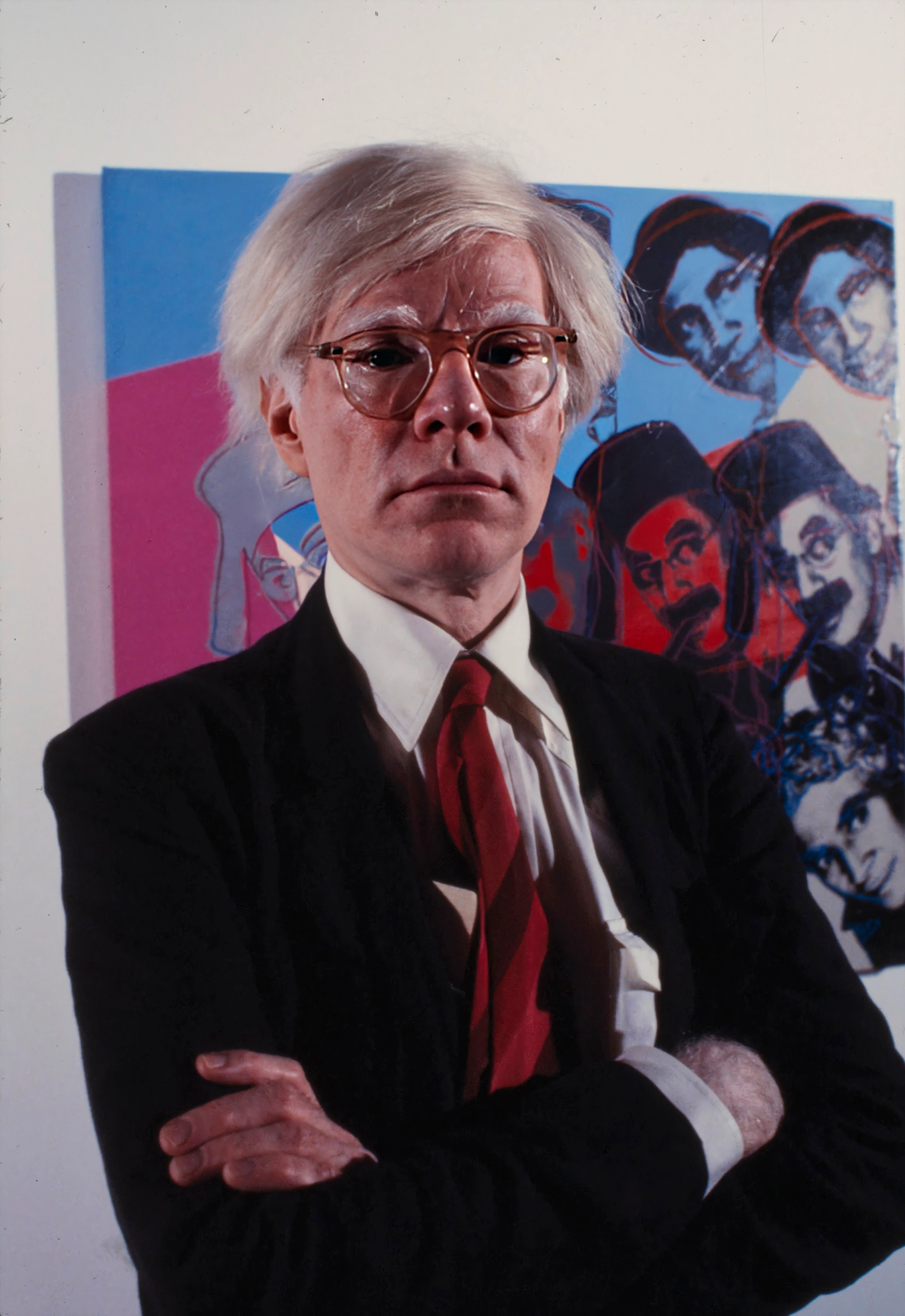
Attr: Bernard Gotfryd, No restrictions
| 38 Quotes | |
| Born as | Andrew Warhola Jr. |
| Occup. | Artist |
| From | USA |
| Born | August 6, 1927 Pittsburgh, Pennsylvania, USA |
| Died | February 22, 1987 New York City, New York, USA |
| Cause | Complications following gallbladder surgery |
| Aged | 59 years |
| Cite | |
Citation Formats
APA Style (7th ed.)
Andy warhol biography, facts and quotes. (2026, February 11). FixQuotes. https://fixquotes.com/authors/andy-warhol/
Chicago Style
"Andy Warhol biography, facts and quotes." FixQuotes. February 11, 2026. https://fixquotes.com/authors/andy-warhol/.
MLA Style (9th ed.)
"Andy Warhol biography, facts and quotes." FixQuotes, 11 Feb. 2026, https://fixquotes.com/authors/andy-warhol/. Accessed 31 Mar. 2026.
Early Life and Background
Andy Warhol was born Andrew Warhola Jr. on August 6, 1928, in Pittsburgh, Pennsylvania, to Carpatho-Rusyn immigrant parents from what is now Slovakia. Raised in a working-class, Byzantine Catholic household in the Oakland neighborhood, he grew up amid the hard rhythms of an industrial city where mass production, advertising, and celebrity already shaped public desire - raw material for the art he would later turn back on America.Childhood illness sharpened his inwardness. He endured bouts of chorea (often described as St. Vitus dance) and long periods confined at home, where he listened to radio, collected movie-star images, and learned to look at fame as something both intimate and unreachable. That early mix of physical fragility, devotional iconography, and glossy Hollywood fantasy formed a private theater of images - less about self-expression than about assembling a self from what the world projected.
Education and Formative Influences
Warhol studied pictorial design at the Carnegie Institute of Technology (now Carnegie Mellon University), graduating in 1949, and absorbed modern illustration, typography, and the commercial logic of reproducible images. He moved immediately to New York City, where the postwar boom was turning magazine illustration and advertising into dominant visual languages, and where the boundary between art and commerce was already under pressure from Abstract Expressionism on one side and Madison Avenue on the other.Career, Major Works, and Turning Points
In the 1950s Warhol became a sought-after commercial illustrator for magazines like Glamour and for shoe advertising, developing his distinctive blotted-line technique and a public persona of quiet, watchful detachment. By the early 1960s he pivoted decisively into fine art, bringing the look of the supermarket and the tabloid into galleries with Campbell's Soup Cans (1962), Coca-Cola bottles, and Marilyn Diptych (1962), using silkscreen to make repetition feel both mechanical and mournful. He founded the Factory in Manhattan as a studio and social engine, produced films such as Sleep (1963), Empire (1964), and Chelsea Girls (1966), managed and promoted the Velvet Underground, and made portraits for patrons that fused society painting with celebrity branding. A major rupture came on June 3, 1968, when Valerie Solanas shot him; he survived, but afterward worked with increased guardedness, delegating more production and tightening control of his image and business. In the 1970s and 1980s, he expanded commissioned portraiture, edited Interview magazine, and returned to painterly ambition with series like Oxidation (1978), Skulls (1976), and the late collaborations and abstractions that culminated in the stark religious gravitas of the Last Supper works (1986). He died on February 22, 1987, in New York after complications following gallbladder surgery.Philosophy, Style, and Themes
Warhol treated modern life as a conveyor belt of pictures - seductive, repeated, and faintly deadening - and he made that condition visible without moralizing it. His signature procedures (silkscreen, assistants, serial format, deliberate misregistration) were not just techniques but psychology: a way to hold feelings at arm's length by turning them into surfaces. His work insists that America thinks in loops: “Isn't life a series of images that change as they repeat themselves?” The question is not rhetorical; it is his method, a lens through which soup cans, car crashes, electric chairs, and movie stars become variations on the same problem - how repetition both protects us from shock and quietly multiplies it.He also recast authorship as entrepreneurship and celebrity as a medium, aligning the artist with the corporation and the gossip column. “Being good in business is the most fascinating kind of art. Making money is art and working is art and good business is the best art”. That stance was less cynicism than a candid admission that desire in the twentieth century is engineered - and that the artist who pretends otherwise is merely less honest about the system. His most prophetic line, “In the future everyone will be famous for 15 minutes”. , reads like a joke until it becomes a diagnosis: fame, stripped of permanence, becomes a disposable commodity, and identity itself starts to behave like a product you can manufacture, package, and sell.
Legacy and Influence
Warhol permanently altered the terms of modern art by making mass media, consumer goods, and publicity not just subjects but structural principles. Pop art existed before him, but his particular synthesis of mechanical reproduction, deadpan affect, and strategic self-mythology set the template for contemporary image culture - from appropriation art and postmodern design to music marketing, fashion, and social media self-branding. The Warhol who seemed to hide behind surfaces ultimately taught a harder lesson: in an era built from images, surfaces are not superficial - they are where power, longing, and memory live.Our collection contains 38 quotes written by Andy, under the main topics: Witty One-Liners - Truth - Art - Mortality - Nature.
Other people related to Andy: Fran Lebowitz (Journalist), Lou Reed (Musician), Beck (Musician), Jean-Michel Basquiat (Artist), Robert Mapplethorpe (Photographer), Jeff Koons (Artist), Martha Plimpton (Actress), Marcel Duchamp (Artist), Stephen Sprouse (Designer), Valerie Solanas (Writer)
Source / external links