
Angela Carter Biography Quotes 32 Report mistakes
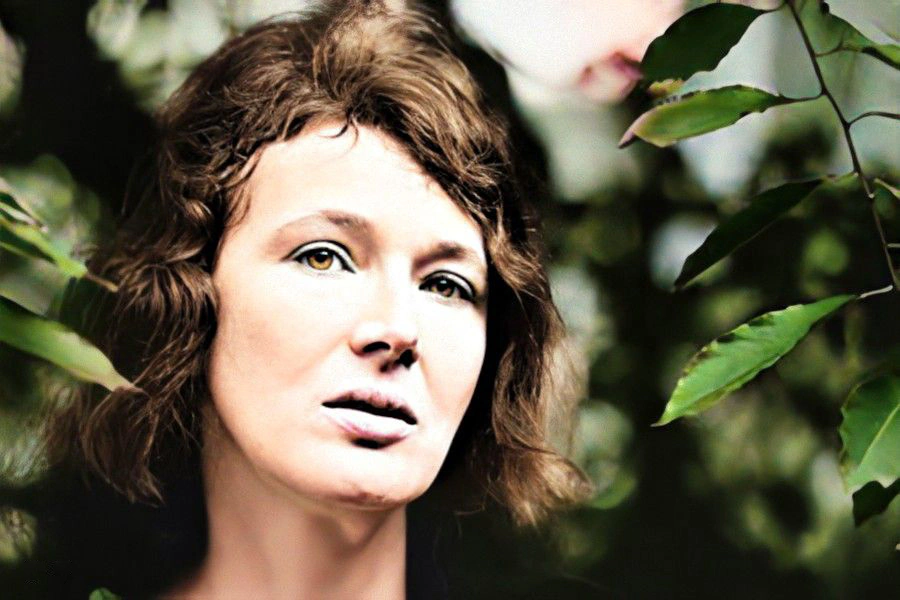
| 32 Quotes | |
| Occup. | Novelist |
| From | England |
| Born | May 7, 1940 Eastbourne, England |
| Died | February 16, 1992 London, England |
| Aged | 51 years |
| Cite | |
Citation Formats
APA Style (7th ed.)
Angela carter biography, facts and quotes. (2026, February 11). FixQuotes. https://fixquotes.com/authors/angela-carter/
Chicago Style
"Angela Carter biography, facts and quotes." FixQuotes. February 11, 2026. https://fixquotes.com/authors/angela-carter/.
MLA Style (9th ed.)
"Angela Carter biography, facts and quotes." FixQuotes, 11 Feb. 2026, https://fixquotes.com/authors/angela-carter/. Accessed 27 Mar. 2026.
Early Life and Background
Angela Olive Carter was born on May 7, 1940, in Eastbourne, Sussex, in a Britain still defined by wartime rationing, evacuees, and the tightening discipline of the home front. Her father, a journalist, and her mother, who had been a child in Edwardian South Africa, gave her an early sense of history as something lived in the body and retold in stories - often partial, often mythic. During the Blitz years she was sent away from London for safety, an experience that left her alert to the thin partitions between domestic routine and catastrophe, and to the way fear reorganizes imagination.After the war the family settled in south London, and Carter grew up amid the new austerity, the rise of mass entertainment, and the slow, class-coded reshaping of English life that would culminate in the 1960s. She learned early to read culture like a text: the allure of cinema, the authority of public voice, the performance of femininity, the lingering pageantry of empire. That double vision - enchantment and skepticism at once - became her temperament: she loved spectacle but mistrusted its claims, especially when it asked women to play the part of myth rather than authors of it.
Education and Formative Influences
Carter left school young, worked briefly as a journalist, and married Paul Carter in 1960; the marriage, and her early freelancing, placed her inside the ordinary compromises she would later anatomize with ferocious wit. She studied English at the University of Bristol (graduating in the mid-1960s), where she absorbed the canon while also reading against it - hearing in Gothic, fairy tale, and surrealism a counter-tradition to polite realism. The era mattered: the end of censorship, the widening of higher education, and the ferment of second-wave feminism sharpened her sense that literature was not a genteel inheritance but a contested technology for making selves.Career, Major Works, and Turning Points
Her debut novel, Shadow Dance (1966), announced a writer drawn to violence and theatricality; it was followed by The Magic Toyshop (1967), Several Perceptions (1968, which won the Somerset Maugham Award), and Love (1971), books that turned cramped English interiors into stages for power, desire, and rupture. A decisive turning point came in 1969 when she used her prize money to travel to Japan; living in Tokyo and elsewhere for about two years unfastened her from English assumptions about gender and erotic display, and fed the essays collected in Nothing Sacred (1982). She returned with a widened imaginative palette that helped produce her most influential fictions: The Infernal Desire Machines of Doctor Hoffman (1972), the historically baroque Nights at the Circus (1984), and Wise Children (1991), as well as her landmark fairy-tale revisions in The Bloody Chamber (1979). In the 1980s she also wrote criticism, radio work, and film-related essays (including The Sadeian Woman, 1979), and taught creative writing, becoming a public intellectual without surrendering her taste for the unruly. She died in London on February 16, 1992, aged 51.Philosophy, Style, and Themes
Carter treated literature as an instrument for demystification and re-enchantment at once, insisting that myths are not timeless - they are made, circulated, and therefore editable. Her prose is lush, comic, and intellectually armed, full of voluptuous surfaces that keep revealing their own mechanics: costume as ideology, romance as contract, the carnivalesque as critique. She was suspicious of comfortable retrospection, because nostalgia can smuggle old hierarchies back in under the guise of tenderness: “Nostalgia, the vice of the aged. We watch so many old movies our memories come in monochrome”. That line is less a joke than a self-warning from a writer who feared the seductions of softened memory and preferred the rude colors of the present tense.Her feminism was similarly unsentimental. She examined pornography, fairy tale, and show business not to endorse their cruelties but to expose how desire is trained - and how it might be retrained. Her critical imagination was steeped in the manufactured fantasies of mass culture: “Hollywood... was the place where the United States perpetrated itself as a universal dream and put the dream into mass production”. Yet she never reduced readers to dupes; she understood reading as an active, even rebellious act of re-making meaning: “Reading a book is like re-writing it for yourself. You bring to a novel, anything you read, all your experience of the world. You bring your history and you read it in your own terms”. Psychologically, this is Carter in miniature - allergic to innocence, devoted to consciousness, convinced that the self is built in dialogue with stories and therefore responsible for how it interprets them.
Legacy and Influence
Carter's enduring influence lies in how she expanded the English novel's permissions: she made it legitimate to be erudite and filthy, tender and ruthless, fantastical and politically exacting in the same paragraph. The Bloody Chamber reset the possibilities of fairy-tale retelling; Nights at the Circus became a touchstone for feminist fabulism; Wise Children offered a late-career summation of her love for illegitimacy, performance, and the democratic mess of popular art. Writers of contemporary Gothic, speculative fiction, and feminist realism continue to borrow her method - not her plots so much as her stance: that culture is a script, gender is a costume with teeth, and imagination is not escape but a way to see the world's power structures in brighter, more dangerous light.Our collection contains 32 quotes written by Angela, under the main topics: Witty One-Liners - Truth - Art - Love - Sarcastic.
Other people related to Angela: Danielle Dax (Musician)
Angela Carter Famous Works
- 1991 Wise Children (Novel)
- 1984 Nights at the Circus (Novel)
- 1979 The Bloody Chamber (Collection)
- 1977 The Passion of New Eve (Novel)
- 1972 The Infernal Desire Machines of Doctor Hoffman (Novel)
Source / external links