
Angelo Scola Biography Quotes 2 Report mistakes
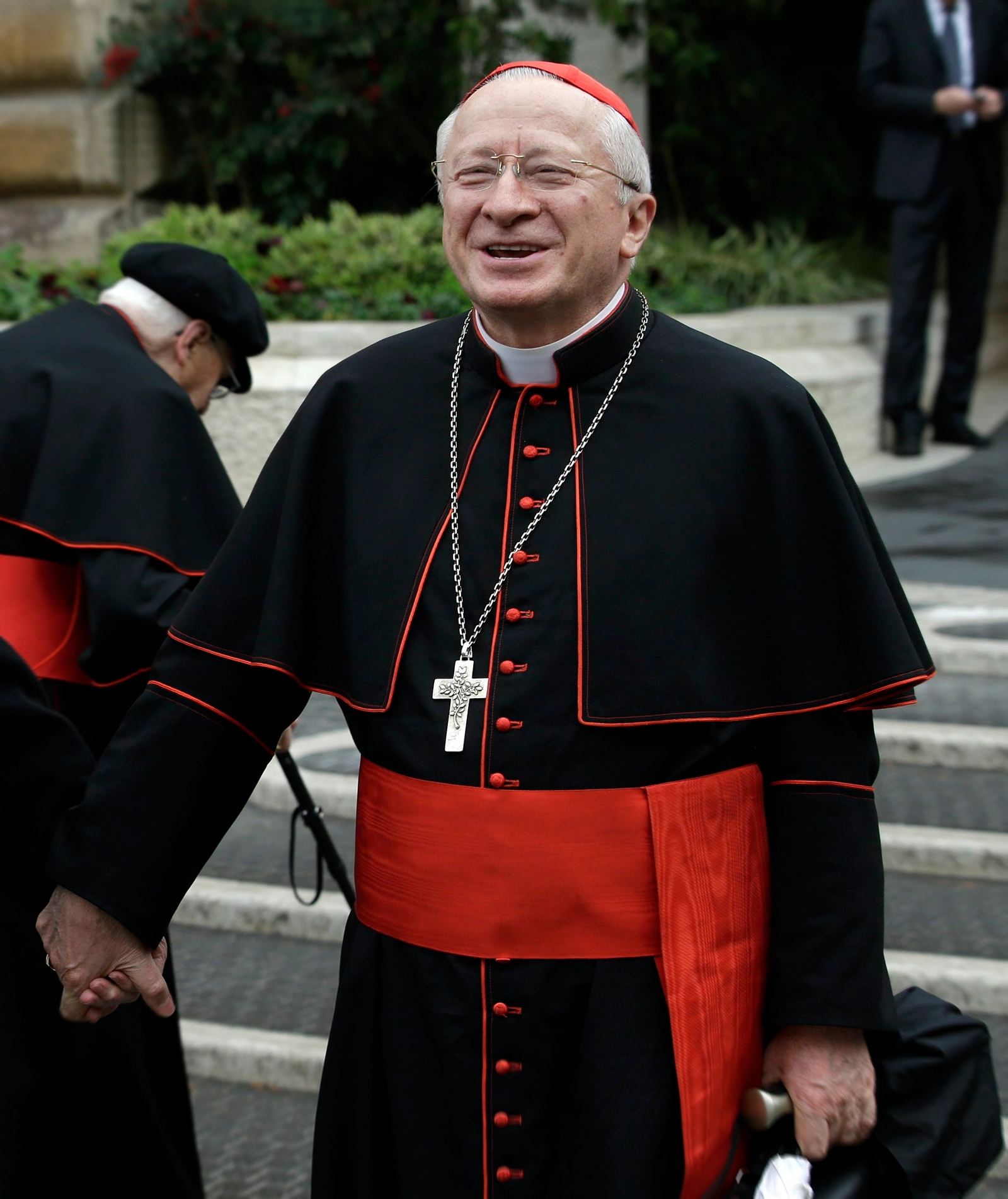
| 2 Quotes | |
| Occup. | Clergyman |
| From | Italy |
| Born | November 7, 1941 Malgrate, Lombardy, Italy |
| Age | 84 years |
| Cite | |
Citation Formats
APA Style (7th ed.)
Angelo scola biography, facts and quotes. (2026, February 11). FixQuotes. https://fixquotes.com/authors/angelo-scola/
Chicago Style
"Angelo Scola biography, facts and quotes." FixQuotes. February 11, 2026. https://fixquotes.com/authors/angelo-scola/.
MLA Style (9th ed.)
"Angelo Scola biography, facts and quotes." FixQuotes, 11 Feb. 2026, https://fixquotes.com/authors/angelo-scola/. Accessed 12 Feb. 2026.
Early Life and Background
Angelo Scola was born on November 7, 1941, in Malgrate, near Lecco, in Lombardy, during a wartime Italy where political collapse and moral reconstruction would mark his generation. Raised in a devout Catholic milieu shaped by parish life and the rhythms of northern Italian labor, he came of age as the country moved from Fascism's ruins into the contested modernity of the postwar republic.The Italian Church of his youth was both a social shelter and a public force, mediating between families, unions, and parties. That environment formed Scola's instinct to read faith not as private consolation but as a claim about society, institutions, and the human person. It also made him attentive to the fractures modern life could create between belief, civic allegiance, and cultural belonging - a tension that would remain a constant in his preaching and theological writing.
Education and Formative Influences
Scola pursued philosophical and theological studies in the decades when the Second Vatican Council (1962-1965) was redefining Catholic self-understanding and public engagement. He was ordained a priest in 1970 for the Archdiocese of Milan, and his intellectual formation was decisively shaped by the renewal currents around Communion and Liberation and its founder Luigi Giussani, as well as by the wider European ressourcement and personalist traditions. Advanced study and teaching drew him into the Roman theological world, where debates over freedom, authority, secularization, and the Church's cultural voice were not abstractions but live questions pressed by student movements, shifting family forms, and the reconfiguration of European politics.Career, Major Works, and Turning Points
A theologian-priest who became a bishop in the long shadow of Vatican II, Scola moved from academic leadership to governance: rector of the Pontifical Lateran University, then bishop, and in 2002 Patriarch of Venice, where the memory of John Paul II's Italy and the city's global symbolism sharpened his attention to the interface of faith, art, and public life. In 2003 he was created cardinal. In 2011 Benedict XVI appointed him Archbishop of Milan, placing him in one of Catholicism's most influential sees, where industrial modernity, immigration, and cultural pluralism converge. Across these roles he became known for a sustained focus on marriage and the family, bioethics, and the social consequences of secularization, and for a distinctive theological anthropology articulated in essays and pastoral interventions - notably the multi-volume "Nuova bioetica" project and writings on the "mystery of the human person" and the drama of freedom. His resignation in 2017, upon reaching the customary age limit, closed a high-profile Milanese chapter that had often been read through the lens of Vatican politics, though his deeper project remained intellectual and pastoral rather than factional.Philosophy, Style, and Themes
Scola's thought turns on a single wager: that the human person is not intelligible without relation - to God, to others, to the body, and to history. He writes in a dense Italian prose typical of postconciliar theology, but his pastoral style favors concrete realities - spouses, workers, migrants, students - as test cases for doctrine. The family, for him, is not merely a moral issue but a privileged social form where freedom learns commitment and where the person is educated into the common good. This is why he treats bioethical disputes not as technical policy questions but as signals of a deeper contest over what a person is and who may name that truth.Psychologically, Scola often speaks from within the ache of modern Catholic ambivalence: the Church is called to witness, yet it must also learn how to be heard. "It's very difficult to determine whether this is the fault of the world that has abandoned the Church, or the Church that does not know how to relate to the world". The sentence captures his refusal of easy blame and his instinct for self-examination - a habit learned in an era when Catholic authority could no longer assume cultural deference. At the same time, his public theology insists that politics is not morally self-grounding: "We show deference to the civil authorities when they respect the divine origin of their power and when they serve the people with objective reference to the law of God". That conditional deference reveals his core tension: he wants a Church neither absorbed by the modern state nor reduced to private spirituality, but capable of forming consciences that can resist both coercion and relativism.
Legacy and Influence
Scola stands as a major Italian churchman of the postconciliar period: a bridge between academic theology and episcopal governance, and a prominent interpreter of Catholic engagement with late-modern Europe. In Venice and especially Milan, he modeled an archbishopric that treated culture, family life, and civic institutions as arenas of evangelization rather than mere contexts for charity. His influence persists in debates on anthropology and bioethics, in the intellectual DNA of Communion and Liberation, and in a style of Catholic public reasoning that tries to speak to plural societies without surrendering the claim that truth about the person is knowable, contestable, and finally inseparable from worship.Our collection contains 2 quotes written by Angelo, under the main topics: Faith - God.
Other people related to Angelo: Dionigi Tettamanzi (Clergyman)
Source / external links