
Anish Kapoor Biography Quotes 37 Report mistakes
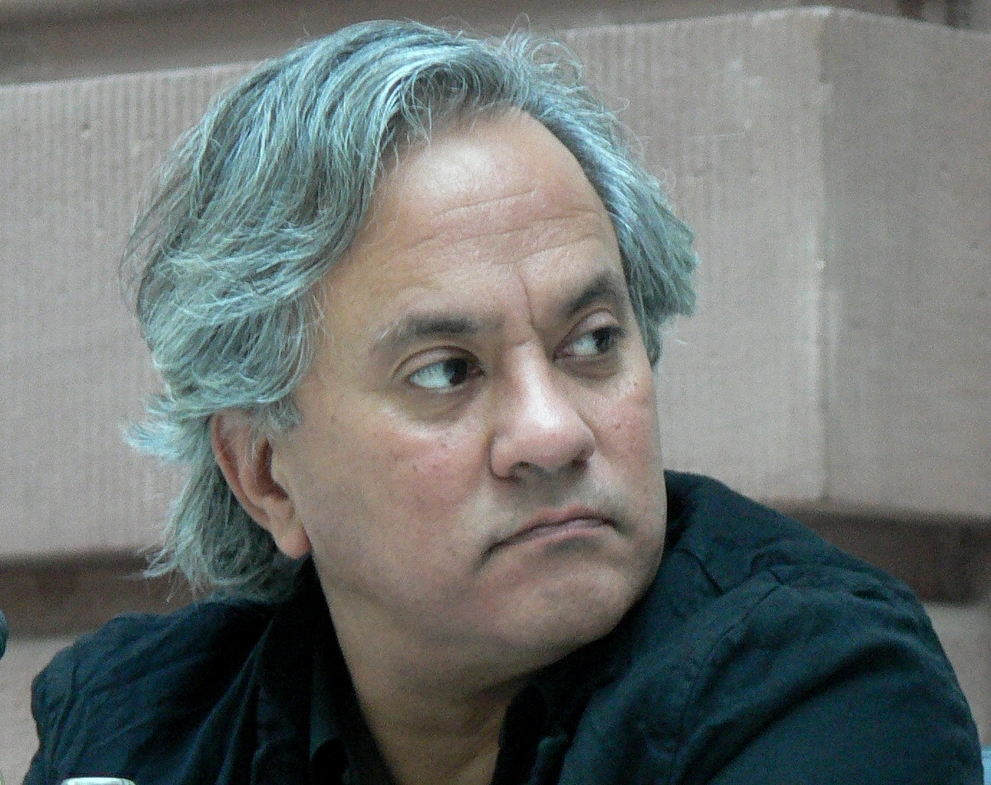
| 37 Quotes | |
| Occup. | Artist |
| From | India |
| Born | March 12, 1954 Mumbai, Maharashtra, India |
| Age | 72 years |
| Cite | |
Citation Formats
APA Style (7th ed.)
Anish kapoor biography, facts and quotes. (2026, February 11). FixQuotes. https://fixquotes.com/authors/anish-kapoor/
Chicago Style
"Anish Kapoor biography, facts and quotes." FixQuotes. February 11, 2026. https://fixquotes.com/authors/anish-kapoor/.
MLA Style (9th ed.)
"Anish Kapoor biography, facts and quotes." FixQuotes, 11 Feb. 2026, https://fixquotes.com/authors/anish-kapoor/. Accessed 27 Mar. 2026.
Early Life and Background
Anish Kapoor was born on March 12, 1954, in Bombay (now Mumbai), into a city defined by post-independence ambition and contradiction - a place where modernist architecture rose beside crowded bazaars, and where religious iconography, cinema spectacle, and street color formed a daily visual grammar. His family life carried its own complexity: a Punjabi Hindu father and an Iraqi Jewish mother, a crosscurrent of languages and histories that placed questions of belonging close to the surface. That early doubleness later returned, abstracted, as voids and skins, interiors and exteriors, presence and disappearance.Kapoor has often been read through the lens of origin, but his early years also forecast a different, more interior preoccupation: the pull between the material and the imaginal. India in the 1950s and 1960s was negotiating nationhood, industrialization, and the aftershocks of Partition, and the young Kapoor absorbed a culture where the symbolic was not a museum category but a lived environment. The intensity of pigment, the weight of ritual objects, and the sensation of public space as theatre became not references to illustrate, but pressures that later drove him toward forms that feel older than style - like a remembered architecture of the mind.
Education and Formative Influences
In the early 1970s Kapoor left India for Britain, a decisive rupture that placed him in the charged atmosphere of London art schools and the broader postwar rethinking of sculpture. He studied at Hornsey College of Art and then at Chelsea School of Art, encountering European modernism, the legacy of Brancusi and minimalism, and a critical climate suspicious of easy exoticism. The move sharpened his attention to perception itself: how meaning is made by the conditions of viewing, how an object can act like an event, and how a form can carry the gravity of metaphysical questions without resorting to narration.Career, Major Works, and Turning Points
Kapoor emerged in the late 1970s and early 1980s with pigment-saturated sculptures whose powdery surfaces seemed both emphatically physical and strangely ungraspable, as if matter were slipping into atmosphere; the work announced a sculptor less interested in carving than in conjuring. Recognition accelerated: the Turner Prize in 1991 marked institutional arrival, while public commissions expanded his scale and audience. Key works became cultural landmarks - Cloud Gate (2004-2006) in Chicago, with its seamless mirrored skin turning skyline and crowd into liquid image; Marsyas (2002) at Tate Modern, a vast red membrane stretched through the Turbine Hall like an anatomical myth; and later installations such as Descension, in which a whirlpool-like void stages vertigo as sculpture. His career has also been punctuated by controversy and debate about authorship, access, and the boundaries between art, spectacle, and civic space, all of which only underscored his central wager: that sculpture can still generate awe without returning to monumentality in the old sense.Philosophy, Style, and Themes
Kapoor's signature is a disciplined seduction: immaculate surfaces that refuse to stay merely optical, and volumes that seem to open into psychological space. Mirrors do not flatter - they destabilize, folding the viewer into the work and implicating perception in the artwork's meaning-making. “The work itself has a complete circle of meaning and counterpoint. And without your involvement as a viewer, there is no story”. This is not participatory art as entertainment; it is a phenomenological trap, where self-recognition becomes disorientation, and where the body discovers how quickly sight turns into belief.Underneath the engineering and polish lies a moral metaphysic shaped by late-20th-century fracture - migration, hybrid identity, and the suspicion that modern life has lost coherence. Kapoor frames his ambition in explicitly reparative terms: “We live in a fractured world. I've always seen it as my role as an artist to attempt to make wholeness”. That wholeness is not a tidy unity but a tension held open: voids that feel generative rather than empty, reds that read as blood, desire, and sacred intensity, and forms that hover between architecture and organism. His conviction that sculpture can operate like a belief system is bluntly stated in another of his maxims: “Artists don't make objects. Artists make mythologies”. The mythology is not borrowed from a single tradition; it is built from the viewer's encounter with scale, color, and the primal unease of not knowing where the object ends and the self begins.
Legacy and Influence
Kapoor has helped redefine what public sculpture can be in a global city: not commemorative statuary, but a catalytic site where crowds gather, images circulate, and private sensation becomes collective ritual. His technical collaborations pushed fabrication forward, while his insistence on the void, the mirrored skin, and the immersive environment influenced a generation of sculptors and installation artists negotiating experience-driven art without surrendering conceptual depth. At his best, his work has entered the popular imagination without becoming merely popular - a rare feat - and his most enduring impact may be this: he made the question of interiority, of what cannot be pictured, feel not like an academic problem but like a shared civic encounter.Our collection contains 37 quotes written by Anish, under the main topics: Motivational - Truth - Wisdom - Art - Meaning of Life.
Source / external links