
Anita Hill Biography Quotes 30 Report mistakes
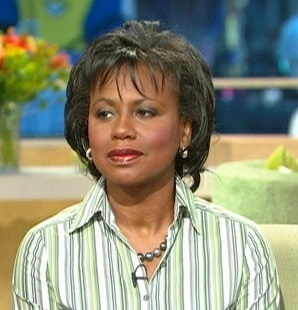
| 30 Quotes | |
| Occup. | Professor |
| From | USA |
| Born | July 30, 1956 |
| Age | 69 years |
| Cite | |
Citation Formats
APA Style (7th ed.)
Anita hill biography, facts and quotes. (2026, February 11). FixQuotes. https://fixquotes.com/authors/anita-hill/
Chicago Style
"Anita Hill biography, facts and quotes." FixQuotes. February 11, 2026. https://fixquotes.com/authors/anita-hill/.
MLA Style (9th ed.)
"Anita Hill biography, facts and quotes." FixQuotes, 11 Feb. 2026, https://fixquotes.com/authors/anita-hill/. Accessed 25 Mar. 2026.
Early Life and Background
Anita Faye Hill was born on July 30, 1956, in rural Oklahoma, in a large family rooted in the discipline and mutual reliance of farm life. She grew up in an America still sorting through the aftershocks of Brown v. Board of Education and the daily realities of segregation and its slow dismantling. In that landscape, authority was not abstract: it had names, offices, and consequences, and children learned early how power could be exercised quietly as well as loudly.The rhythms of her upbringing - church, school, work, and close-knit kinship - fostered an inward steadiness that later read to outsiders as composure under fire. That steadiness was never apathy; it was a practiced self-possession shaped by a world in which Black girls were expected to be both invisible and impeccable. Hill learned to measure risk, to watch institutions from the inside, and to endure the gap between public ideals and private conduct.
Education and Formative Influences
Hill attended Oklahoma State University, earning a BA in psychology in 1977, before entering Yale Law School and receiving her JD in 1980. Yale, in the wake of Watergate and the rise of modern rights litigation, trained students to treat institutions as systems rather than personalities, and to see how procedure can launder injustice into legitimacy. Law school also changed her sense of self in durable ways, a professional identity fused with moral obligation: “One of the things I was taught in law school is that I'd never be able to think the same again - that being a lawyer is something that's part of who I am as an individual now”. That transformation mattered later, when she was asked to speak not as a symbol, but as a witness.Career, Major Works, and Turning Points
After law school Hill worked in Washington, DC, including at the Department of Education's Office for Civil Rights and later at the Equal Employment Opportunity Commission, where she encountered the federal government's promise to police discrimination and its frequent reluctance to do so. She also taught law, becoming a professor whose scholarship and public work centered on civil rights and workplace equality. The turning point that defined her public biography came in 1991, when she testified before the US Senate Judiciary Committee during the confirmation hearings for Supreme Court nominee Clarence Thomas, for whom she had previously worked. Her testimony about alleged sexual harassment, and the combative, televised spectacle that followed, made her a central figure in a national argument about credibility, gender, race, and the limits of institutional accountability. In the years after, Hill continued teaching and writing, including the memoir Speaking Truth to Power (1997), and served on commissions and boards addressing workplace and social equity, insisting that the story was never only about one man or one hearing.Philosophy, Style, and Themes
Hill's thought begins with power - how it is distributed, narrated, and defended. Her manner, often described as calm, is better understood as a lawyer's insistence on relevance and a citizen's refusal to be baited into theater. In her testimony she framed herself not as an avenger but as a conduit for information: "I have no personal vendetta against Clarence Thomas. I seek only to provide the committee with information which it may regard as relevant" . That stance revealed a core psychological pattern: she tried to separate personal injury from institutional consequence, as if discipline of tone could keep a mob from turning a witness into a defendant.The hearings, however, showed how institutions redirect scrutiny away from alleged conduct and toward the character of the accuser. Hill diagnosed that dynamic without sentimentality: “I resent the idea that people would blame the messenger for the message, rather than looking at the content of the message itself”. She also made explicit what many commentators preferred to keep implicit - that the proceeding was structured as an identity trial rather than an evidentiary one: “If you think about the way the hearings were structured, the hearings were really about Thomas' race and my gender”. Across her writing and public speaking, the theme recurs: procedure can become a mask for domination, and "comfort" is often the reward for silence and the price of complicity.
Legacy and Influence
Hill's legacy is both cultural and institutional: she helped push sexual harassment into the center of public language, reshaped expectations of workplace conduct, and forced elites to confront how credibility is rationed by gender and race. The political aftershocks were immediate - the early 1990s saw a surge of women running for office, and the hearings became a reference point for later movements contesting abuse of power in workplaces and public life. As a professor, she modeled a civic form of legal thinking: not merely what rules say, but who rules protect, who they expose, and how a democracy tests truth when the cost of telling it is public erasure.Our collection contains 30 quotes written by Anita, under the main topics: Truth - Justice - Honesty & Integrity - Long-Distance Friendship - Equality.
Other people related to Anita: Barbara Boxer (Politician), Nina Totenberg (Journalist), David Brock (Author)
Source / external links