
Ann Bancroft Biography Quotes 16 Report mistakes
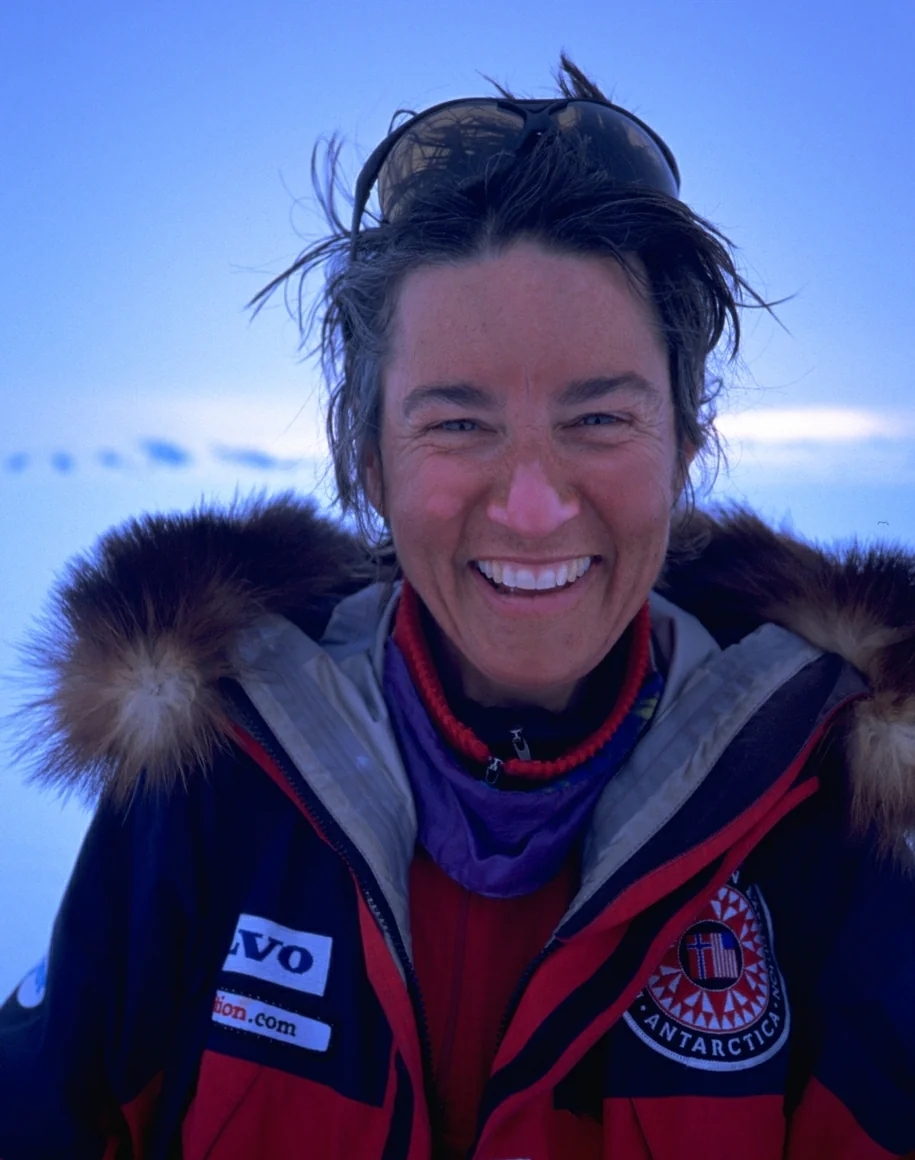
| 16 Quotes | |
| Occup. | Explorer |
| From | USA |
| Born | September 29, 1955 St. Paul, Minnesota, U.S. |
| Age | 70 years |
| Cite | |
Citation Formats
APA Style (7th ed.)
Ann bancroft biography, facts and quotes. (2026, February 1). FixQuotes. https://fixquotes.com/authors/ann-bancroft/
Chicago Style
"Ann Bancroft biography, facts and quotes." FixQuotes. February 1, 2026. https://fixquotes.com/authors/ann-bancroft/.
MLA Style (9th ed.)
"Ann Bancroft biography, facts and quotes." FixQuotes, 1 Feb. 2026, https://fixquotes.com/authors/ann-bancroft/. Accessed 12 Feb. 2026.
Early Life and Background
Ann Bancroft was born on September 29, 1955, in Mendota Heights, Minnesota, and grew up in the cultural weather of the Upper Midwest - long winters, practical households, and a local ethic that admired endurance more than display. Before she became an emblem of polar travel, she was a child learning how to move through cold and constraint, in a society that still treated serious adventure as a masculine province and treated many girls ambitions as a phase to outgrow.Family and community life gave her both friction and fuel. She was not raised inside an elite expedition pipeline; she came from ordinary American conditions where self-definition had to be fought for in small daily ways. That background matters: her later achievements read not like a destiny fulfilled but like a series of decisions made against doubt - her own and other peoples - as she tested what kind of person she could become when comfort was removed.
Education and Formative Influences
School was not an easy proving ground. She later said, "I wanted to be a teacher, but I was a lousy student, one of the slowest readers. It was a tremendous struggle. But I'm lucky I had some teachers who saw something in me". That admission is a key to her inner life: Bancroft did not learn confidence as a natural trait; she learned it as a discipline, assembled through patient mentorship and repeated effort. In the 1970s and early 1980s, as womens athletics and outdoor programs broadened in the United States, she found in physical challenge a language that felt more honest than grades - a place where persistence, teamwork, and emotional steadiness mattered as much as raw talent.Career, Major Works, and Turning Points
Bancrofts career crystalized in the 1980s when she turned from conventional paths toward expedition work and polar travel, fields where logistics, pain tolerance, and judgment under pressure are the real credentials. In 1986, she joined the Steger International Polar Expedition, a landmark dogsled traverse to the North Pole led by Will Steger; her role in the team placed her at the center of a media moment that could finally picture a woman as an equal participant in extreme exploration. She later led and completed major journeys in her own right, including a 1992 expedition to the South Pole that made her the first woman to cross the ice to that destination, and she became a continuing presence in public education about leadership, environmental conditions, and the practical craft of travel in lethal climates.Philosophy, Style, and Themes
Bancrofts public persona is often framed as toughness, but her philosophy is more interior than heroic. She has insisted that the true contest is not against weather but against the self: "For me, the greatest obstacles are never on the ice itself. That's the area I excel in. That's where my passion is. I think we all strive to push ourselves, to overcome our struggles. And when we do, we get to know ourselves better". The line reveals a psychology that treats hardship as a diagnostic tool - a way to identify fear, stubbornness, and generosity when they can no longer be performed for others. In her account, the ice is not merely a backdrop; it is an instrument that strips away pretension.That inward focus also explains her refusal to reduce herself to image. "I do not think about being beautiful. What I devote most of my time to is being healthy". The sentence is not just lifestyle advice; it is an argument against the older bargain offered to women in public life, where approval is purchased through appearance. Bancrofts style - in speech and in expeditions - is practical, unromantic, and bodily honest. Even her descriptions of work resist glamour: "To push behind the dog sled and run in front of the dog sled. That was always an interesting job". The humor is revealing: she meets danger with craft and clarity, and she meets her own ambition with a kind of grounded skepticism that keeps it from curdling into ego.
Legacy and Influence
Bancrofts legacy sits at the intersection of exploration, womens history, and modern leadership culture. She helped expand the narrative of who belongs in extreme environments, not by proclaiming exceptionality but by demonstrating competence over time - planning, hauling, failing forward, and returning to try again. For younger explorers and for audiences far from the poles, she modeled a useful definition of courage: not a taste for risk, but a practiced willingness to learn, to accept help, and to keep going when identity is under negotiation. In a late-20th-century America eager for inspiration yet suspicious of elitism, she became influential precisely because she sounded like someone who had earned every mile.Our collection contains 16 quotes written by Ann, under the main topics: Motivational - Ethics & Morality - Overcoming Obstacles - Health - Faith.
Source / external links