
Ann Patchett Biography Quotes 10 Report mistakes
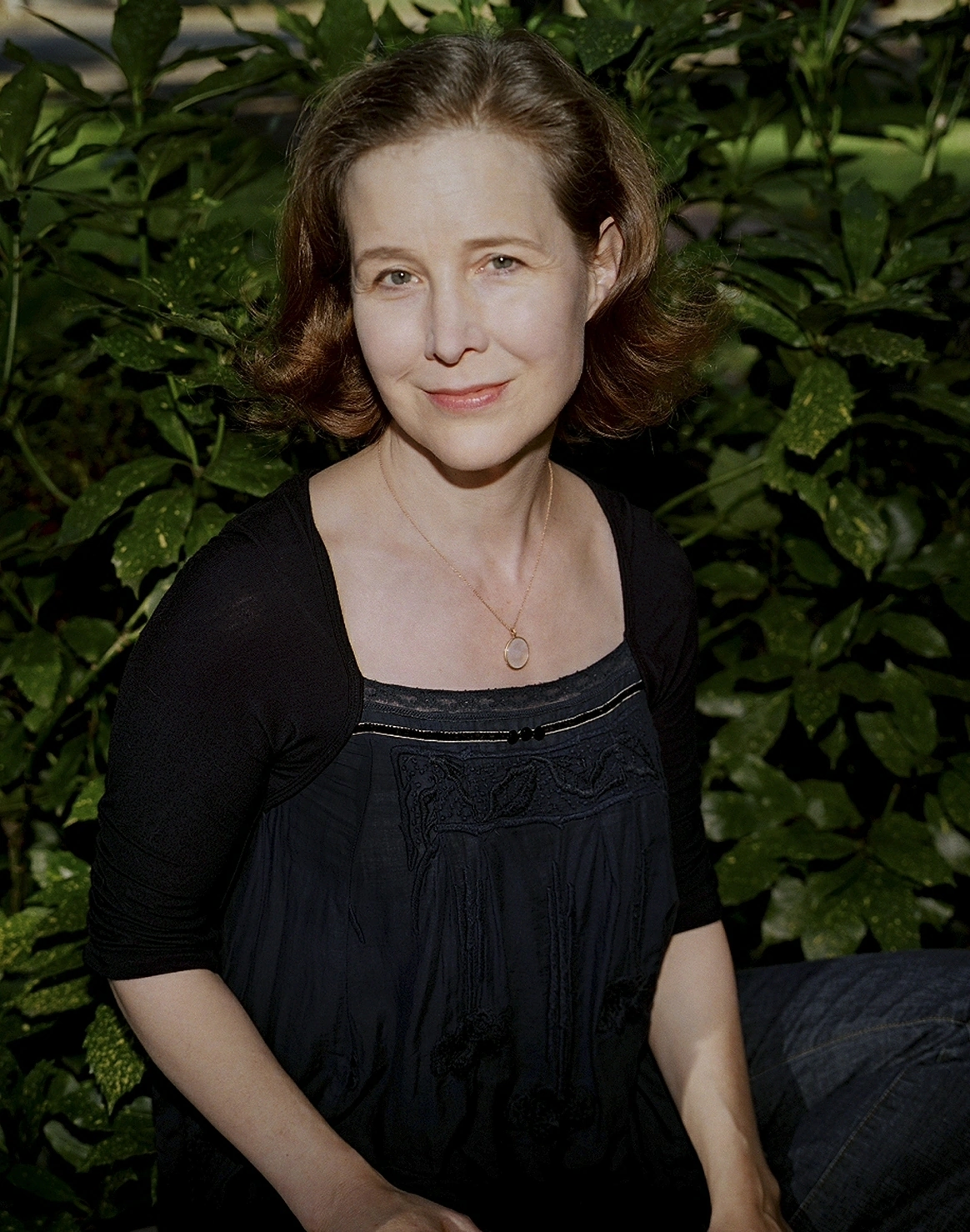
| 10 Quotes | |
| Occup. | Author |
| From | USA |
| Born | December 2, 1963 Los Angeles, California, United States |
| Age | 62 years |
| Cite | |
Citation Formats
APA Style (7th ed.)
Ann patchett biography, facts and quotes. (2026, February 11). FixQuotes. https://fixquotes.com/authors/ann-patchett/
Chicago Style
"Ann Patchett biography, facts and quotes." FixQuotes. February 11, 2026. https://fixquotes.com/authors/ann-patchett/.
MLA Style (9th ed.)
"Ann Patchett biography, facts and quotes." FixQuotes, 11 Feb. 2026, https://fixquotes.com/authors/ann-patchett/. Accessed 5 Mar. 2026.
Early Life and Background
Ann Patchett was born on December 2, 1963, in Los Angeles, California, and spent much of her childhood in the American South after her family moved to Nashville, Tennessee. The shift from a sprawling, image-driven West Coast city to a more inward, story-saturated Southern milieu mattered: Nashville in the 1970s and 1980s combined conservative social expectations with an intense respect for narrative performance, from music to church to local lore. Patchett grew up attentive to how communities edit themselves - what is said in public, what is whispered in private - a tension that later animates her fictional families, ensembles, and long marriages.From early on she gravitated toward books as both refuge and apprenticeship, drawn to the architecture of long novels and to characters whose moral lives unfolded over time rather than in epiphanies. She also watched adulthood up close in a culture that prized conventional scripts, then learned how fragile those scripts could be when confronted by desire, ambition, illness, or the simple fact of human change. That sense of lived unpredictability became a defining engine in her work: her plots often begin with an orderly premise and then test it under pressure, asking who a person becomes when the life they planned is no longer available.
Education and Formative Influences
Patchett studied at Sarah Lawrence College in New York and later earned an MFA at the Iowa Writers' Workshop, a training ground that sharpened her attention to scene, sentence rhythm, and the ethics of point of view. At Iowa and beyond, she absorbed a tradition of the social novel and the enclosed-world narrative, and she learned how to use research without surrendering to it - how to make the factual feel intimate. Her years as a magazine writer further strengthened her control of voice and compression, skills that later let her move between fiction, memoir, and criticism without losing tonal authority.Career, Major Works, and Turning Points
Patchett built her reputation through a sequence of increasingly ambitious novels, including The Patron Saint of Liars (1992), Taft (1994), and The Magician's Assistant (1997), which established her as a writer of domestic consequence and quiet structural daring. Her breakthrough, Bel Canto (2001), won the PEN/Faulkner Award and the Orange Prize and expanded her canvas into political crisis and communal art-making inside a hostage siege. Later works such as Run (2007), State of Wonder (2011), Commonwealth (2016), and The Dutch House (2019) showed a novelist repeatedly returning to the family as an institution that both saves and damages, while her nonfiction - especially Truth and Beauty (2004), This Is the Story of a Happy Marriage (2013), and These Precious Days (2021) - revealed the autobiographical sources of her rigor: friendship, mortality, faith in work, and the daily disciplines of attention. In Nashville she also became a civic figure, co-founding Parnassus Books in 2011, a tangible commitment to literary culture during an era of bookstore closures and algorithmic taste-making.Philosophy, Style, and Themes
Patchett's style is lucid, patient, and morally curious: she favors clean surfaces that gradually disclose depth, and she trusts the cumulative power of ordinary moments. She is an ensemble novelist at heart, drawn to situations that trap or gather disparate people and force them into sustained contact - the kind of long proximity in which personality becomes fate. That structural instinct is partly literary inheritance, as she has said of Thomas Mann, “I was very influenced by The Magic Mountain. It's a book that had a huge impact on me. I loved that as a shape for a novel: put a bunch of people in a beautiful place, give them all tuberculosis, make them all stay in a fur sleeping bag for several years and see what happens”. Her own "beautiful place" might be an Amazonian research station, a hostage-filled mansion, or the living room of a family broken by one choice decades earlier; in each case, the drama is the slow revelation of character under duration.Underneath the composure is a psychology wary of external noise and hungry for the steadiness of craft. Patchett repeatedly argues for devotion to the work itself over the theater around it: “I think people become consumed with selling a book when they need to be consumed with writing it”. In that credo is a kind of self-protection - a refusal to let praise, scorn, or market anxieties colonize the private room where sentences are made - and it matches her insistence that art is built by discipline more than inspiration: “Write because you love the art and the discipline, not because you're looking to sell something”. Her themes follow from this: love as practice rather than fantasy, the costs of loyalty, the accidental violences of family myth, and the way a single event can reorder a lifetime without ever fully explaining itself.
Legacy and Influence
Patchett has become one of the central American novelists of her generation, admired for making literary craft accessible without diluting complexity and for restoring seriousness to plots built from relationships rather than spectacle. Bel Canto endures as a modern parable about beauty inside catastrophe, while Commonwealth and The Dutch House have helped define the contemporary family saga as a vehicle for historical memory and private reckoning. Beyond her books, her advocacy for independent bookstores and her example as a writer who treats sentences as a daily practice have influenced younger authors navigating a loud, transactional culture. Her lasting imprint is a faith - earned, not naive - that attention to other lives, rendered with precision and mercy, is one of literature's quiet forms of resistance.Our collection contains 10 quotes written by Ann, under the main topics: Writing - Life - Resilience - Movie - Husband & Wife.
Ann Patchett Famous Works
- 2019 The Dutch House (Novel)
- 2016 Commonwealth (Novel)
- 2011 State of Wonder (Novel)
- 2007 Run (Novel)
- 2001 Bel Canto (Novel)
- 1997 The Magician's Assistant (Novel)
- 1994 Taft (Novel)
- 1992 The Patron Saint of Liars (Novel)
Source / external links