
Anna Freud Biography Quotes 25 Report mistakes
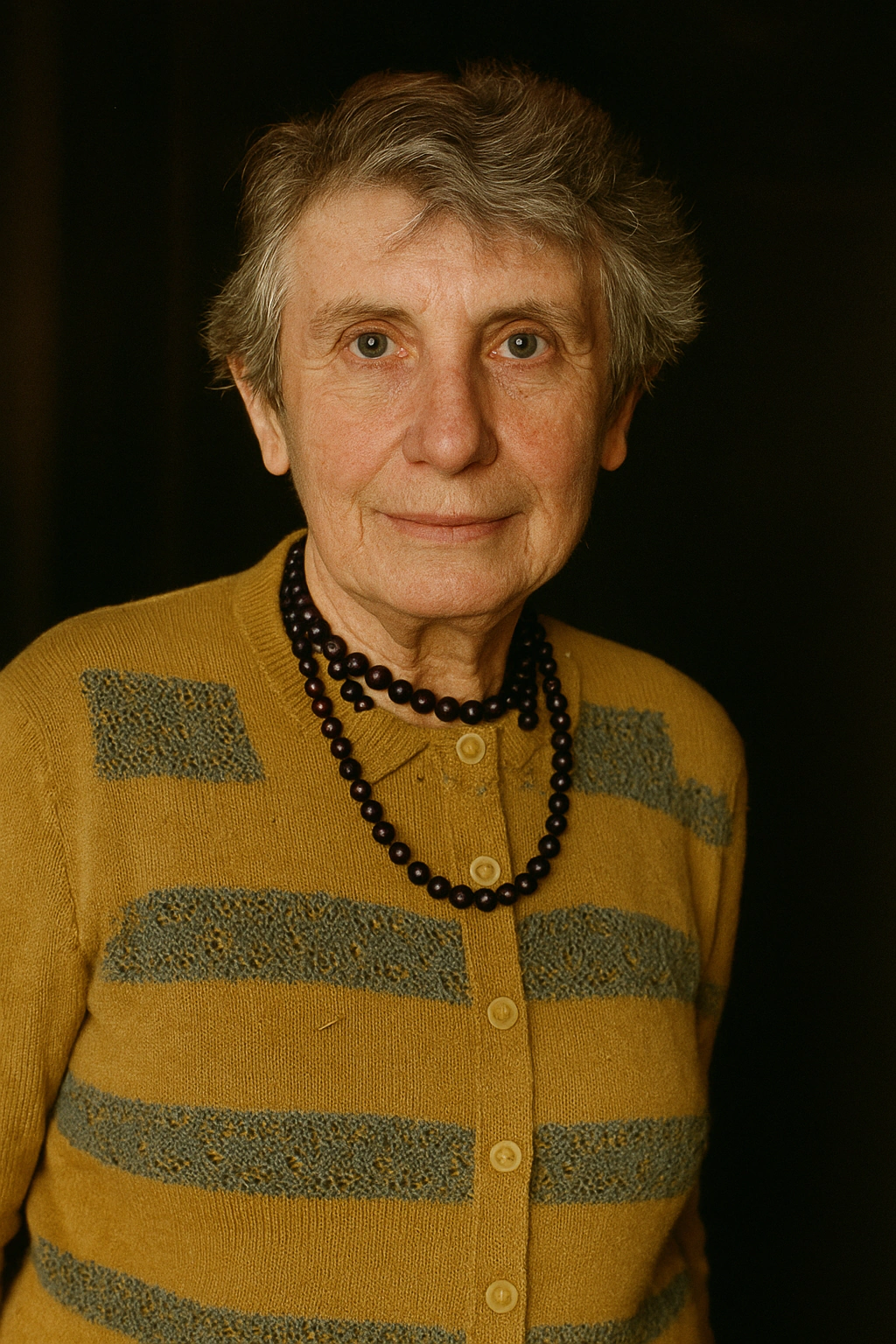
Attr: Dutch National Archives, The Hague, Fotocollectie Algemeen Nederlands Persbureau
| 25 Quotes | |
| Occup. | Psychologist |
| From | Austria |
| Born | December 3, 1895 Vienna, Austria |
| Died | October 9, 1982 London, England |
| Aged | 86 years |
| Cite | |
Citation Formats
APA Style (7th ed.)
Anna freud biography, facts and quotes. (2026, February 11). FixQuotes. https://fixquotes.com/authors/anna-freud/
Chicago Style
"Anna Freud biography, facts and quotes." FixQuotes. February 11, 2026. https://fixquotes.com/authors/anna-freud/.
MLA Style (9th ed.)
"Anna Freud biography, facts and quotes." FixQuotes, 11 Feb. 2026, https://fixquotes.com/authors/anna-freud/. Accessed 6 Mar. 2026.
Early Life and Background
Anna Freud was born on December 3, 1895, in Vienna, then the capital of the Habsburg Empire, into a household where the new language of psychoanalysis was being invented in real time. She was the youngest of Sigmund Freud and Martha Bernays Freud's six children, growing up amid the rhythms of bourgeois Jewish Vienna and the constant traffic of patients, colleagues, and controversy that surrounded her father. Unlike her older siblings, she came of age after psychoanalysis had become both a profession and a public scandal, and her childhood was shaped by the mixture of intellectual glamour and private strain that the Freud home could produce.Her early emotional world was marked by strong attachments and sharp comparisons. She felt closest to her father and to her aunt, Minna Bernays, and she often experienced herself as the "difficult" child - observant, proud, and hungry for recognition. The First World War arrived when she was nineteen, collapsing the old imperial order and sharpening the era's preoccupation with loss, deprivation, and psychic survival. Those conditions - scarcity outside, analytic intensity inside - helped form her lifelong interest in how children adapt to what they cannot change.
Education and Formative Influences
Freud trained as a schoolteacher rather than pursuing a university degree, studying at the Cottage Lyceum in Vienna and teaching in elementary settings where she could watch children's defenses in daily life. Her analytic formation was unusually direct: she entered analysis with her father in 1918 and remained embedded in the Vienna Psychoanalytic Society, presenting clinical observations while still a young teacher. Alongside her father, she learned from figures such as Helene Deutsch and, later, from the increasingly consequential debates with Melanie Klein's followers, which forced her to define what could be responsibly inferred from children's play, speech, and behavior.Career, Major Works, and Turning Points
By the 1920s Anna Freud had become a central architect of child psychoanalysis, developing technique, training standards, and a clinical vocabulary of defense mechanisms that would help redefine ego psychology. Her landmark book "The Ego and the Mechanisms of Defence" (1936) codified defenses not as mere obstacles but as organized strategies of psychic self-preservation. In 1938, after Nazi annexation of Austria, she was briefly interrogated by the Gestapo; the family fled Vienna for London, where Sigmund Freud died the following year. In wartime Britain she co-founded the Hampstead War Nurseries with Dorothy Burlingham, studying the effects of separation, bombardment, and institutional care; these findings fed into "War and Children" (1943) and the postwar clinical program that became the Hampstead Child Therapy Course and Clinic (later the Anna Freud Centre). Her later works, including "Normality and Pathology in Childhood" (1965), aimed to map development with enough nuance to distinguish transient crises from enduring disorder.Philosophy, Style, and Themes
Anna Freud's psychology was disciplined by realism: she distrusted sentimental ideas of childhood innocence and focused instead on adaptation - what the mind does to stay intact under pressure. Her aphorism “Things are not as we would like them to be. There is only one way to deal with it, namely to try and be all right oneself”. reads like a moral instruction, but in her clinical hands it became method: the analyst's steadiness models an internal refuge the child can gradually build. That inward emphasis also reflects her private temperament - reserved, exacting, and self-demanding - and her conviction that resilience is manufactured from routine, limits, and truthful observation rather than reassurance.At the same time, her work never reduced children to isolated psyches; it treated them as beings embedded in family weather. “It is only when parental feelings are ineffective or too ambivalent or when the mother's emotions are temporarily engaged elsewhere that children feel lost”. condenses a lifetime of clinic notes from nurseries, evacuations, and homes where anxiety flowed through caregivers before it appeared in symptoms. Her writing style mirrored this ethic: concrete, developmental, and procedural, wary of grand metaphysics. Even her faith in talent was pragmatic, closer to survival than brilliance: “Creative minds have always been known to survive any kind of bad training”. - a line that doubles as a defense of the child against adult systems, and a reminder that a mind can outlast the institutions meant to shape it.
Legacy and Influence
Anna Freud died in London on October 9, 1982, having turned exile into an enduring school of thought and care. She professionalized child analysis, helped institutionalize training and supervision, and gave clinicians a durable framework for understanding defenses, developmental lines, and the interplay of inner conflict with external deprivation. While later attachment research and developmental psychology revised parts of her model, her core insistence remains influential: a child's symptoms are intelligible strategies, not simply defects, and treatment must be calibrated to developmental reality, family context, and the ordinary heroism of staying "all right" in a world that rarely conforms to wish.Our collection contains 25 quotes written by Anna, under the main topics: Truth - Friendship - Meaning of Life - Life - Parenting.
Other people related to Anna: Bruno Bettelheim (Writer), Erik Erikson (Psychologist), Otto Rank (Psychologist), Erik H. Erikson (Psychologist)
Frequently Asked Questions
- Anna Freud interesting Facts: Austrian-born, fled to London in 1938; analyzed by her father; co-ran wartime nurseries for bombed children; key figure in the British psychoanalytic 'controversial discussions'.
- Anna Freud contribution to psychology: Pioneer of child psychoanalysis; clarified defense mechanisms; introduced developmental lines; founded the Hampstead Child Therapy Clinic (later the Anna Freud Centre).
- Anna Freud and Sigmund Freud relationship: She was Sigmund Freud's youngest daughter, his analysand, and a close collaborator who carried forward his work.
- Anna Freud wife: She never married; her longtime partner and collaborator was Dorothy Tiffany Burlingham.
- Anna Freud books: The Ego and the Mechanisms of Defence (1936); Normality and Pathology in Childhood (1965); War and Children; Infants Without Families (both with Dorothy Burlingham).
- Anna Freud children: She had no children; she specialized in child psychoanalysis and co-founded the Hampstead War Nurseries and the Hampstead Child Therapy Clinic.
- Anna Freud theory: Ego psychology focused on the ego, defense mechanisms, and 'developmental lines' of child development.
- How old was Anna Freud? She became 86 years old
Source / external links