
Anna Kournikova Biography Quotes 24 Report mistakes
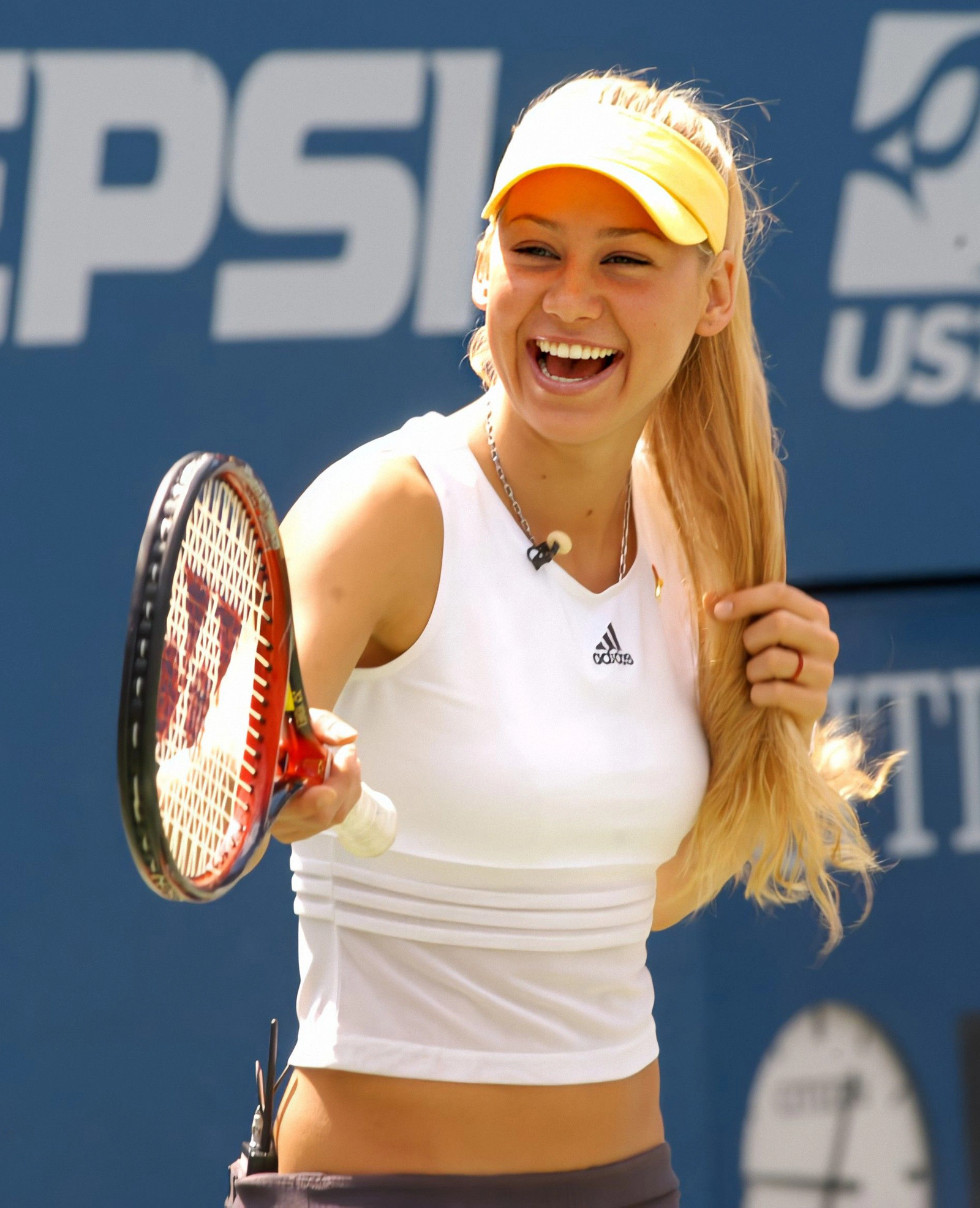
| 24 Quotes | |
| Occup. | Athlete |
| From | Russia |
| Born | June 7, 1981 Moscow, Russian SFSR, Soviet Union (now Russia |
| Age | 44 years |
| Cite | |
Citation Formats
APA Style (7th ed.)
Anna kournikova biography, facts and quotes. (2026, February 11). FixQuotes. https://fixquotes.com/authors/anna-kournikova/
Chicago Style
"Anna Kournikova biography, facts and quotes." FixQuotes. February 11, 2026. https://fixquotes.com/authors/anna-kournikova/.
MLA Style (9th ed.)
"Anna Kournikova biography, facts and quotes." FixQuotes, 11 Feb. 2026, https://fixquotes.com/authors/anna-kournikova/. Accessed 27 Mar. 2026.
Early Life and Background
Anna Sergeyevna Kournikova was born on June 7, 1981, in Moscow, in the late-Soviet moment when sport functioned as both social mobility and national showcase. Her father, Sergei, worked in the criminal investigation department; her mother, Alla, was a former sprinter. In a city where communal discipline and ambition were familiar currencies, Kournikova absorbed early the idea that physical talent had civic meaning - and that the body could be a profession.She picked up tennis as a small child and proved unusually quick to learn the geometry of the court and the performance demands around it. By the time the Soviet Union dissolved in 1991, she was already being steered toward the new post-Soviet pathway: private sponsorship, international academies, and an accelerating race to turn promise into earnings. Her childhood coincided with Russia's turbulent shift to capitalism, and she would become one of its most visible athletic exports - glamorous, controversial, and widely misunderstood.
Education and Formative Influences
Kournikova's real education was the academy circuit: first intensive training in Russia, then a decisive move to Florida to develop inside the American junior pipeline, where year-round competition, coaching specialization, and brand-conscious professionalism were the hidden curriculum. The late 1990s women's game was defined by power hitters and televised personalities, and she was formed in that crucible - learning that results, charisma, and marketability were not separate tracks but a single, unforgiving scoreboard.Career, Major Works, and Turning Points
Turning pro in 1995, she broke through with a headline run to the Wimbledon semifinals in 1997 as a teenager, rapidly climbing into the top tier of the WTA. Although she never captured a singles title, she reached a career-high singles ranking around No. 8 and became a fixture in the world's top bracket; her most durable competitive legacy came in doubles, where her partnership with Martina Hingis produced major titles at the Australian Open (1999, 2002) and a stretch as the world's No. 1 pair. Chronic injuries - especially to her back and foot - steadily narrowed her schedule, and by the early 2000s her appearances were sporadic; she effectively stepped away from full-time tennis while remaining omnipresent in global advertising, modeling, and pop culture, a rare athlete whose fame outlived her match volume.Philosophy, Style, and Themes
Kournikova's tennis was built on movement, anticipation, and clean strike timing rather than brute force. She played an aggressively angled game, liked to finish at the net, and in doubles her reflexes and court sense became weapons. Yet her era increasingly rewarded the simple arithmetic of power, and her career became a case study in how athletic identity can be rewritten by the surrounding media economy. She insisted on a basic truth about labor and visibility: “I worked very hard and I earned all the attention I'm getting”. The line reads less like bravado than self-defense - the psychology of someone forced to argue that work exists even when the audience is looking somewhere else.Her public image became an ongoing negotiation between femininity, control, and legitimacy. She refused the premise that beauty cancels competence, framing the attention as contingent on excellence as well as appearance: “You don't think people would go on about my looks if I was No. 500 in the world instead of No.12, do you? Anyway, as I keep telling everyone, you can't blame me for looking like this on purpose”. In that phrasing is a distinctly modern tension - the desire to be seen on one's own terms in a marketplace that sells bodies alongside achievements. Even her aesthetic standard for the sport had an edge of discipline: “I think that tennis is a lady's sport, so we should look out there like ladies”. Read closely, it is not mere conservatism but a strategy: if the world is going to watch, then the athlete will set the rules of presentation, turning scrutiny into a kind of armor.
Legacy and Influence
Kournikova's legacy is paradoxical and therefore enduring: a player with limited singles hardware who helped redefine what global sports celebrity could be in the internet age, when highlight clips, photo spreads, and brand campaigns could rival tournament results in shaping reputation. She normalized the idea that women athletes would be evaluated - unfairly, relentlessly - at the intersection of performance and appearance, and her insistence on her own seriousness anticipated later conversations about agency, objectification, and the economics of attention. In doubles, her trophies with Hingis remain the simplest rebuttal to caricature; in culture, her name became shorthand for the modern sports icon, admired, criticized, and never merely one thing.Our collection contains 24 quotes written by Anna, under the main topics: Witty One-Liners - Sarcastic - Sports - Work Ethic - God.
Other people related to Anna: Enrique Iglesias (Musician)
Source / external links