
Anna Pavlova Biography Quotes 7 Report mistakes
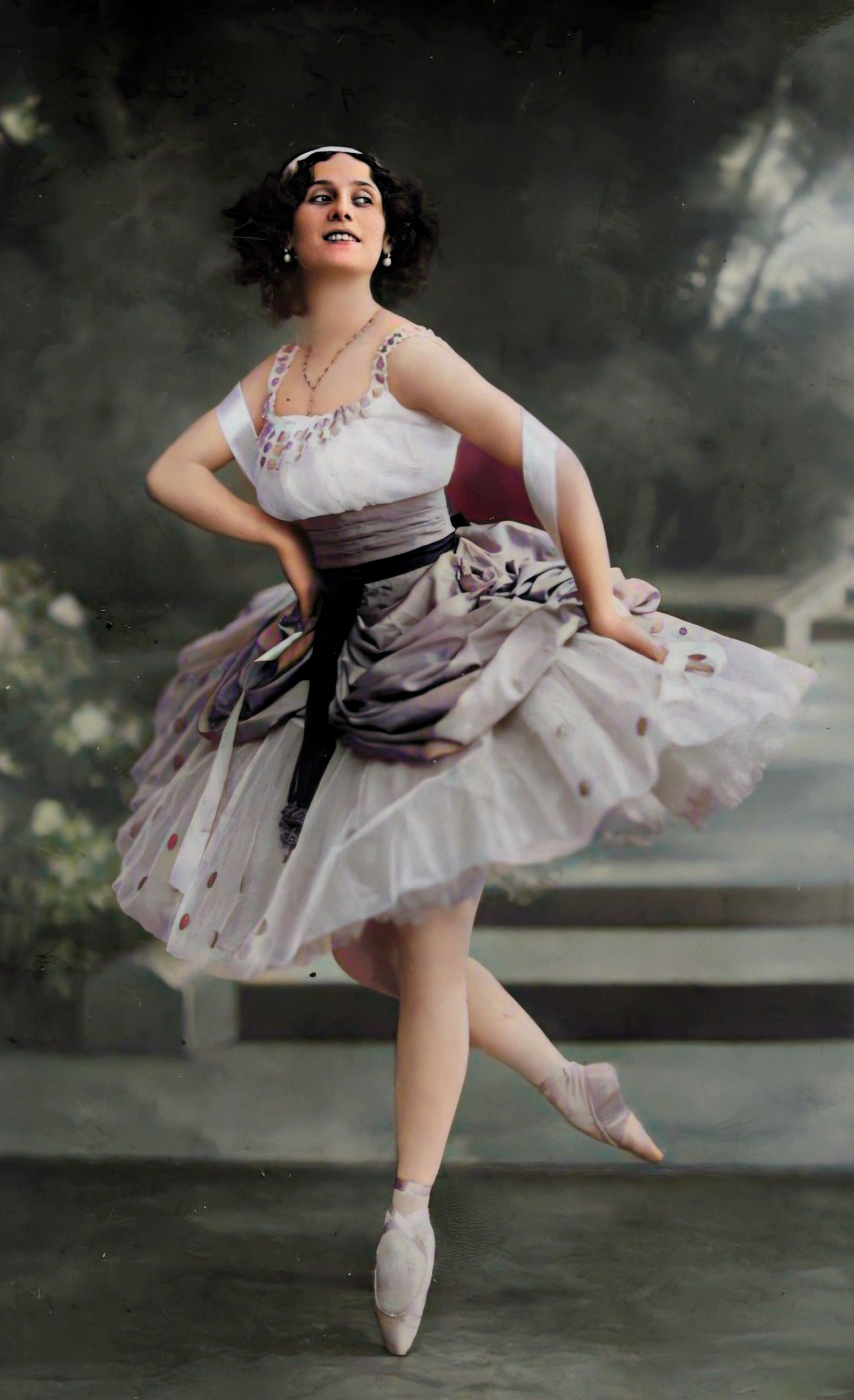
| 7 Quotes | |
| Born as | Anna Matveyevna Pavlova |
| Occup. | Dancer |
| From | Russia |
| Spouse | Victor Dandré (1914) |
| Born | February 12, 1881 St. Petersburg, Russia |
| Died | January 23, 1931 The Hague, Netherlands |
| Aged | 49 years |
| Cite | |
Citation Formats
APA Style (7th ed.)
Anna pavlova biography, facts and quotes. (2026, February 11). FixQuotes. https://fixquotes.com/authors/anna-pavlova/
Chicago Style
"Anna Pavlova biography, facts and quotes." FixQuotes. February 11, 2026. https://fixquotes.com/authors/anna-pavlova/.
MLA Style (9th ed.)
"Anna Pavlova biography, facts and quotes." FixQuotes, 11 Feb. 2026, https://fixquotes.com/authors/anna-pavlova/. Accessed 25 Mar. 2026.
Early Life
Anna Matveyevna Pavlova was born on 12 February 1881 in St. Petersburg, in the Russian Empire. Raised by her mother, Lyubov Feodorovna, she grew up in modest circumstances. The identity of her father is uncertain in historical accounts, though a soldier named Matvey Pavlov is often cited. From an early age she set her sights on the ballet, inspired by a performance of The Sleeping Beauty at the Imperial Mariinsky Theatre. In 1891, at age ten, she was accepted into the Imperial Ballet School in St. Petersburg, where her slight build and hyper-arched feet drew criticism, yet also foretold the distinctive line and ethereal quality that would later define her dancing.Training and Rise at the Mariinsky
At the Imperial school and later within the Imperial Ballet, Pavlova studied with leading figures of the era. The ballerino and pedagogue Pavel Gerdt coached her refinement and stage craft. Enrico Cecchetti, whose rigorous method shaped generations of dancers, drilled her strength and clarity, and remained a key mentor throughout her career. Under the artistic authority of Marius Petipa, she absorbed the classical repertory that formed the backbone of St. Petersburg ballet. She graduated in 1899 into the Mariinsky company and advanced rapidly, winning attention for the lightness and musicality that compensated for what some called an unconventional physique for the time.By the mid-1900s she was entrusted with major roles, including Giselle, Paquita, and leading parts in La Bayadere and The Sleeping Beauty. In 1906, after celebrated performances in Giselle, she was named prima ballerina of the Imperial Ballet. In a milieu still dominated by the exacting classicism codified by Petipa, she offered something both faithful and new: a personal, lyrical expressivity joined to sparkling virtuosity, particularly in pointe work that appeared to defy gravity.
The Dying Swan and Artistic Identity
In 1905 choreographer Michel Fokine created for her The Dying Swan, a short solo set to Camille Saint-Saens's Le Cygne. It became her signature, distilling her art into a few haunting minutes. With fluid arms and a fragile, tremulous poignancy, she embodied a creature at once regal and mortal. The solo helped inaugurate a broader shift in early twentieth-century ballet toward expressive modern sensibilities, even as Pavlova herself continued to champion the classics. The Dying Swan followed her everywhere, closing evenings in St. Petersburg and later on tour, a poetic emblem of her stage identity.International Breakthrough
Pavlova's acclaim in Russia drew international invitations. She appeared in Western Europe before joining Serge Diaghilev's 1909 Saisons Russes in Paris, where she danced alongside Tamara Karsavina and the young Vaslav Nijinsky. While Diaghilev's enterprise would soon veer toward experimental collaborations, Pavlova's path diverged; she favored an independent itinerary that prioritized classical showcase and direct contact with broad audiences. With the dynamic Mikhail Mordkin as a frequent partner, she toured widely. In 1910 she made a sensational American debut, and by 1911 she had formed her own company, with the businessman Victor Dandre serving as her manager and closest associate. Their personal relationship was long-standing; though details were kept private, he played a vital role in sustaining her artistic and logistical ambitions.Life in London and Global Tours
From 1912 Pavlova made London a base, purchasing Ivy House in Hampstead. There she kept real swans on the pond and turned the residence into a rehearsal hub, a salon, and a refuge for dancers in her orbit. Cecchetti taught classes, and Pavlova nurtured young talent, including Alicia Markova, whom she encouraged and featured onstage, and Anton Dolin, who would later become an eminent British dancer and director. She also worked with partners such as Laurent Novikoff and Alexandre Volinine during extensive tours.The company toured almost continually for two decades, carrying ballet to audiences across Europe, North and South America, Africa, the Middle East, India, East Asia, and Australia. The repertory blended full-length classics with divertissements and character pieces that showcased her particular gifts and the strengths of a small, nimble ensemble. Pavlova calibrated programs to local circumstances, often introducing ballet to cities that had never hosted a classical troupe. Her schedule was punishing, but it allowed her to cultivate a global public that came to equate ballet itself with her name.
Artistry, Technique, and Persona
Pavlova's dancing fused the academic heritage of St. Petersburg with a deeply personal sensibility. She pursued a refined but unforced line, an elasticity in the wrists and elbows that suggested breath, and a phrasing that placed movement exactly on the musical wave rather than merely counting beats. Critics sometimes noted technical idiosyncrasies, yet her elevation, quick bourrees, and seemingly weightless balances gave her the aura of a creature not bound by ordinary gravity. She adapted her shoes to support her extreme arches, an emblem of her practical means of achieving an ideal of lightness. In character roles she prioritized truth of feeling over ornamental detail, foregoing display when it interfered with dramatic clarity.Offstage she carefully constructed an image consistent with her roles: disciplined, fastidious, and devoted. The swan, both through Fokine's solo and her life at Ivy House, became a personal totem. Yet she was also a capable organizer, managing costumes, transportation, and finances with Dandre, and tending to the welfare of company members during long months on the road.
War, Exile, and Continuity
During World War I and the upheavals that followed, Pavlova remained abroad, and after the Russian Revolution she did not return to her homeland. She became, in the eyes of many, a living link to the pre-revolutionary Imperial stage, carrying its repertory across borders while the institutions that had formed her were transformed. In London she continued to coach and perform, and by the 1920s her influence on the British dance scene was significant; through proteges like Markova and Dolin, and through public enthusiasm she helped ignite, she contributed to the foundations on which later British companies would grow.Final Years and Death
Pavlova toured almost without interruption into the early 1930s, shortening engagements only when illness demanded. In late 1930 and early 1931, while traveling in the Netherlands, she developed complications from pleurisy and pneumonia. On 23 January 1931 she died in The Hague at the age of 49. Accounts circulated that she refused a surgery that would have ended her career, and that she asked for her swan costume; whatever the exact details, the public understood her passing through the lens of her art. Her ashes were later placed at Golders Green Crematorium in London.Legacy
Anna Pavlova transformed the map of ballet. She was a supreme interpreter of nineteenth-century classics, a muse for Michel Fokine's modern lyricism, and an indefatigable ambassador whose tours seeded audiences and artists on several continents. Figures who shaped her path or shared it, Marius Petipa, Enrico Cecchetti, Serge Diaghilev, Tamara Karsavina, Vaslav Nijinsky, Mikhail Mordkin, Victor Dandre, Laurent Novikoff, Alicia Markova, and Anton Dolin, mark the breadth of an era she both epitomized and helped carry into a new century. Beyond the repertory she danced, Pavlova left a model of devotion to craft, an ideal of expressive truth within classical form, and an image, the swan in its final, trembling arcs, that continues to define for many the very essence of ballet.Our collection contains 7 quotes written by Anna, under the main topics: Art - Work Ethic - Success - Human Rights - Perseverance.
Source / external links