
Anne Bronte Biography Quotes 8 Report mistakes
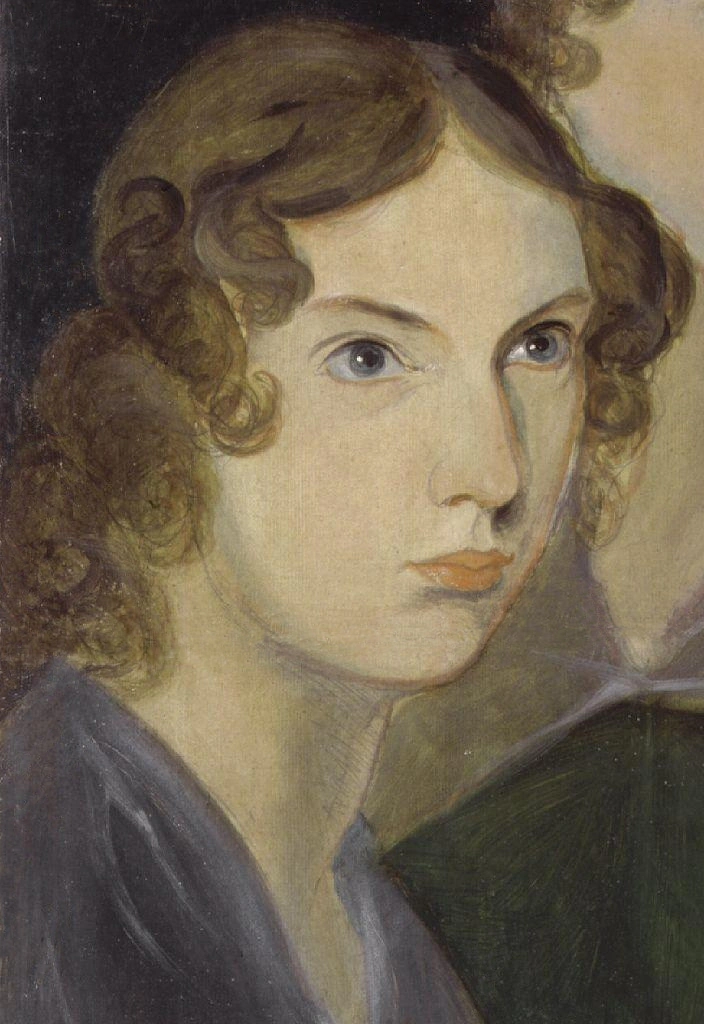
Attr: Patrick Branwell Brontë (died 1848)
| 8 Quotes | |
| Born as | Anne Brontë |
| Occup. | Novelist |
| From | United Kingdom |
| Born | January 17, 1820 Thornton, West Yorkshire, United Kingdom |
| Died | May 28, 1849 Scarborough, North Yorkshire, United Kingdom |
| Cause | Tuberculosis |
| Aged | 29 years |
| Cite | |
Citation Formats
APA Style (7th ed.)
Anne bronte biography, facts and quotes. (2026, March 2). FixQuotes. https://fixquotes.com/authors/anne-bronte/
Chicago Style
"Anne Bronte biography, facts and quotes." FixQuotes. March 2, 2026. https://fixquotes.com/authors/anne-bronte/.
MLA Style (9th ed.)
"Anne Bronte biography, facts and quotes." FixQuotes, 2 Mar. 2026, https://fixquotes.com/authors/anne-bronte/. Accessed 5 Mar. 2026.
Early Life and Background
Anne Bronte was born on 17 January 1820 at Thornton, near Bradford in Yorkshire, the youngest of six children of Patrick Bronte, an Irish-born Anglican clergyman, and Maria Branwell Bronte, from Cornwall. Within months the family moved to the Haworth parsonage on the edge of the moors, a landscape of wind, stone, and severe beauty that became inseparable from the siblings imaginations. Maria died in 1821, and the children grew up under the brisk household authority of their maternal aunt, Elizabeth Branwell, in a home where piety, books, and the daily sight of parish hardship coexisted.The early loss of their mother and, soon after, the deaths of the two eldest sisters, Maria and Elizabeth, following their brief, harsh schooling at the Clergy Daughters School at Cowan Bridge, formed the emotional weather of Anne's childhood. Anne was often described as the gentlest of the three novelist-sisters, but gentleness in Haworth did not mean softness: it meant endurance, attentiveness, and an instinct for moral clarity. With Charlotte, Emily, and Branwell, she entered the private worlds of toy soldiers and handmade magazines, creating the long-running juvenile saga of Gondal, where her poetry began to test the boundaries between longing, duty, and self-command.
Education and Formative Influences
Anne's formal education was intermittent, shaped by the limited options for clergymen's daughters and by the Brontes preference for self-directed reading. She attended Roe Head School in Mirfield in 1836-1837, where Charlotte had studied and briefly taught; the separation strained her health and spirits, but it also trained her in discipline and observation. In the parsonage she read widely - the Bible, sermons, Romantic poetry, and contemporary periodicals - while the sisters sustained each other through critique and collaboration, and Anne quietly developed a more openly didactic moral imagination than Emily, and a less socially strategic one than Charlotte.Career, Major Works, and Turning Points
Like many educated but not wealthy women of her era, Anne earned her living as a governess, first at Blake Hall near Mirfield (1839-1840) and then for the Robinson family at Thorp Green Hall near York (1840-1845). The work gave her daily evidence of class power, parental indulgence, and the precarious dignity of a woman paid to shape other people's children. After leaving Thorp Green, she returned to Haworth and joined Charlotte and Emily in publishing Poems by Currer, Ellis, and Acton Bell (1846), adopting the masculine pseudonym Acton Bell. Her first novel, Agnes Grey (1847), drew on her governess years with unsparing realism; the same year she published The Tenant of Wildfell Hall, a bold, commercially successful study of marital tyranny and female self-rescue. Tuberculosis cut her life short; she died in Scarborough on 28 May 1849, seeking sea air, with Charlotte at her side.Philosophy, Style, and Themes
Anne Bronte wrote with a plain, almost legalistic seriousness that was itself a form of courage in a literary culture that expected women to soften their judgments. Her realism was not merely descriptive; it was diagnostic, intent on showing how character is shaped under pressure. She repeatedly argued, in art as in life, that protection can become a trap, and that moral education must build self-reliance rather than dependence: “If you would have your son to walk honourably through the world, you must not attempt to clear the stones from his path, but teach him to walk firmly over them - not insist upon leading him by the hand, but let him learn to go alone”. The sentence is programmatic - a governess's hard-won credo - and it reveals Anne's inner life as a continual negotiation between tenderness and the refusal to sentimentalize.In The Tenant of Wildfell Hall, her psychology sharpens into a theory of survival: love without clear-eyed judgment becomes complicity, and virtue without autonomy becomes mere performance. Her insistence on speaking plainly about vice - especially male drunkenness and coercion inside marriage - is anchored in a belief that ignorance is not innocence. “I would not send a poor girl into the world, ignorant of the snares that beset her path; nor would I watch and guard her, till, deprived of self-respect and self-reliance, she lost the power or the will to watch and guard herself ”. Even her lyrical nature writing, often overlooked beside her polemics, functions as emotional counterweight: “A light wind swept over the corn, and all nature laughed in the sunshine”. That burst of pastoral laughter is not escapism so much as her vision of grace - brief, sensory, and hard-earned, appearing amid the moral storms she refused to ignore.
Legacy and Influence
For decades Anne was treated as the lesser Bronte, in part because Charlotte, shaping the family's posthumous image, viewed The Tenant of Wildfell Hall as too coarse in subject and too direct in method. Modern criticism has reversed that verdict, recognizing Anne as one of the Victorian era's most incisive moral realists: a novelist who fused evangelical conscience with proto-feminist arguments about legal and economic power in marriage. Agnes Grey helped define the governess novel as social document, and The Tenant of Wildfell Hall remains a landmark in the literature of addiction, domestic abuse, and female agency - a book whose calm, relentless candor has influenced later traditions of social problem fiction and continues to expand what readers think a "respectable" novel can confront.Our collection contains 8 quotes written by Anne, under the main topics: Wisdom - Love - Nature - Father - Perseverance.
Frequently Asked Questions
- Anne Brontë governess: Anne Brontë worked as a governess for the Ingham and Robinson families.
- Brontë sisters' books: The Brontë sisters' books include 'Jane Eyre' by Charlotte, 'Wuthering Heights' by Emily, and 'The Tenant of Wildfell Hall' by Anne.
- Brontë sisters: The Brontë sisters were Anne, Charlotte, and Emily Brontë, all of whom were novelists.
- Anne Brontë poems: Anne Brontë's poems include 'The Penitent', 'Lines Composed in a Wood on a Windy Day', and 'The Captive Dove'.
- Anne Brontë pen name: Anne Brontë wrote under the pen name Acton Bell.
- Anne Brontë Works: Anne Brontë wrote 'Agnes Grey' and 'The Tenant of Wildfell Hall'.
- Anne Brontë famous Works: Anne Brontë's famous works include 'Agnes Grey' and 'The Tenant of Wildfell Hall'.
- How did Anne Bronte die: Anne Brontë died of tuberculosis in 1849.
- How old was Anne Bronte? She became 29 years old
Anne Bronte Famous Works
- 1848 The Tenant of Wildfell Hall (Novel)
- 1847 Agnes Grey (Novel)
Source / external links