
Anne McCaffrey Biography Quotes 28 Report mistakes
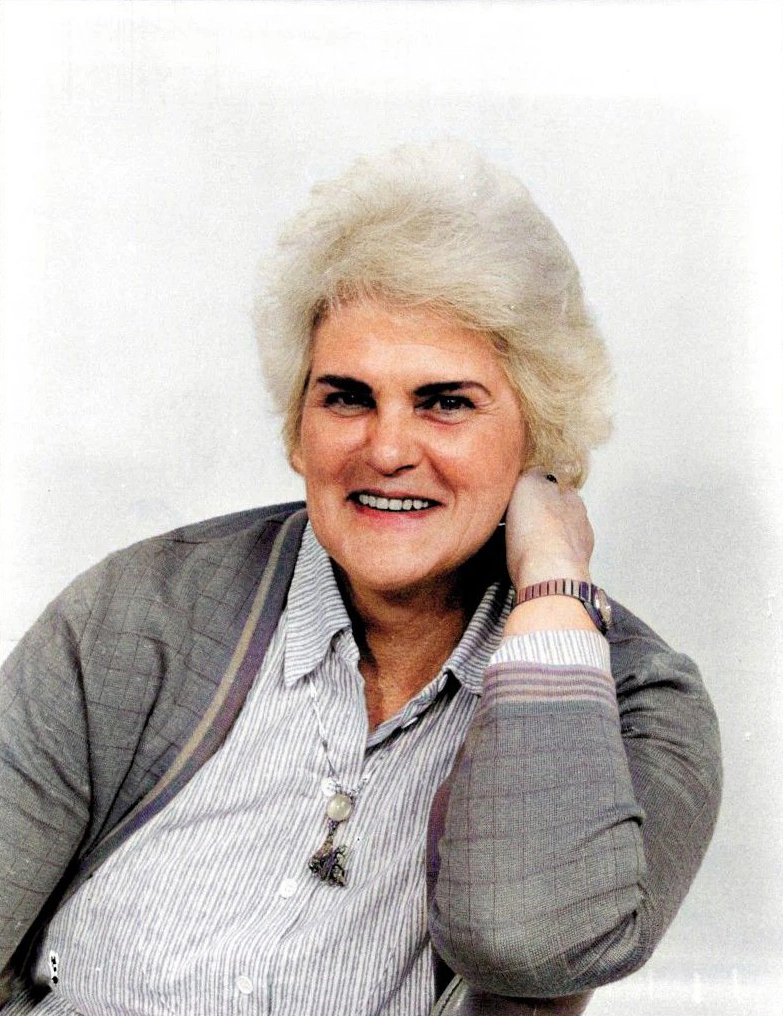
| 28 Quotes | |
| Born as | Anne Inez McCaffrey |
| Occup. | Author |
| From | USA |
| Spouse | Horace Wright Johnson (1949–1958) |
| Born | April 1, 1926 Cambridge, Massachusetts, USA |
| Died | November 21, 2011 Bray, County Wicklow, Ireland |
| Cause | Stroke |
| Aged | 85 years |
| Cite | |
Citation Formats
APA Style (7th ed.)
Anne mccaffrey biography, facts and quotes. (2026, February 11). FixQuotes. https://fixquotes.com/authors/anne-mccaffrey/
Chicago Style
"Anne McCaffrey biography, facts and quotes." FixQuotes. February 11, 2026. https://fixquotes.com/authors/anne-mccaffrey/.
MLA Style (9th ed.)
"Anne McCaffrey biography, facts and quotes." FixQuotes, 11 Feb. 2026, https://fixquotes.com/authors/anne-mccaffrey/. Accessed 5 Mar. 2026.
Early Life and Background
Anne Inez McCaffrey was born on April 1, 1926, in Cambridge, Massachusetts, into a Catholic, Irish-American family shaped by the interwar years and the tightening moral codes that followed. Growing up amid the Great Depression and World War II, she absorbed early lessons about duty, scarcity, and the way institutions can both steady and constrain a life - tensions that later reappeared in her fiction as communities forced to improvise workable ethics under pressure.From the beginning she was drawn to performance and narrative, the two crafts that teach an artist how voice and audience interact. That instinct for storytelling as an embodied act - dialogue that must sound true, scenes that must move like lived experience - would become central to her later work in science fiction and fantasy, genres she treated not as escapism but as laboratories for building functional societies and testing human resilience.
Education and Formative Influences
McCaffrey attended Radcliffe College, graduating in 1947, and later studied at the Stuart School of the Boston Museum of Fine Arts. The combined training - rigorous liberal-arts analysis and visual composition - sharpened her sense of structure and perspective: character as the focal point, worldbuilding as the frame that makes emotion legible. She also sang and acted, and that theatrical ear for timing and voice helped her write dialogue with unusual clarity, a skill that mattered in the magazine era when a short story had to seize readers quickly.Career, Major Works, and Turning Points
She published early science fiction in the 1950s, but her decisive breakthrough came with the stories that became the Dragonriders of Pern: "Weyr Search" (1967) won a Hugo, and "Dragonrider" (1968) won a Nebula, positioning her as a rare woman winning top field honors in a still male-skewed marketplace. Dragonflight (1968) and Dragonquest (1971) expanded Pern into a long-running chronicle of survival against Thread, blending science-fictional premises with the romance of dragons and the grit of agrarian labor; later volumes such as The White Dragon (1978), Dragonsdawn (1988), and a widening web of companion novels turned the series into a generational mythology. She also built major secondary franchises - the Crystal Singer books (beginning 1982) and the Talent/Rowan universe (beginning 1990) - and eventually moved to Ireland, where the distance from American publishing hubs did not lessen her productivity but did deepen her interest in community, lineage, and the costs of leadership.Philosophy, Style, and Themes
McCaffrey wrote with the conviction that speculative fiction is a moral technology: it can model how ordinary people endure catastrophes without surrendering dignity. Her characters are frequently workers first - riders, healers, miners, singers, telepaths - people whose competence becomes an ethical stance, and whose bonds (human to human, human to dragon, mentor to apprentice) replace abstract ideals with lived responsibility. The recurring McCaffrey drama is not whether heroes are pure, but whether flawed people can be taught to cooperate fast enough to keep a world intact.Her inner life, as it surfaces through interviews and narrative pattern, shows a preference for compassion over verdicts and for pragmatic humanism over doctrinal certainty. “Make no judgements where you have no compassion”. That line maps onto Pern's social tensions, where discipline is necessary but cruelty is treated as a failure of imagination. She also made an explicit creative choice to strip away organized religion on Pern: “I also don't have organized religion on Pern. I figured - since there were four holy wars going on at the time of writing - that religion was one problem Pern didn't need”. In context, the statement reads less like provocation than like protective architecture: she wanted a world where moral authority must be earned through care, skill, and accountability, not inherited through dogma. And beneath the dragons and psychic gifts is her most revealing credo about why readers return: “Because we build the worlds we wouldn't mind living in. They contain scary things, problems, but also a sense of rightness that makes them alive and makes us want to live there”. Her "rightness" is never utopian ease; it is the felt relief of a society that, when tested, chooses mutual aid.
Legacy and Influence
McCaffrey died on November 21, 2011, leaving a body of work that helped normalize women-centered adventure in mainstream science fiction and proved that long-form, emotionally driven series could be both popular and formally ambitious. Pern in particular became a bridge property for readers moving between fantasy and science fiction, and its imprint persists in later dragon-centric epics, competency-driven heroines, and fan cultures built around maps, songs, and shared lore. More quietly, her enduring influence lies in the psychological permission she offered: to imagine survival not as lone-wolf triumph but as the hard, daily practice of belonging.Our collection contains 28 quotes written by Anne, under the main topics: Motivational - Writing - Life - Parenting - Kindness.
Other people related to Anne: Elizabeth Moon (Author)
Anne McCaffrey Famous Works
- 1978 The White Dragon (Novel)
- 1973 To Ride Pegasus (Novel)
- 1971 Dragonquest (Novel)
- 1969 The Ship Who Sang (Novel)
- 1968 Dragonflight (Novel)
Source / external links