
Anne Sexton Biography Quotes 13 Report mistakes
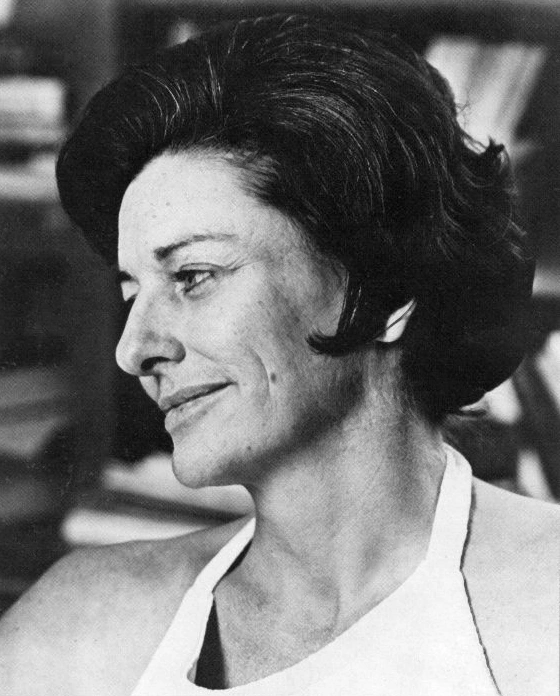
| 13 Quotes | |
| Occup. | Poet |
| From | USA |
| Born | November 9, 1928 Newton, Massachusetts, United States |
| Died | October 4, 1974 Weston, Massachusetts, United States |
| Aged | 45 years |
| Cite | |
Citation Formats
APA Style (7th ed.)
Anne sexton biography, facts and quotes. (2026, February 11). FixQuotes. https://fixquotes.com/authors/anne-sexton/
Chicago Style
"Anne Sexton biography, facts and quotes." FixQuotes. February 11, 2026. https://fixquotes.com/authors/anne-sexton/.
MLA Style (9th ed.)
"Anne Sexton biography, facts and quotes." FixQuotes, 11 Feb. 2026, https://fixquotes.com/authors/anne-sexton/. Accessed 27 Mar. 2026.
Early Life and Background
Anne Gray Harvey Sexton was born on November 9, 1928, in Newton, Massachusetts, and grew up largely in nearby Weston, in the well-appointed, status-conscious suburbs of Boston. Her family life carried the tensions of a household that prized appearance and social poise while quietly breeding volatility: her father, Ralph Gray Harvey, worked in the woolen business; her mother, Mary Gray Staples Harvey, came from a line that valued manners and reputation. Sexton later described feeling both indulged and emotionally stranded, a child watching adult moods for weather signs and learning early how silence can become a kind of pressure.Adolescence brought a sharpened sense of difference. She chafed against conformity, found the codes of proper femininity constricting, and began to attach a secretive intensity to love, shame, and performance. After attending boarding school, she married Alfred "Kayo" Sexton II in 1948 and moved through the postwar ideal of domestic security while feeling it as an ill-fitting costume. Motherhood - she had two daughters, Linda and Joyce - coincided with worsening depression, and by the mid-1950s she suffered severe breakdowns, hospitalizations, and suicidal crises that would shadow her remaining years.
Education and Formative Influences
Sexton did not arrive by the conventional academic route of mid-century American poetry; her decisive education began in treatment. A psychiatrist encouraged her to write as part of therapy, and in the late 1950s she pursued workshops and mentorship with unusual hunger, studying craft while testing how far confession could go without collapsing into mere diary. She learned quickly in Boston-area literary circles, drawing sustaining rigor and rivalry from peers and teachers such as Robert Lowell in his famed seminar, alongside other emerging voices, and she absorbed the era's belief that a poem could carry private crisis into public speech without apologizing for its subject.Career, Major Works, and Turning Points
Her rise was swift. She published early work in major magazines and broke through with To Bedlam and Part Way Back (1960), a book shaped by hospitalization and survival, followed by All My Pretty Ones (1962), which deepened her elegiac reach and sharpened her family reckonings. Live or Die (1966) made her a central figure in the confessional movement and won the Pulitzer Prize in 1967, confirming that her raw material was also formidable art. Later books widened her range and risk: Love Poems (1969) pushed erotic candor into the open; Transformations (1971) reimagined Grimm fairy tales with a feminist, mordant bite; The Book of Folly (1972) and The Death Notebooks (1974) continued her battle between wit and despair. She also performed with a jazz-inflected group, Anne Sexton and Her Kind, turning readings into charged public events. Yet acclaim did not stabilize her. Mental illness, dependence on alcohol and medication, and turbulent relationships - including the strains of marriage and therapy - intensified, and on October 4, 1974, after revising proofs and driving home from lunch, she died by suicide in her garage in Weston.Philosophy, Style, and Themes
Sexton's signature achievement was to make the interior life legible without making it small. She wrote in a direct, spoken American idiom that could pivot from nursery-rhyme simplicity to surgical precision, often within a single stanza. Her poems treat the self not as a fixed identity but as a site of argument: between daughter and mother, wife and lover, patient and performer, believer and skeptic. She returned obsessively to the family as both origin and wound, insisting that memory - unreliable, emotional, necessary - is the real archive. “It doesn't matter who my father was; it matters who I remember he was”. That line is not a dodge but a method: her truth is psychological truth, the felt narrative that shapes desire and damage.The same method governs her spiritual imagination and her ethics of survival. She wrote about God with intimacy and distrust, about sex and death with a clarity that refuses euphemism, and about the female body as a battleground between cultural scripts and private need. Her work is animated by a relentless listening for whatever the psyche tries to hide - “Put your ear down close to your soul and listen hard”. Yet listening did not mean indulgence; she could be fiercely impatient with the corrosive fallout of despair, as in the admonition, “Live or die, but don't poison everything”. The line reads like self-command, the moral voice of someone who knew how suffering can metastasize into cruelty. Formally, she relied on driving narrative momentum, stark imagery, and a controlled use of repetition and refrain - devices that mimic obsession while holding it in shape.
Legacy and Influence
Sexton remains one of the defining American poets of the 1960s and early 1970s, emblematic of confessional poetry yet not reducible to it. Her best work broadened what literary subject matter could include - postpartum depression, suicidal ideation, female rage, sexual agency, ambivalent faith - while proving that candor can coexist with intricate craft and theatrical intelligence. She helped open doors for later poets writing from trauma, illness, and gendered constraint, and her fairy-tale revisions anticipated a wave of feminist retellings that treat inherited stories as ideological instruments. The power of her legacy lies in the tension she never resolved: the poem as a means of staying alive, and the poem as a record of how hard staying alive can be.Our collection contains 13 quotes written by Anne, under the main topics: Ethics & Morality - Mortality - Deep - Poetry - Father.
Other people related to Anne: Sharon Olds (Poet), Ned Rorem (Composer)
Anne Sexton Famous Works
- 1975 The Awful Rowing Toward God (Poetry Collection)
- 1974 The Death Notebooks (Poetry Collection)
- 1972 The Book of Folly (Poetry Collection)
- 1971 Transformations (Poetry Collection)
- 1969 Love Poems (Poetry Collection)
- 1966 Live or Die (Poetry Collection)
- 1962 All My Pretty Ones (Poetry Collection)
- 1960 To Bedlam and Part Way Back (Poetry Collection)
Source / external links