
Anne Spencer Biography Quotes 3 Report mistakes
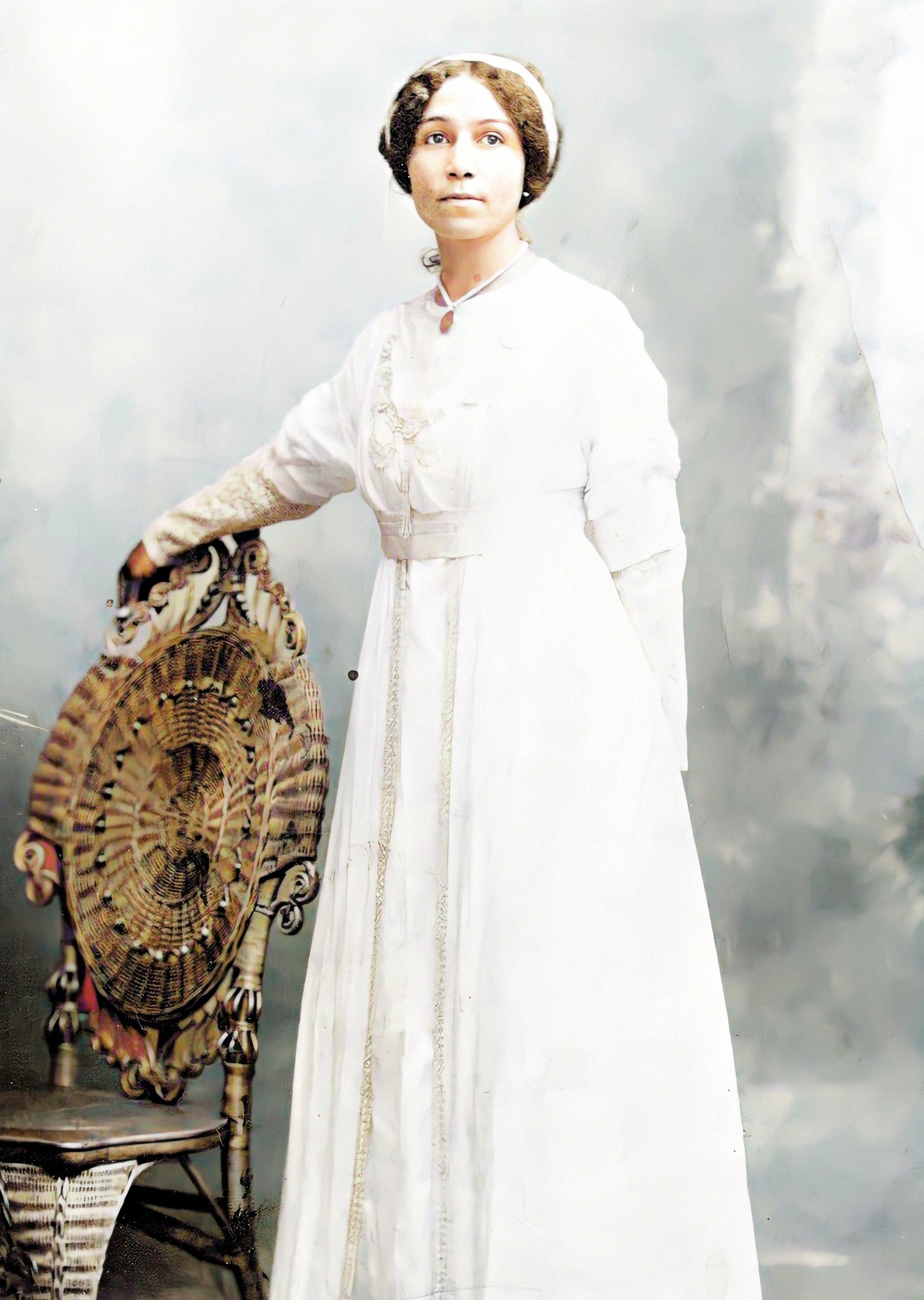
Attr: See page for author
| 3 Quotes | |
| Born as | Annie Bethel Scales Bannister |
| Occup. | Poet |
| From | USA |
| Born | February 6, 1882 Henry County, Virginia |
| Died | July 27, 1975 Lynchburg, Virginia |
| Aged | 93 years |
| Cite | |
Citation Formats
APA Style (7th ed.)
Anne spencer biography, facts and quotes. (2026, February 11). FixQuotes. https://fixquotes.com/authors/anne-spencer/
Chicago Style
"Anne Spencer biography, facts and quotes." FixQuotes. February 11, 2026. https://fixquotes.com/authors/anne-spencer/.
MLA Style (9th ed.)
"Anne Spencer biography, facts and quotes." FixQuotes, 11 Feb. 2026, https://fixquotes.com/authors/anne-spencer/. Accessed 26 Mar. 2026.
Early Life and Background
Anne Spencer was born Annie Bethel Scales Bannister on February 6, 1882, in Henry County, Virginia, in the post-Reconstruction South where Black life was constrained by law and custom yet sustained by family networks, church communities, and self-made institutions. Her early years were marked by movement and improvisation. After her mother died, she spent periods in Bramwell, West Virginia, with relatives, a shift that exposed her to a wider Black middle-class world than rural Virginia typically allowed and gave her a lifelong sense that geography could be both refuge and limit.She came of age as segregation hardened and as African American women were expected to carry labor, kinship, and respectability at once. Spencer later built a private counterworld in her home - a garden, a library, a table where guests argued and laughed - but that impulse began early: a need to claim a protected interior life amid public constraint. From the start, her sensibility leaned toward the exact pleasures of language and plants, a temperament that would become both her subject matter and her method.
Education and Formative Influences
Spencer attended the Virginia Seminary in Lynchburg (later Virginia University of Lynchburg), an unusually consequential space for a young Black woman in the 1890s: disciplined study, teachers who modeled racial uplift without surrendering beauty, and an environment where reading and recitation were not ornaments but tools. She absorbed the cadences of hymnody and oratory, the precision of schoolroom rhetoric, and the emerging news of Black intellectual life that would soon crystallize in the New Negro movement. Just as important, she learned the practical art of self-reliance - how to make a life in a country that offered few sanctioned pathways.Career, Major Works, and Turning Points
In 1901 she married Edward Spencer and settled in Lynchburg, Virginia, where their home at 1313 Pierce Street became an epicenter of Black cultural and political conversation. Spencer's poems appeared in key venues of the Harlem Renaissance, including The Crisis and Opportunity, bringing a Southern Black woman's lyric intelligence into dialogue with a movement often narrated through northern cities. Her best-known poems include "White Things" (a stark meditation on racial violence and purity myths), "Lines to a Nasturtium", and "Lady, Lady" (a tender portrait of Black womanhood under pressure). While she published relatively little in book form during her prime, she wrote steadily, and the turning point was not a single debut but the slow recognition that her domestic sphere - marriage, mothering, gardening, hospitality - could be a platform for art and influence. The garden she cultivated was both literal and symbolic: a living archive of patience, design, and resistance.Philosophy, Style, and Themes
Spencer's philosophy was a practiced equilibrium between intimacy and protest. Her lyrics can be lush with flowers, light, and small domestic rituals, yet they never forget the brutal architecture of Jim Crow that surrounded those pleasures. The tension is central to her psychology: she guarded privacy not as retreat but as a condition for truth-telling. When she writes with the cadence of conversation, she is also measuring the cost of being heard in a world that misreads Black speech and Black silence alike. The domestic becomes a laboratory where power is tested in miniature and where dignity is staged without permission.Her themes return to limitation, choice, and the high price of attention. “One cannot collect all the beautiful shells on the beach”. In Spencer's work, that truth becomes a discipline: the poet selects, arranges, and relinquishes, turning scarcity into form. Marriage and companionship appear not as sentimental fixtures but as fragile achievements within time and labor - “A simple enough pleasure, surely, to have breakfast alone with one's husband, but how seldom married people in the midst of life achieve it”. Even communication, so central to a salon-like home, is never effortless: “Good communication is as stimulating as black coffee, and just as hard”. Her poems enact that hardness through compressed diction, precise imagery, and a willingness to let beauty carry indictment.
Legacy and Influence
Anne Spencer died on July 27, 1975, and in the decades since, her reputation has grown as scholars and readers have re-mapped the Harlem Renaissance to include its Southern rooms, gardens, and local networks. She endures as a poet of doubleness: lyric grace that does not dissolve history, and protest that does not abandon tenderness. The Anne Spencer House and Garden Museum in Lynchburg preserves the physical scene of her imagination - a reminder that her art was made not only in print but in cultivated space, conversation, and the stubborn insistence that Black inner life deserved both protection and expression.Our collection contains 3 quotes written by Anne, under the main topics: Contentment - Husband & Wife - Relationship.
Source / external links