
Annie Jump Cannon Biography Quotes 3 Report mistakes
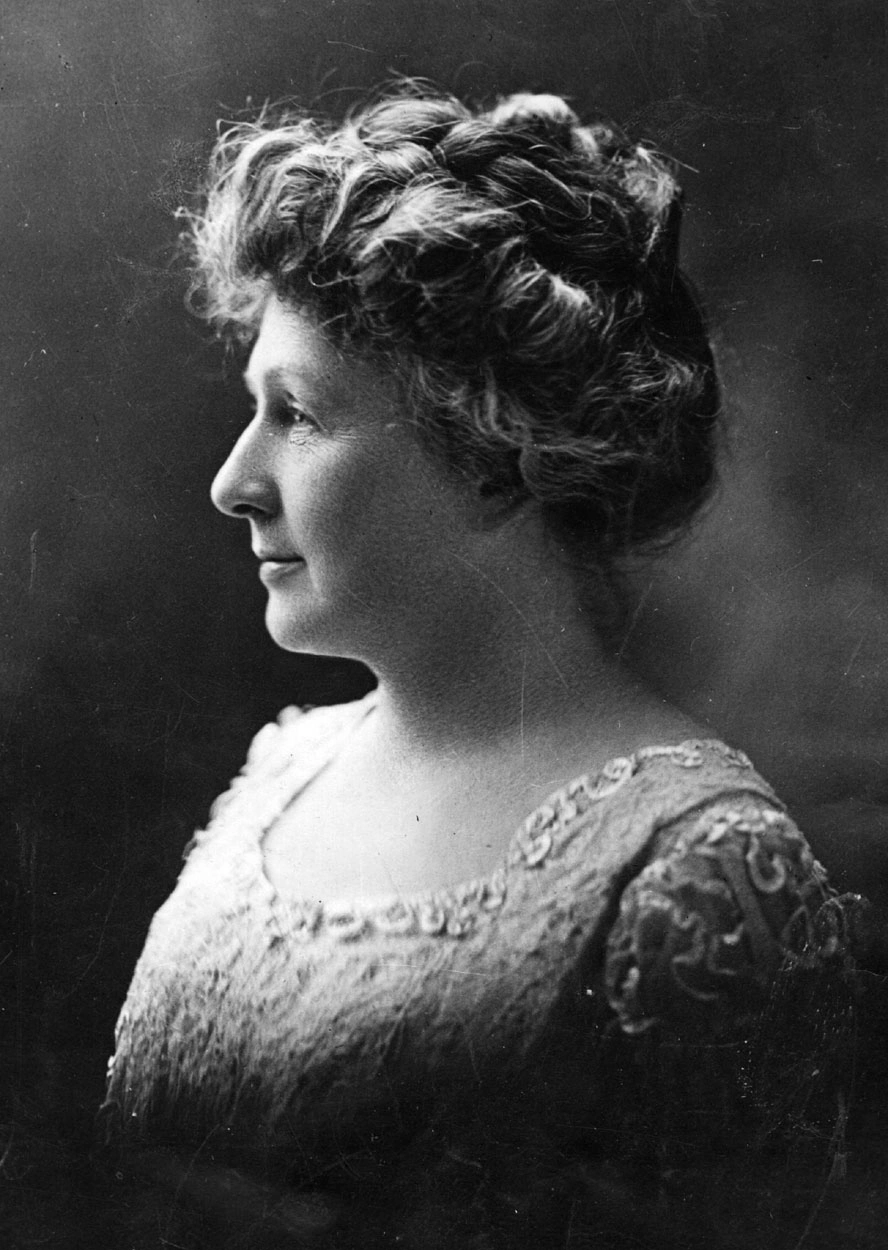
| 3 Quotes | |
| Occup. | Scientist |
| From | USA |
| Born | December 11, 1863 Dover, Delaware |
| Died | April 13, 1941 Cambridge, Massachusetts |
| Aged | 77 years |
| Cite | |
Citation Formats
APA Style (7th ed.)
Annie jump cannon biography, facts and quotes. (2026, February 11). FixQuotes. https://fixquotes.com/authors/annie-jump-cannon/
Chicago Style
"Annie Jump Cannon biography, facts and quotes." FixQuotes. February 11, 2026. https://fixquotes.com/authors/annie-jump-cannon/.
MLA Style (9th ed.)
"Annie Jump Cannon biography, facts and quotes." FixQuotes, 11 Feb. 2026, https://fixquotes.com/authors/annie-jump-cannon/. Accessed 6 Mar. 2026.
Early Life and Background
Annie Jump Cannon was born on December 11, 1863, in Dover, Delaware, the eldest of three daughters in a middle-class household shaped by the aftershocks of the Civil War and the quickening pace of American science. Her father, Wilson Cannon, worked in shipbuilding and state politics; her mother, Mary Jump Cannon, brought a practical curiosity to the home and became Annie's first guide to the night sky. In an era when astronomy was still often practiced as refined hobby as much as profession, Mary encouraged her daughter to learn constellations and to treat observation as a habit of mind rather than a pastime.Those early evenings looking upward became a private refuge and a lifelong compass. Cannon later lost much of her hearing after illness in early adulthood, a disability that tightened her inward focus and sharpened her dependence on written records, careful routines, and visual pattern recognition. The late-19th-century United States was expanding higher education for women in uneven, contested ways, and Cannon learned to move through these openings with both discipline and quiet defiance - cultivating a work identity defined not by access to telescopes, but by mastery of data.
Education and Formative Influences
Cannon entered Wellesley College in 1880 and graduated in 1884, studying physics and astronomy under Sarah Frances Whiting, whose laboratory-based teaching linked observation, instruments, and measurement with intellectual independence. Cannon returned to Delaware briefly, then reoriented her life toward scientific work after her mother's death, taking advanced courses at Radcliffe College and engaging with the growing world of photographic astronomy. She absorbed the period's central shift: the sky was becoming an archive of spectra and plates, and the astronomer increasingly a reader of coded light.Career, Major Works, and Turning Points
In 1896 Cannon joined the Harvard College Observatory under Edward C. Pickering as one of the women "computers" who reduced and classified photographic data. She became the most prolific architect of stellar order, refining and popularizing the spectral sequence O-B-A-F-G-K-M (reorganized from earlier schemes by Antonia Maury and Williamina Fleming) and applying it at industrial scale. Between 1918 and 1924 she published the core volumes of the Henry Draper Catalogue, ultimately classifying on the order of 350, 000 stars and later extending the work toward the Henry Draper Extension. Her speed - often cited as hundreds of stars per hour - was not mere facility but an embodied method: she built consistent judgments across imperfect plates, standardizing types that made comparison possible across observatories. In 1931 she was named Curator of Astronomical Photographs at Harvard, and in 1932 she became the first woman to receive the Henry Draper Medal of the National Academy of Sciences; she also endowed the Annie Jump Cannon Award to support women in astronomy, turning her own hard-won access into institutional leverage.Philosophy, Style, and Themes
Cannon's inner life was marked by restraint, perseverance, and a kind of devotional patience toward evidence. Hearing loss and the gendered hierarchy of the observatory pushed her toward a style of authority that came not from public rhetoric but from immaculate consistency. She trusted the photograph as a witness and the classification table as a moral instrument: if the universe could be ordered without vanity, then a woman could claim intellectual ground without asking permission. Her notebooks and catalogues show a mind that found freedom in constraint - narrow spectral lines, repeated decisions, a discipline that turned anonymity into impact.She also treated classification as a philosophical bridge between human limits and cosmic scale. “Classifying the stars has helped materially in all studies of the structure of the universe”. In that conviction, the cataloguer is not a clerk but a builder of foundations, making possible later work on stellar evolution, galactic structure, and distance scales. Cannon's humility did not dilute ambition; it refined it into service to a larger order: “Teaching man his relatively small sphere in the creation, it also encourages him by its lessons of the unity of Nature and shows him that his power of comprehension allies him with the great intelligence over-reaching all”. The subtext is psychological as much as scientific - a reassurance that careful comprehension can reconcile insignificance with meaning. For her, the night sky was not merely beautiful but inexhaustible, and she could sum up its challenge without melodrama: “No greater problem is presented to the human mind”. Legacy and Influence
Cannon died on April 13, 1941, in Cambridge, Massachusetts, having helped transform astronomy into a data-driven science whose claims rested on standardized, shareable classification. The OBAFGKM sequence remains a basic grammar of stellar astrophysics, and the Henry Draper Catalogue remains a landmark of systematic observation. Just as enduring is the model she embodied: the scientist as meticulous interpreter of evidence, the woman professional who advances by producing work too essential to ignore. Through her award, her methods, and the quiet authority of her catalogues, Cannon's influence persists wherever astronomers turn raw light into organized knowledge.
Our collection contains 3 quotes written by Annie, under the main topics: Wisdom - Deep - Science.
Annie Jump Cannon Famous Works
- 1924 Draper Catalogue of Stellar Spectra (Book)
Source / external links