
Anson Jones Biography Quotes 3 Report mistakes
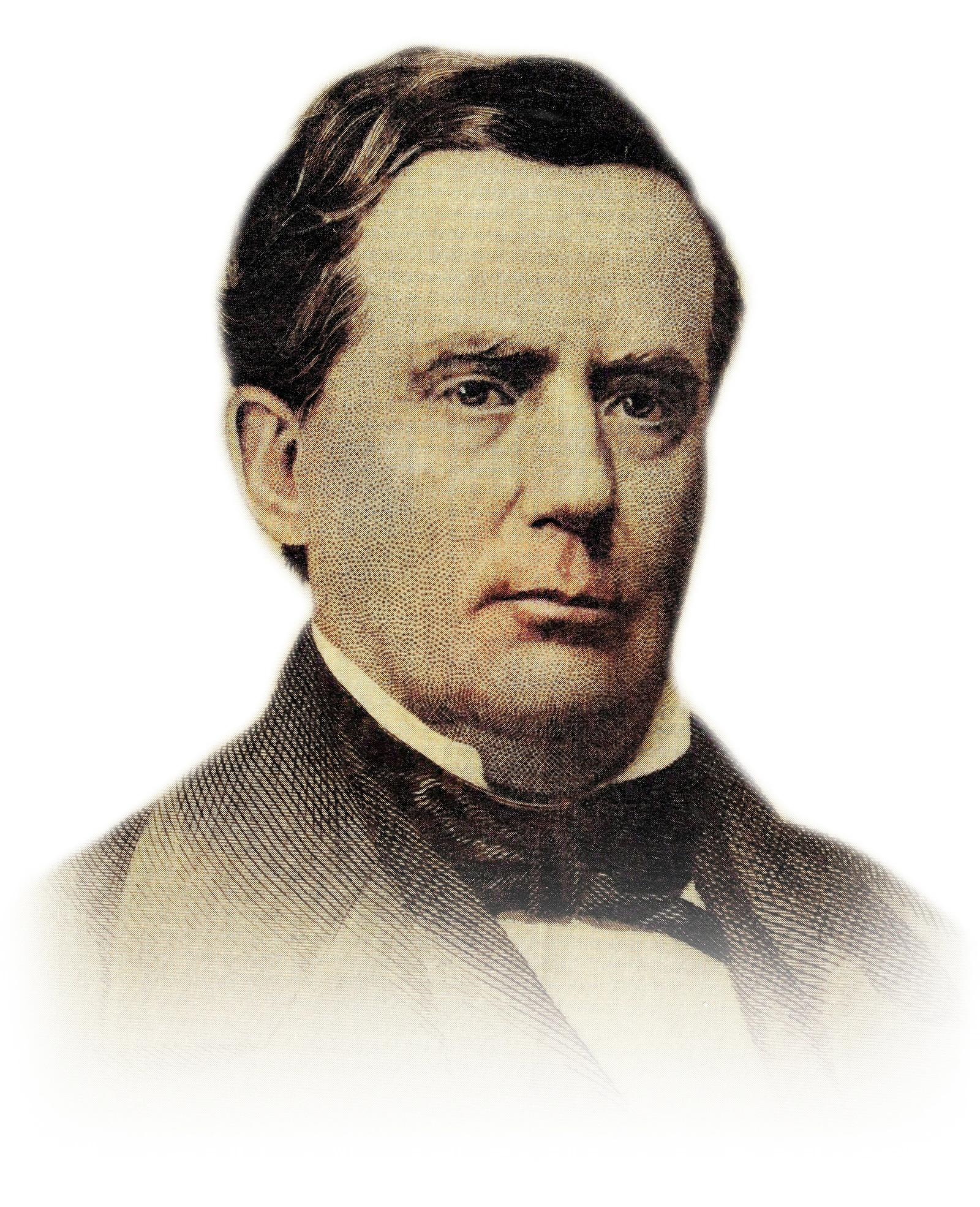
| 3 Quotes | |
| Occup. | Politician |
| From | USA |
| Born | January 20, 1798 Massachusetts, USA |
| Died | January 9, 1858 |
| Aged | 59 years |
| Cite | |
Citation Formats
APA Style (7th ed.)
Anson jones biography, facts and quotes. (2026, February 11). FixQuotes. https://fixquotes.com/authors/anson-jones/
Chicago Style
"Anson Jones biography, facts and quotes." FixQuotes. February 11, 2026. https://fixquotes.com/authors/anson-jones/.
MLA Style (9th ed.)
"Anson Jones biography, facts and quotes." FixQuotes, 11 Feb. 2026, https://fixquotes.com/authors/anson-jones/. Accessed 13 Feb. 2026.
Early Life and Background
Anson Jones was born on January 20, 1798, in Great Barrington, Massachusetts, in a New England world shaped by Congregational moral seriousness, the afterglow of the Revolution, and the restless mobility of the early republic. The son of Welsh-descended families of the Berkshires, he grew up amid small-town institutions that prized self-command, literacy, and public service - traits that would later harden into an exacting personal code and a persistent sensitivity to slights.His early adulthood unfolded during a period when the young United States was expanding commercially and geographically, and when ambitious men could reinvent themselves across professions and borders. Jones did so more than once: first as a physician, then as a Texas politician and diplomat. That pattern of reinvention, paired with a craving for recognition, would become central to his inner life - a mixture of high competence, bruised pride, and a recurring fear that history would misread his motives.
Education and Formative Influences
Jones attended institutions in Massachusetts and trained in medicine, graduating from Berkshire Medical College in the 1820s, absorbing the era's confidence in rational systems and professional credentialing. The disciplined habits of a doctor - diagnosis, evidence, procedure, and the belief that crises can be managed by calm technique - stayed with him when he later tried to treat the Republic of Texas as a patient needing stabilization, international legitimacy, and a controlled transition rather than romantic improvisation.Career, Major Works, and Turning Points
After practicing medicine and teaching, Jones moved to Texas in 1833, entering a frontier society in the wake of the Texas Revolution that was simultaneously lawless and institution-building. He settled at Brazoria and quickly joined politics, serving in the Congress of the Republic and becoming a prominent figure in the divided era of Sam Houston and Mirabeau B. Lamar. Jones was a diplomat to the United States and then Secretary of State for President Houston, where he labored to secure recognition and manage the dangerous triangle of Mexico, the United States, and European powers. In 1844 he was elected the last President of the Republic of Texas, tasked with the most contentious decision imaginable: whether to preserve an independent republic or accept annexation. Jones attempted to keep options open through parallel negotiations for annexation and a possible British- and French-backed settlement with Mexico, but shifting U.S. politics and Texas public pressure narrowed the path. When annexation was approved, he oversaw the transition to statehood, handed power to Governor J. Pinckney Henderson, and receded into a private life increasingly marked by grievance, deteriorating health, and isolation; he died by suicide on January 9, 1858, in Houston.Philosophy, Style, and Themes
Jones thought in terms of systems - treaties, protocols, and reputations - and he wrote and acted with a physician's preference for controlled processes over heroic gesture. His private psychology seems to have been split between a genuine sense of duty and an acute need to be seen as indispensable. In his diplomatic world, trust was currency, and he was repeatedly placed in roles requiring both discretion and nerve: "It is only requisite, for me to say to you, that the President places great reliance upon your skill, judgment and intimate knowledge". That language of reliance captures the way Jones wanted to be valued - not as a charismatic war leader, but as the capable technician of sovereignty, the man who could translate Texan aspirations into international terms.Yet his temperament was also shaped by uncertainty and the improvisational character of the Texas republic, where decisions were made amid rumor, sparse intelligence, and rapidly changing alignments. The frontier state could not provide what Jones most wanted: stable rules and consistent esteem. Instructions were often incomplete, policy contradictory, and timing unforgiving: "Unavoidable circumstances prevent me from giving you ample written instructions. Such however as may be deemed necessary will be prepared and sent to you at the City of Washington in a very few days". In such conditions, Jones learned to carry burdens alone, and that solitude, once politically useful, later curdled into suspicion and bitterness.
His defining theme was closure - the end of an experiment, the surrender of a separate national identity, and the personal reckoning that followed. When he presided over annexation, he could announce history with a stark finality few leaders ever speak: "The Republic of Texas is no more". The sentence is not only constitutional; it is existential, exposing a man who tied his self-worth to the careful management of an ending, and who afterwards struggled to live in the ordinary time that comes after epochal decisions.
Legacy and Influence
Jones remains a paradoxical figure: competent, learned, and crucial to Texas diplomacy, yet often overshadowed by more mythic contemporaries. Historians credit him with steering Texas through its last, perilous months as a republic and executing annexation with administrative order, while also noting how his personal resentments and thin skin shaped his memoir-like writings and later reputation. His life illustrates the psychological cost of nation-making on the second rank of leadership - the administrators and negotiators whose work is essential, whose victories are procedural, and whose endings can feel like erasure even when they are, in political terms, success.Our collection contains 3 quotes written by Anson, under the main topics: Leadership - Legacy & Remembrance - Work.
Source / external links