
Anthony Burgess Biography Quotes 21 Report mistakes
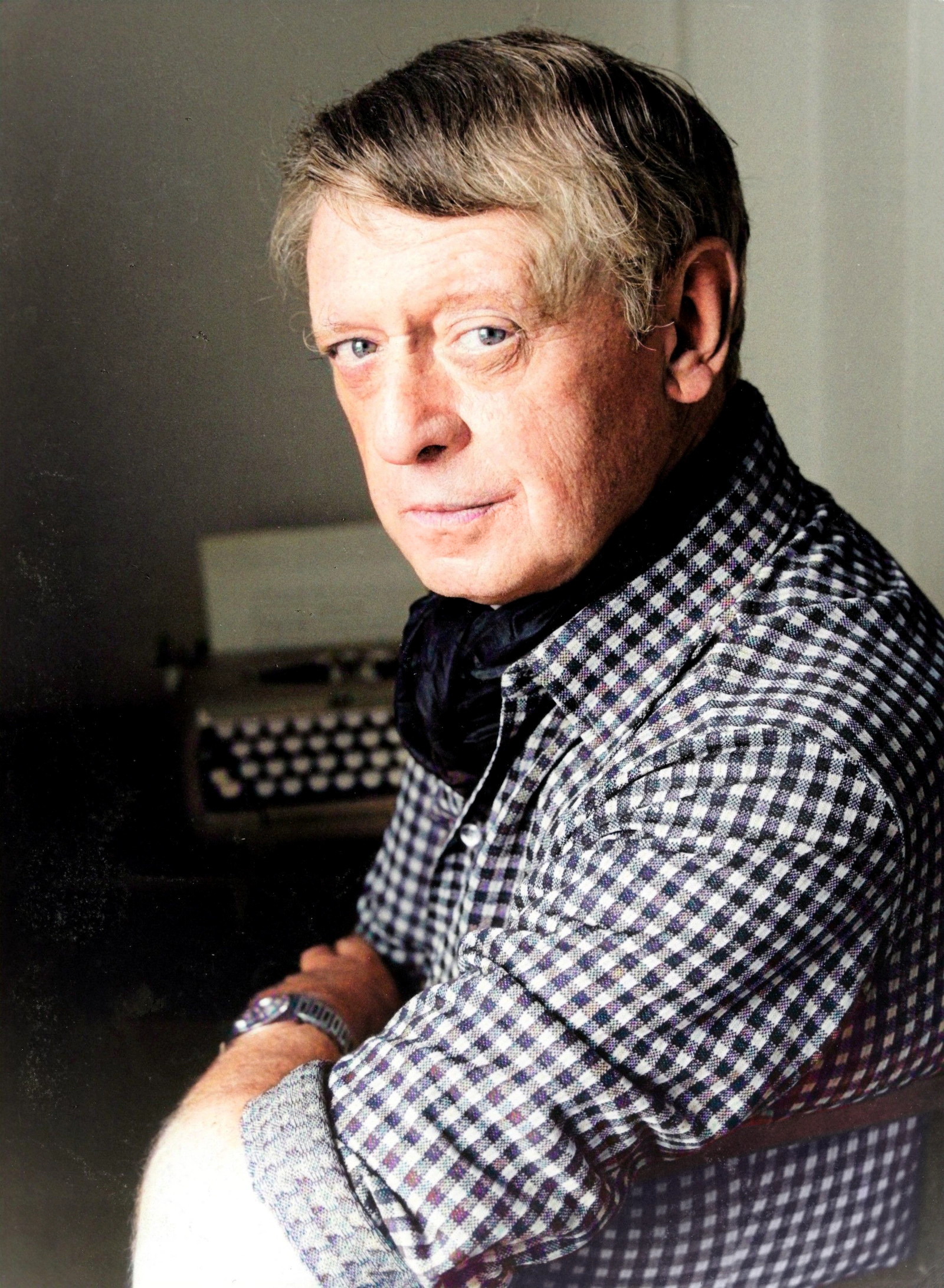
| 21 Quotes | |
| Born as | John Burgess Wilson |
| Known as | John Anthony Burgess Wilson |
| Occup. | Novelist |
| From | United Kingdom |
| Spouses | Llewela Isherwood Jones (1942-1968) Liana Macellari (1968) |
| Born | February 25, 1917 Manchester, England |
| Died | November 25, 1993 London, England |
| Cause | Lung cancer |
| Aged | 76 years |
| Cite | |
Citation Formats
APA Style (7th ed.)
Anthony burgess biography, facts and quotes. (2026, February 11). FixQuotes. https://fixquotes.com/authors/anthony-burgess/
Chicago Style
"Anthony Burgess biography, facts and quotes." FixQuotes. February 11, 2026. https://fixquotes.com/authors/anthony-burgess/.
MLA Style (9th ed.)
"Anthony Burgess biography, facts and quotes." FixQuotes, 11 Feb. 2026, https://fixquotes.com/authors/anthony-burgess/. Accessed 25 Mar. 2026.
Early Life and Background
Anthony Burgess was born John Burgess Wilson on 25 February 1917 in Harpurhey, Manchester, into a working-class Catholic milieu shadowed by loss and influenza-era fragility. His mother, Elizabeth Burgess Wilson, and his elder sister died during the 1918 pandemic, leaving him to be raised largely by his father, Joseph Wilson, a cashier and part-time musician, and later by a stepmother. The early bereavement and the sounds of popular and classical music in the industrial North formed a double inheritance: a sense of life as contingency and a conviction that pattern can be made from noise.Manchester between the wars offered both austerity and an education in voices - Irish Catholic, Lancastrian, music-hall, and the clipped authority of institutions. Burgess grew up alert to speech as social fate, a sensitivity that would later harden into his trademark delight in argot and invented dialects. The pressure of class and creed also left him suspicious of moral simplifications; he learned early how public pieties can coexist with private desperation, and how the body and the conscience seldom keep the same schedule.
Education and Formative Influences
He attended Xaverian College in Manchester and then studied English literature and phonetics at the University of Manchester, graduating in 1940, absorbing Joyce, Shakespeare, and the technical study of sound that would serve his later experiments with language. After wartime service in the Army Educational Corps, he entered civilian teaching, and in 1942 married Llewela "Lynne" Isherwood Jones, a union that carried both devotion and strain. The war years brought discipline and disillusion in equal measure: he saw how institutions teach, coerce, and improvise, and he began to think of art not as ornament but as a rival system for making sense of history.Career, Major Works, and Turning Points
Burgess worked as a teacher and education officer, including postings in British Malaya and Brunei in the 1950s, where colonial bureaucracy, multilingual daily life, and the politics of transition fed his imagination. A pivotal rupture came in 1959 when he was told he had a terminal brain tumor - a diagnosis later shown to be mistaken - and he resolved to write at speed to secure his wife's future; the result was an almost industrial burst of novels. His early fiction included the Malayan trilogy (Time for a Tiger, The Enemy in the Blanket, Beds in the East) and the comic Catholic crisis of The Doctor Is Sick (1960), but global notoriety arrived with A Clockwork Orange (1962), a fable of youth violence and state conditioning written in the invented teen slang Nadsat. Later decades, often lived in self-imposed European exile after Lynne's death and a second marriage to Liana Macellari, produced prolific work across forms: the historical panorama Earthly Powers (1980), the Shakespearean novel Nothing Like the Sun (1964), criticism, journalism, screenwriting, and compositions, all driven by a conviction that craft is a moral duty when time feels borrowed. He died on 25 November 1993 in London.Philosophy, Style, and Themes
Burgess wrote like a man both delighted and cornered: delighted by language as a toybox, cornered by mortality, money, and the fear of wasted talent. His style is fundamentally musical - patterned, alliterative, keyed to stress and cadence - and his narratives often behave like variations on a theme, returning obsessively to the relation between choice and coercion. He distrusted closed systems, whether political or theological, because he saw how quickly they turn human beings into instruments. “Every dogma has its day”. That skepticism did not make him a relativist; rather, he treated ethical life as a perpetual argument, with the self always tempted by the relief of surrendering agency.The signature Burgess question is whether goodness has meaning without the freedom to do evil, and A Clockwork Orange stages that problem with brutal clarity in the figure of Alex - charming, monstrous, aesthetic, and finally subject to the state's attempt to mechanize virtue. Burgess understood violence not as an alien force but as misdirected vitality, and he framed it as a failure of imagination as much as of law: “Violence among young people is an aspect of their desire to create. They don't know how to use their energy creatively so they do the opposite and destroy”. He also wrote with the sour practical knowledge that art and ethics are lived inside economics - publishers, rent, exile, and deadlines - and he rarely romanticized the writer's position: “We all need money, but there are degrees of desperation”. Across his major novels, satire and metaphysics coexist, because for Burgess laughter is not evasion but reconnaissance, a way of measuring how thin the membrane is between civilization and appetite.
Legacy and Influence
Burgess endures as one of the most technically gifted British novelists of the postwar period, a writer who made linguistic play carry philosophical weight and who treated popular scandal as an opportunity for serious inquiry. The film adaptation of A Clockwork Orange (1971) by Stanley Kubrick both amplified his fame and sometimes simplified his intent, yet it kept his central warning in public view: that the state can commit its own forms of violence in the name of order. His broader oeuvre - from colonial comedies to massive late panoramas like Earthly Powers - helped legitimize the idea that a single writer could be at once entertainer, theologian, satirist, and formal experimenter. Later novelists and critics have drawn from his fusion of Joyce-like verbal invention with an almost reportorial attention to institutions, leaving a model of the writer as polyglot craftsman: restless, argumentative, and determined to make art out of the era's noise.Our collection contains 21 quotes written by Anthony, under the main topics: Witty One-Liners - Wisdom - Writing - Deep - Learning.
Frequently Asked Questions
- What was Anthony Burgess IQ? Burgess claimed that his IQ was about 150.
- How did Anthony Burgess die? He died from lung cancer in 1993.
- What was Anthony Burgess first book? His first novel was 'Time for a Tiger' published in 1956.
- Anthony Burgess brain tumor: Burgess was falsely diagnosed with an inoperable brain tumor in the early 1960s, but he did not have one.
- Was Anthony Burgess wife attacked? Yes, his first wife, Lynne, was assaulted in 1944.
- How many languages did Anthony Burgess speak? Burgess claimed to be fluent in 8 languages and an expert in 12.
- How old was Anthony Burgess? He became 76 years old
Anthony Burgess Famous Works
- 1993 A Dead Man in Deptford (Novel)
- 1990 You've Had Your Time (Autobiography)
- 1986 Little Wilson and Big God (Autobiography)
- 1982 The End of the World News: An Entertainment (Novel)
- 1980 Earthly Powers (Novel)
- 1974 Napoleon Symphony: A Novel in Four Movements (Novel)
- 1974 The Clockwork Testament, or Enderby's End (Novel)
- 1968 Enderby Outside (Novel)
- 1966 Tremor of Intent (Novel)
- 1964 Nothing Like the Sun (Novel)
- 1963 Inside Mr Enderby (Novel)
- 1962 A Clockwork Orange (Novel)
- 1962 The Wanting Seed (Novel)
- 1961 One Hand Clapping (Novel)
- 1960 The Doctor Is Sick (Novel)
- 1959 Beds in the East (Novel)
- 1958 The Enemy in the Blanket (Novel)
- 1956 Time for a Tiger (Novel)
Source / external links