
Anthony Powell Biography Quotes 8 Report mistakes
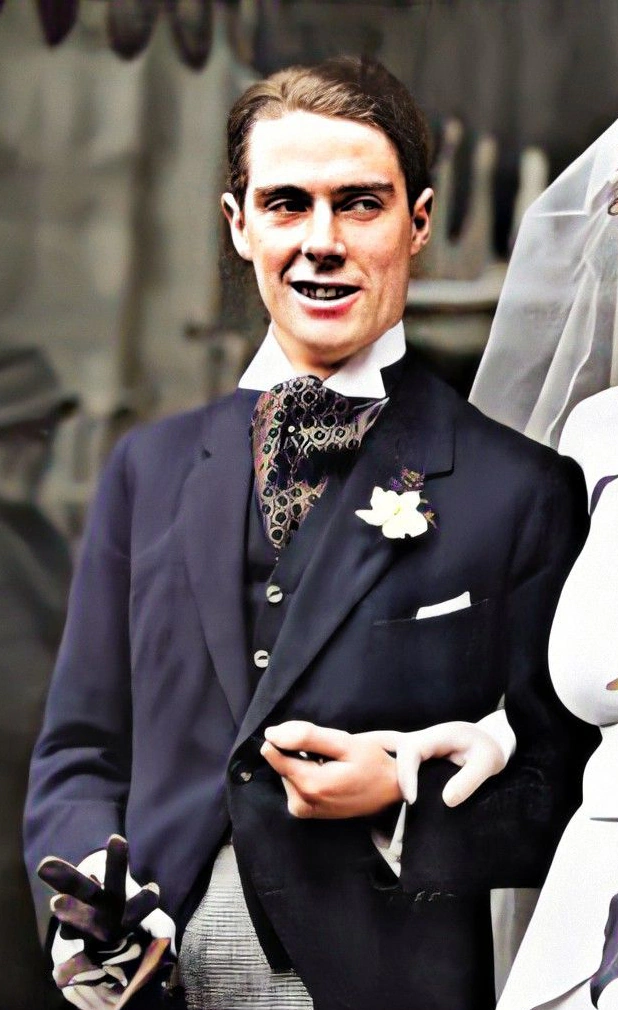
Attr: See page for author
| 8 Quotes | |
| Occup. | Novelist |
| From | United Kingdom |
| Born | December 21, 1905 United Kingdom |
| Died | March 28, 2000 United Kingdom |
| Cause | Natural Causes |
| Aged | 94 years |
| Cite | |
Citation Formats
APA Style (7th ed.)
Anthony powell biography, facts and quotes. (2026, February 11). FixQuotes. https://fixquotes.com/authors/anthony-powell/
Chicago Style
"Anthony Powell biography, facts and quotes." FixQuotes. February 11, 2026. https://fixquotes.com/authors/anthony-powell/.
MLA Style (9th ed.)
"Anthony Powell biography, facts and quotes." FixQuotes, 11 Feb. 2026, https://fixquotes.com/authors/anthony-powell/. Accessed 6 Mar. 2026.
Early Life and Background
Anthony Dymoke Powell was born on December 21, 1905, in Westminster, London, into a family shaped by the itinerant disciplines of the British Army. His father, Philip Lionel Powell, was an officer whose postings pulled the household across England and Ireland, giving the boy an early education in transience, class signals, and the quiet abrasions of belonging. Powell grew up watching how manners could both soften and sharpen social hierarchies, an observation that later became his signature instrument.That mobile upbringing also trained his inwardness. Powell learned to take bearings from rooms, voices, and small rituals rather than from rooted community, and he developed a cool, amused attention to human comedy that concealed strong feelings. The England of his childhood was still Edwardian in texture - confident, stratified, and on the verge of rupture - and his adult work would become, in effect, a long audit of what survived the rupture and what merely changed costume.
Education and Formative Influences
Powell was educated at Eton College and then at Balliol College, Oxford, where he moved through the interwar generation that would stock his fiction: public-school assurance, aesthetic talk, social climbing, and a recurrent fear of being judged. At Oxford he absorbed the novelistic lessons of Proust and the English social tradition from Austen forward, while friendships and encounters with figures around the Bloomsbury and Mitford-adjacent worlds sharpened his ear for dialogue and social nuance. He left with an instinct for chronology as a moral force: time did not just pass, it arranged reputations, exposed vanities, and turned private choices into public patterns.Career, Major Works, and Turning Points
Powell worked in publishing in London during the 1920s and 1930s, including at Duckworth, acquiring a professional feel for literary fashion and the limits of what could be said plainly. He began publishing novels such as Afternoon Men (1931), Venusberg (1932), and A Buyer s Market (1952, though conceived much earlier in his long arc), but his defining project became the 12-volume sequence A Dance to the Music of Time (1951-1975), narrated by the reflective Nicholas Jenkins. World War II was a decisive turn: Powell served in the British Army, experiences he transformed into the war volumes of the sequence, where bureaucracy, chance, and ambition jostle as insistently as gunfire. After the war he wrote steadily, added memoirs and journals that revealed the craftsman behind the cool surface, and became a public emblem of the English novelist as social historian.Philosophy, Style, and Themes
Powell s style is patient, exact, and socially omniscient without being cruel. He treats a party, a regimental office, or a shabby flat as a stage where character reveals itself through timing - who arrives late, who overhears, who pretends not to notice. His central metaphor, borrowed from Poussin, is the dance: individuals believe they lead, but the music of time - war, money, marriage, illness, fashion - keeps changing the steps. The sequence form let him dramatize an inner truth he defended explicitly: “People think that because a novel's invented, it isn't true. Exactly the reverse is the case. Biography and memoirs can never be wholly true, since they cannot include every conceivable circumstance of what happened. The novel can do that”. It is a credo that matches his psychology: wary of confession, he trusted pattern over proclamation.Within that pattern he returned to the furniture of identity - objects, books, rooms, and the social performances they enable. “Books do furnish a room”. In Powell, that is not decorative but diagnostic: books signal the self one claims, the world one courts, and the solitude one survives. His comedy often circles narcissism as a tragicomic engine, nowhere more succinct than his observation, “Self-love seems so often unrequited”. Behind the wit lies a quiet bleakness about how people misread themselves, then spend decades paying for the mistake; yet he grants them dignity by recording their illusions with almost anthropological care.
Legacy and Influence
Powell died on March 28, 2000, having outlived nearly all the worlds he chronicled. A Dance to the Music of Time endures as one of the major achievements of 20th-century English fiction: not merely a panorama of the British upper-middle and aristocratic milieus from the 1920s through the 1970s, but an inquiry into how time edits character and how society manufactures fate. His influence runs through later long-form social novels and serial narratives, and his method - irony without cynicism, memory as structure, and comedy as moral attention - remains a template for writers trying to render a whole era without pretending to stand above it.Our collection contains 8 quotes written by Anthony, under the main topics: Art - Writing - Parenting - Book - Aging.
Other people related to Anthony: Henry Green (Novelist)
Anthony Powell Famous Works
- 1951 A Dance to the Music of Time (Novel Series)
- 1948 John Aubrey and His Friends (Biography)
- 1939 What's Become of Waring? (Novel)
- 1936 Agents and Patients (Novel)
- 1933 From a View to a Death (Novel)
- 1932 Venusberg (Novel)
- 1931 Afternoon Men (Novel)
Source / external links