
Antoine de Saint-Exupery Biography Quotes 40 Report mistakes
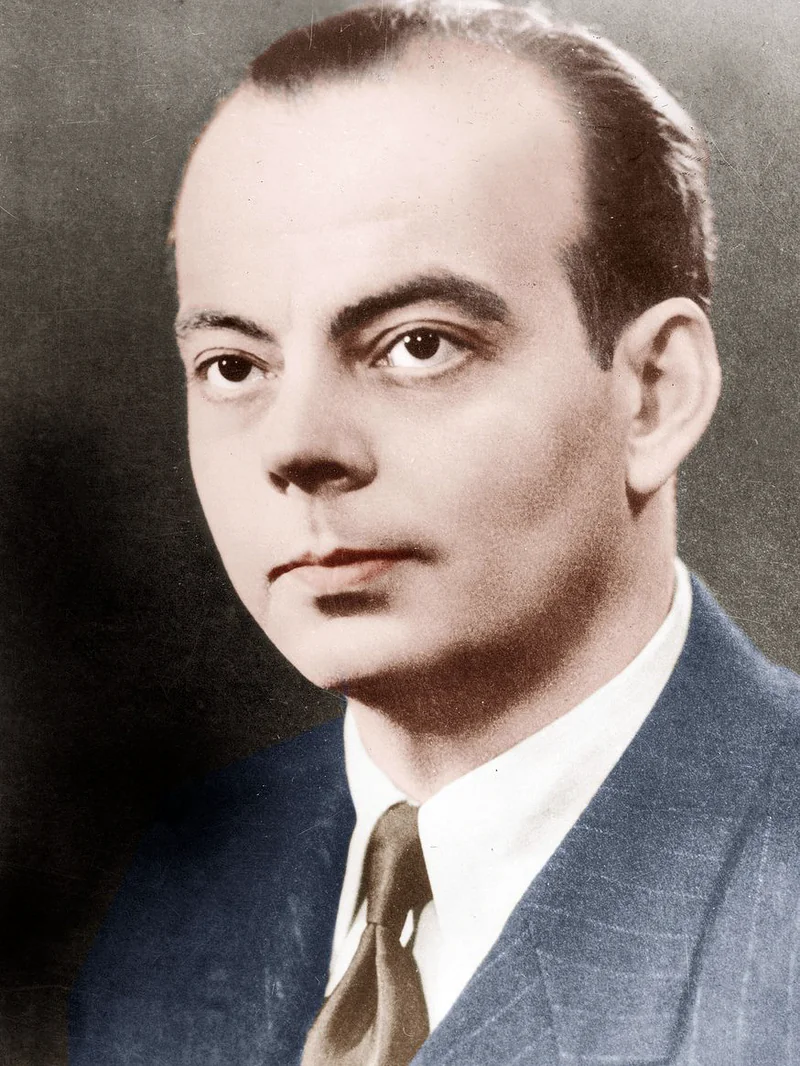
Attr: meisterdrucke.fr
| 40 Quotes | |
| Occup. | Novelist |
| From | France |
| Born | June 29, 1900 Lyon, France |
| Died | July 31, 1944 |
| Cause | plane crash |
| Aged | 44 years |
| Cite | |
Citation Formats
APA Style (7th ed.)
Antoine de saint-exupery biography, facts and quotes. (2026, February 1). FixQuotes. https://fixquotes.com/authors/antoine-de-saint-exupery/
Chicago Style
"Antoine de Saint-Exupery biography, facts and quotes." FixQuotes. February 1, 2026. https://fixquotes.com/authors/antoine-de-saint-exupery/.
MLA Style (9th ed.)
"Antoine de Saint-Exupery biography, facts and quotes." FixQuotes, 1 Feb. 2026, https://fixquotes.com/authors/antoine-de-saint-exupery/. Accessed 21 Mar. 2026.
Early Life and Background
Antoine Jean-Baptiste Marie Roger de Saint-Exupery was born on 1900-06-29 in Lyon, France, into an old but financially strained aristocratic family. His father died when Antoine was a child, and the household settled into a life shaped by a mother who fostered imagination and a boyhood that moved between provincial calm and the first shocks of modernity. Early loss and the ache of belonging - to family, to place, to a vanishing social world - left him unusually alert to what holds people together when the obvious structures fall away.A gifted, restless youth, he built and sketched, read widely, and clung to a romantic idea of duty without knowing yet where to place it. France after World War I was both proud and wounded, and Saint-Exupery grew up amid memorials and returning veterans, with aviation rising as the new frontier. That tension - between grief and technological promise - would become the emotional engine of his later writing, where flight is never mere thrill but a test of character.
Education and Formative Influences
He studied in Catholic schools and pursued higher preparation in Paris, attempting the demanding route toward the Ecole navale before entering military service; he ultimately trained as a pilot in the early 1920s, a decisive shift from classroom ambition to lived risk. The cockpit taught him attention, solitude, and precision, while the growing culture of French aviation offered a fraternity that was modern yet ritualistic - men bound by checklists, weather, and trust. Those formative years braided engineering discipline with lyrical perception, preparing him to write as someone who had watched landscapes become abstractions and then, on landing, turn back into human need.Career, Major Works, and Turning Points
Saint-Exupery became a pioneering airmail pilot with Latcoere and later Aeropostale, flying routes from Toulouse to North Africa and on to South America, including perilous postings such as Cape Juby (then Spanish Sahara), where he negotiated with local tribes for the release of downed airmen. These experiences fed his first major novel, "Courrier Sud" (1929), and especially "Vol de nuit" ("Night Flight", 1931), which transformed commercial aviation into moral drama and won the Prix Femina. After a near-fatal crash in the Sahara during a 1935 long-distance attempt and further accidents, his body carried the costs of his vocation. During World War II he opposed Nazi domination but distrusted propaganda; after France fell in 1940 he spent time in the United States, writing "Pilote de guerre" ("Flight to Arras", 1942) and, in 1943, "Le Petit Prince", the fable that distilled his worldview. He returned to combat flying with the Free French-aligned forces in reconnaissance, disappearing on 1944-07-31 from a mission over the Mediterranean; decades later, wreckage consistent with his aircraft was recovered near Marseille, sealing the legend with a material trace.Philosophy, Style, and Themes
Saint-Exupery wrote like a pilot thinks under pressure: stripped of ornament, intolerant of false bravado, yet capable of sudden radiance when the world opens at altitude or at night. His prose moves between report and parable, using deserts, stars, engines, and friendships as moral instruments. Against the 20th century's faith in systems, he insisted that meaning is made by commitment rather than comfort, that people become fully human by what they accept as obligation. In his terms, society is a demanding construction, not a vending machine: “A civilization is built on what is required of men, not on that which is provided for them”. The line is less political slogan than self-diagnosis - the creed of someone who needed difficulty to feel real.War and flight, for him, were never aestheticized. He knew fear, fatigue, and the way violence corrodes language, and he refused to call that corrosion heroic: “War is not an adventure. It is a disease. It is like typhus”. Yet he also believed that tenderness is an ethical practice, not a mood. “You are responsible, forever, for what you have tamed. You are responsible for your rose”. This is the adult core inside the childlike surface of "Le Petit Prince": love as a binding act, chosen and renewed, capable of resisting the modern habit of treating people as interchangeable. Psychologically, Saint-Exupery oscillated between ascetic duty and longing for intimate shelter; his art reconciled the two by arguing that responsibility is the only durable form of belonging.
Legacy and Influence
Saint-Exupery endures as a novelist because he made aviation - the emblem of speed and modern technique - speak the language of conscience. "Le Petit Prince" became one of the most translated books in the world, read as children's literature and as an existential catechism for adults, while "Night Flight" and "Flight to Arras" remain touchstones for writing about risk, comradeship, and moral clarity under historical pressure. His disappearance in 1944 completed a narrative he never tried to stage: the writer-pilot absorbed back into the sky he had turned into metaphor, leaving behind a body of work that continues to train readers, like apprentices, to see the human heart as a responsibility rather than a possession.Our collection contains 40 quotes written by Antoine, under the main topics: Motivational - Ethics & Morality - Wisdom - Art - Friendship.
Antoine de Saint-Exupery Famous Works
- 1948 Citadel (Book)
- 1943 Letter to a Hostage (Essay)
- 1943 The Little Prince (Novella)
- 1942 Flight to Arras (Non-fiction)
- 1939 Wind, Sand and Stars (Memoir)
- 1931 Night Flight (Novel)
- 1929 Southern Mail (Novel)