
Anton Chekhov Biography Quotes 42 Report mistakes
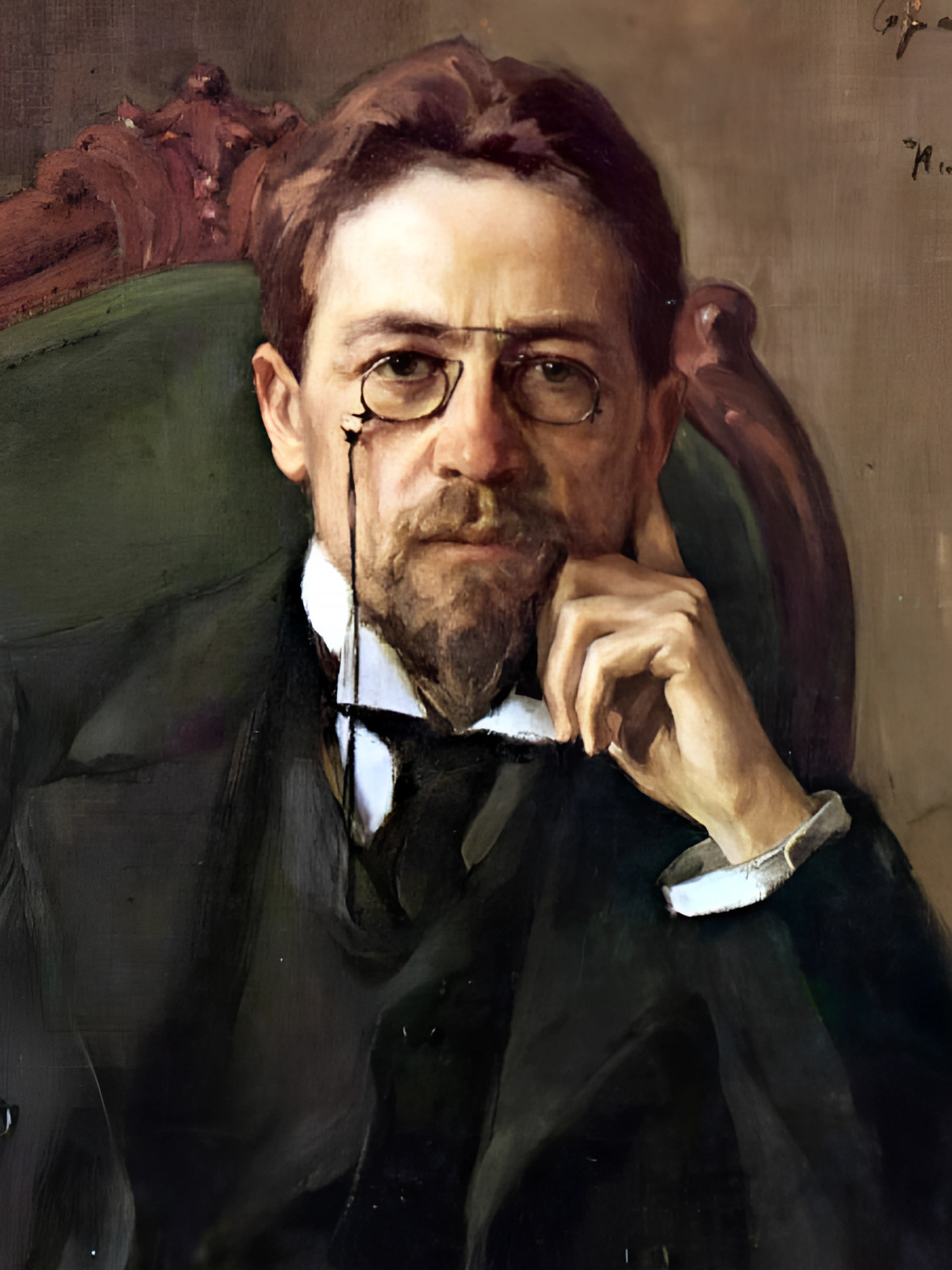
Attr: Osip Braz, Public domain
| 42 Quotes | |
| Born as | Anton Pavlovich Chekhov |
| Occup. | Dramatist |
| From | Russia |
| Born | January 29, 1860 Taganrog, Russia |
| Died | July 14, 1904 Badenweiler, Germany |
| Aged | 44 years |
| Cite | |
Citation Formats
APA Style (7th ed.)
Anton chekhov biography, facts and quotes. (2026, February 11). FixQuotes. https://fixquotes.com/authors/anton-chekhov/
Chicago Style
"Anton Chekhov biography, facts and quotes." FixQuotes. February 11, 2026. https://fixquotes.com/authors/anton-chekhov/.
MLA Style (9th ed.)
"Anton Chekhov biography, facts and quotes." FixQuotes, 11 Feb. 2026, https://fixquotes.com/authors/anton-chekhov/. Accessed 25 Mar. 2026.
Early Life and Background
Anton Pavlovich Chekhov was born on 1860-01-29 in Taganrog, a port town on the Sea of Azov in the Russian Empire. He grew up in a tense, crowded household: his father, Pavel Chekhov, a grocer and former serf, enforced piety and discipline, while his mother, Evgeniya, carried the family through stories and quiet endurance. The Chekhov children sang in the church choir and worked in the shop, learning early how public respectability can mask private strain.When the family business collapsed in 1876, Chekhov's parents fled to Moscow to escape debt, leaving Anton behind to finish school in Taganrog. Those years of isolation sharpened his observational powers and his sense of responsibility; he tutored, lived frugally, and watched provincial life at close range - petty humiliations, sudden kindnesses, the slow grind of routine. In the background lay the era's larger pressures: a post-emancipation Russia with widening urban poverty, bureaucratic rigidity, and an intelligentsia arguing about faith, science, and social duty.
Education and Formative Influences
In 1879 Chekhov entered Moscow University to study medicine, graduating in 1884, and he never stopped identifying as a doctor even after literature became his main labor. Medical training gave him a method: listen without romanticizing, record symptoms, distrust grand explanations, and see how environment shapes behavior. At the same time, Moscow's newspapers and satirical weeklies offered a marketplace for short sketches; writing became both craft and income, supporting his family and teaching him economy, pacing, and the art of implication.Career, Major Works, and Turning Points
Chekhov rose quickly from humorous pieces signed "Antosha Chekhonte" to serious stories that remade the Russian short form: "The Steppe" (1888), "A Dreary Story" (1889), "Ward No. 6" (1892), "The Black Monk" (1894), "The House with the Mezzanine" (1896), "The Man in a Case" (1898), "Gooseberries" (1898), "The Lady with the Dog" (1899), and "In the Ravine" (1900). Tuberculosis shadowed his life and forced migrations - to Melikhovo (where he practiced medicine and fought cholera) and later to Yalta - but illness also concentrated his focus on time, regret, and unspoken need. A decisive public turning point came in theater: after the initial failure of The Seagull (1896), the Moscow Art Theatre under Konstantin Stanislavski revived it in 1898, establishing Chekhov's modern dramaturgy, followed by Uncle Vanya (1899), Three Sisters (1901), and The Cherry Orchard (1904). He died on 1904-07-14 in Badenweiler, Germany, and was buried in Moscow, already claimed by readers and actors as a writer of the lived moment.Philosophy, Style, and Themes
Chekhov's inner life was marked by a tension between compassion and skepticism. He resisted ideological posturing, preferring close description to verdict, and his characters often feel most trapped not by single catastrophes but by habits, half-truths, and stalled moral courage. He understood that “Any idiot can face a crisis - it's day to day living that wears you out”. , and his plots are built accordingly: weather, money, boredom, and minor cruelties accumulate until a person realizes, too late, that life has been spent in rehearsal. Yet his detachment is not coldness; it is a discipline meant to protect human complexity from propaganda.In form, Chekhov pursued a realism of understatement. He pared away melodrama, made subtext a motor of action, and treated silence as evidence. His aesthetic humility - “There is nothing new in art except talent”. - signals a distrust of flashy novelty and a belief that attention itself can be revolutionary. As a writer trained in diagnosis, he also warned against counterfeit certainty: “No psychologist should pretend to understand what he does not understand... Only fools and charlatans know everything and understand nothing”. That warning maps his dramaturgy: people speak in confident phrases, but their lives disclose contradictions; the author refuses to play judge, letting the audience complete the moral work.
Legacy and Influence
Chekhov's enduring influence lies in how he changed narrative temperature and theatrical physics. The short story after Chekhov - from Katherine Mansfield to Raymond Carver - inherited his compression, his respect for the ordinary, and his endings that feel less concluded than recognized. Modern drama absorbed his idea that plot can be the pressure of time on a roomful of desires, realized through Stanislavski's acting system and later refracted in Tennessee Williams, Arthur Miller, and countless ensemble playwrights. In Russia and beyond, Chekhov remains a moral presence precisely because he refused easy answers: a writer-doctor who chronicled suffering without sentimental rescue, and who trusted that truthful attention to daily life could be its own form of care.Our collection contains 42 quotes written by Anton, under the main topics: Witty One-Liners - Ethics & Morality - Wisdom - Art - Justice.
Other people related to Anton: Janet Malcolm (Writer), Michael Frayn (Playwright)