
Antonin Artaud Biography Quotes 13 Report mistakes
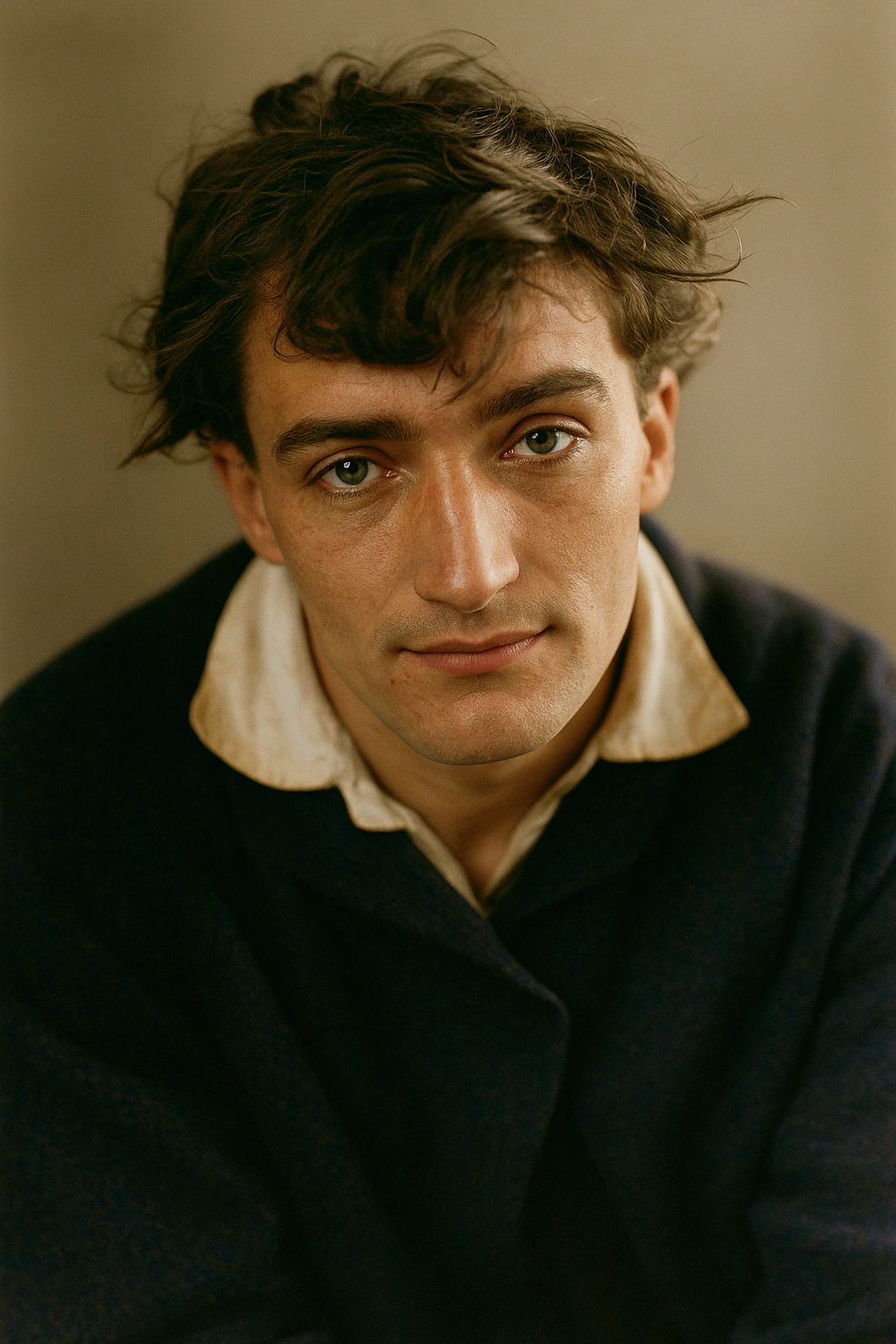
| 13 Quotes | |
| Born as | Antoine Marie Joseph Paul Artaud |
| Occup. | Dramatist |
| From | France |
| Born | September 4, 1896 Marseille, France |
| Died | March 4, 1948 Ivry-sur-Seine, France |
| Aged | 51 years |
| Cite | |
Citation Formats
APA Style (7th ed.)
Antonin artaud biography, facts and quotes. (2026, February 11). FixQuotes. https://fixquotes.com/authors/antonin-artaud/
Chicago Style
"Antonin Artaud biography, facts and quotes." FixQuotes. February 11, 2026. https://fixquotes.com/authors/antonin-artaud/.
MLA Style (9th ed.)
"Antonin Artaud biography, facts and quotes." FixQuotes, 11 Feb. 2026, https://fixquotes.com/authors/antonin-artaud/. Accessed 10 Mar. 2026.
Early Life and Background
Antonin Artaud was born Antoine Marie Joseph Paul Artaud on 1896-09-04 in Marseille, a port city where Catholic ritual, Mediterranean street life, and the commerce of bodies and goods formed a noisy, public theater. His family was lower-middle-class and French, with roots in the region; the tone of his youth was set less by lineage than by a private catastrophe of nerves. As a child he suffered bouts of illness and lasting neuralgia, and his adolescence was marked by insomnia, anxiety, and episodes that foreshadowed the psychiatric labels later attached to him. Pain arrived early as both a tyrant and a teacher, pressing him toward art not as ornament but as survival.The Great War framed his entry into adulthood, and he came of age in a France that was at once technologically modern and spiritually exhausted. Artaud was briefly conscripted and quickly discharged for health reasons, a rejection that intensified his sense of being unfit for ordinary social time. Treatments for pain and agitation exposed him to opiates, and dependency would braid itself into his working life. From the beginning he experienced the body as a contested site - simultaneously a prison, a laboratory, and an instrument he did not fully command.
Education and Formative Influences
Artaud did not follow a conventional academic path; his education was piecemeal, shaped by reading, by hospitals and rest cures, and by the magnet of Paris in the early 1920s. He absorbed Symbolist and Decadent literature, then the shock of postwar avant-garde movements seeking to rebuild language after mass death. In Paris he moved through literary circles and theater studios, drawn to the Surrealists for their assault on bourgeois reason yet unwilling to submit to party discipline. Encounters with non-Western performance - especially Balinese dance at the 1931 Colonial Exposition - gave him a model of theater as visceral rite rather than psychological talk, while Nietzschean and mystical currents fed his conviction that art must touch the nerves, not merely the mind.Career, Major Works, and Turning Points
In the 1920s Artaud acted in and wrote for experimental theater and film, appearing in works by directors of the French avant-garde and gaining a reputation for an intensity that seemed to burn through roles. He joined and then broke with the Surrealists, whose political turn he resisted, and pursued theater on his own terms, founding (with Roger Vitrac) the Theatre Alfred Jarry as a proving ground for a new stage language. His most enduring theoretical statement, The Theater and Its Double (1938), gathered manifestos that argued for a "Theater of Cruelty" - cruelty as necessity, not sadism - and condemned polite drama as a counterfeit of life. In 1936 he traveled to Mexico seeking initiatory knowledge among the Tarahumara; in 1937 he went to Ireland with a messianic mission and returned to France in crisis. From 1937 to 1946 he was largely confined in psychiatric asylums, including years at Rodez where he underwent electroshock. Released after the war into a Paris hungry for new beginnings, he produced late writings and radio work of volcanic force, only to die on 1948-03-04 in Ivry-sur-Seine, physically worn down but artistically unappeased.Philosophy, Style, and Themes
Artaud treated art as a fight with the limits of consciousness, a struggle to reach what he called the real beneath social surfaces. "When we speak the word "life“, it must be understood we are not referring to life as we know it from its surface of fact, but to that fragile, fluctuating center which forms never reach”. This is the key to his psychology: he felt ordinary language and conventional theater were not merely insufficient, but actively complicit in hiding that trembling center. His writing tries to tear holes in representation - through incantation, repetition, blasphemous prayer, and anatomical imagery - so the audience encounters sensation as revelation. The Theater of Cruelty was his answer: a theater of gesture, light, percussion, and spatial assault meant to bypass interpretation and strike the nervous system, restoring the stage to the intensity of plague, exorcism, and sacrifice.His aesthetic of extremity was also a self-diagnosis. “No one has ever written, painted, sculpted, modeled, built, or invented except literally to get out of hell”. For Artaud, creation was not a career but an escape attempt from psychic imprisonment, and his later asylum writings show how easily that escape could fail, turning language into both weapon and wound. He distrusted culture's tendency to fossilize art into safe masterpieces, insisting on a continual burning-away of the dead hand of tradition: “Written poetry is worth reading once, and then should be destroyed. Let the dead poets make way for others”. The brutality of that claim is less nihilism than desperation - an attempt to keep expression from becoming another institution that cages the living.
Legacy and Influence
Artaud left few realized productions that matched his theory, but his impact on modern performance has been immense precisely because he redefined what theater could be: not literature illustrated, but an event that remakes the body and the crowd. Postwar directors and companies from Jerzy Grotowski and Peter Brook to the Living Theatre, as well as performance art, body art, and experimental sound and radio, drew from his insistence on ritual intensity, anti-illusionist space, and the primacy of voice as material. His life - marked by illness, addiction, visionary ambition, confinement, and furious late resurgence - became an emblem of the artist at war with institutions of sanity and taste. Today Artaud endures less as a system-builder than as a provocation: a reminder that art can be a technology of inner truth, and that the stage can still be a site where society confronts what it tries hardest not to feel.Our collection contains 13 quotes written by Antonin, under the main topics: Ethics & Morality - Truth - Art - Deep - Meaning of Life.
Other people related to Antonin: Peter Brook (Producer), Jean Dubuffet (Artist), Gilles Deleuze (Philosopher)
Frequently Asked Questions
- Antonin Artaud most famous works: The Theatre and Its Double; Theatre of Cruelty manifestos; Spurt of Blood (Le Jet de sang); The Cenci; Van Gogh, The Man Suicided by Society.
- Antonin Artaud old: 51 years old at death (1896–1948).
- Antonin Artaud poems: Le Pèse-nerfs; L’Ombilic des limbes; Artaud le Mômo; Suppôts et Suppliciations.
- Antonin Artaud cause of death: Cancer (1948, Ivry-sur-Seine, France).
- Antonin Artaud books: The Theatre and Its Double; Heliogabalus: Or, The Crowned Anarchist; Van Gogh, The Man Suicided by Society; Journey to the Land of the Tarahumara; Selected Writings.
- Antonin Artaud Theatre of Cruelty: A radical theater theory using visceral, nonverbal shock to jolt audiences; outlined in The Theatre and Its Double.
- How old was Antonin Artaud? He became 51 years old
Source / external links