
Antonio Tabucchi Biography Quotes 31 Report mistakes
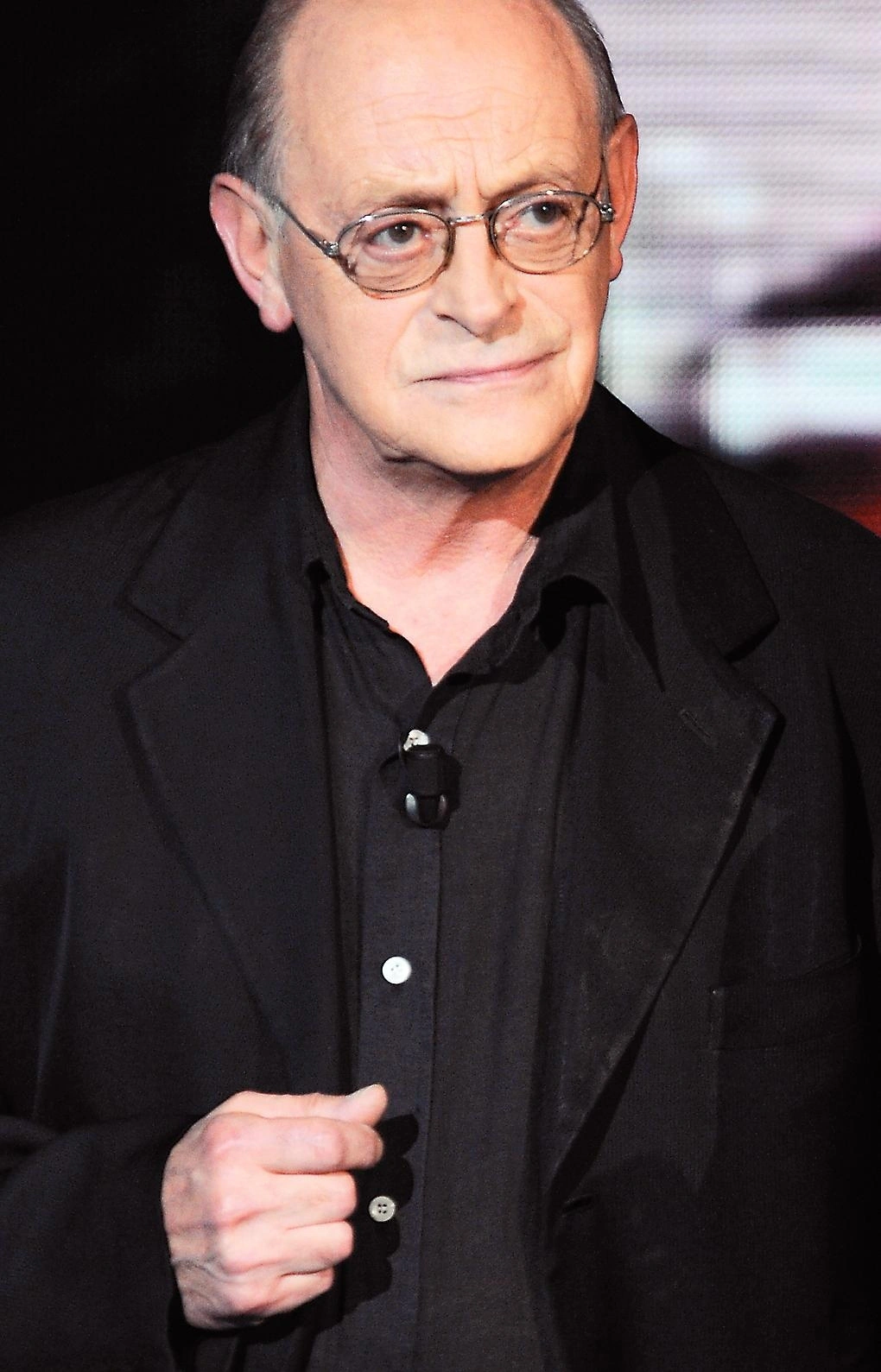
| 31 Quotes | |
| Occup. | Writer |
| From | Italy |
| Spouse | Graziella Chiarcossi |
| Born | September 23, 1943 Pisa, Italy |
| Died | March 25, 2012 Lisbon, Portugal |
| Cause | Cancer |
| Aged | 68 years |
| Cite | |
Citation Formats
APA Style (7th ed.)
Antonio tabucchi biography, facts and quotes. (2026, February 11). FixQuotes. https://fixquotes.com/authors/antonio-tabucchi/
Chicago Style
"Antonio Tabucchi biography, facts and quotes." FixQuotes. February 11, 2026. https://fixquotes.com/authors/antonio-tabucchi/.
MLA Style (9th ed.)
"Antonio Tabucchi biography, facts and quotes." FixQuotes, 11 Feb. 2026, https://fixquotes.com/authors/antonio-tabucchi/. Accessed 11 Feb. 2026.
Early Life and Background
Antonio Tabucchi was born on September 23, 1943, in Pisa, Tuscany, during the final convulsions of Fascist Italy and the Second World War. He grew up as the country reassembled itself amid rationing, political bitterness, and the slow promise of the postwar "economic miracle". That split atmosphere - private lives carried forward under public uncertainty - became one of his lasting imaginative habitats: the everyday as a corridor into enigma, memory, and moral choice.As a young man he was already drawn to elsewhere, not as tourism but as a way of thinking. Italy in the 1950s and 1960s offered rapid modernization and mass culture, yet also regional poverty and ideological polarization; Tabucchi learned early to distrust clean narratives of progress. The tension between belonging and estrangement, and between civic duty and individual dream-life, would later surface in his fiction as characters who drift, double back, or wake into their own biographies as if into a secondhand room.
Education and Formative Influences
He studied literature at the University of Pisa, where a decisive encounter arrived less through a classroom than through reading: in Paris in the early 1960s he discovered Fernando Pessoa, whose heteronyms and fractured selfhood gave Tabucchi a lifelong companion and a method. He went on to devote major scholarly work to Portuguese literature, living for long periods in Lisbon and moving between Italy and Portugal as both critic and novelist, eventually teaching Portuguese language and literature at the University of Siena while translating and editing Pessoa for Italian readers.Career, Major Works, and Turning Points
Tabucchi began publishing fiction in the 1970s, developing a style that fused essay, mystery, and dream logic with a historian's attention to political weather. His breakthrough came with "Notturno indiano" (Indian Nocturne, 1984), a quest narrative that treats identity as a trail of substitutions; "Il filo dell'orizzonte" (1986) and later "Sostiene Pereira" (Pereira Maintains, 1994) sharpened his reputation across Europe. "Pereira" - set in Lisbon under Salazar's Estado Novo in 1938 - became his moral turning point: a story of a cautious journalist pushed into resistance, it aligned his art with an explicit antifascist vigilance. In later works such as "La testa perduta di Damasceno Monteiro" (1997) and "Tristano muore" (Tristan Dies, 2004), he kept testing how testimony is formed: through rumor, confession, bureaucratic record, and the unstable memory of a dying narrator. He died on March 25, 2012, in Lisbon, the adopted city that had long served as his imaginative capital.Philosophy, Style, and Themes
Tabucchi's inner life, as it appears through his work, is defined by a productive skepticism: he treats certainty as a moral risk and doubt as an ethical instrument. "Doubts are like stains on a shirt. I like shirts with stains, because when I'm given a shirt that's too clean, one that's completely white, I immediately start having doubts". That preference shaped his signature structures - investigations without final closure, narrators who mistrust their own statements, and plots that behave like dossiers with missing pages. He gravitated to people at the edge of decision: widowers, exiles, translators, minor officials, and wanderers who sense that identity is partly imposed, partly chosen, and mostly negotiated in the half-light between the two.His politics were never simply programmatic; they were embedded in the felt texture of living under regimes, newspapers, police stations, and the pressure of public language. "But democracy isn't a state of perfection. It has to be improved, and that means constant vigilance". That vigilance animates "Pereira" and the later legal and journalistic motifs of his fiction, where institutions blur into habits and habits harden into complicity. Against monocultures of nation or self, he insisted on hybrid belonging: "The salt of any interesting civilization is mixture". In Tabucchi, mixture is aesthetic as well as civic - Italian and Portuguese cadences, realism and oneiric interruption, essayistic reflection braided into suspense - all serving the same question: how a person becomes responsible for what they know, and for what they suspect but cannot yet prove.
Legacy and Influence
Tabucchi endures as one of the central European novelists of the late 20th century, a writer who made moral awakening narratively gripping without sacrificing ambiguity. He broadened the Italian novel's geography and conscience, turning Lisbon, Pessoa, and the Iberian dictatorships into mirrors for Italy's own unresolved past while demonstrating how fiction can behave like a civic instrument - not propaganda, but a training in attention. His translations and criticism reshaped Pessoa's reception in Italy; his novels, widely translated and adapted, continue to influence writers drawn to political fables told in the conditional tense, where responsibility begins not with certainty, but with the refusal to look away.Our collection contains 31 quotes written by Antonio, under the main topics: Ethics & Morality - Wisdom - Truth - Writing - Freedom.
Antonio Tabucchi Famous Works
- 1997 The Missing Head of Damasceno Monteiro (Novel)
- 1994 Pereira Maintains (Novel)
- 1991 Requiem: A Hallucination (Novel)
Source / external links