
Aristophanes Biography Quotes 20 Report mistakes
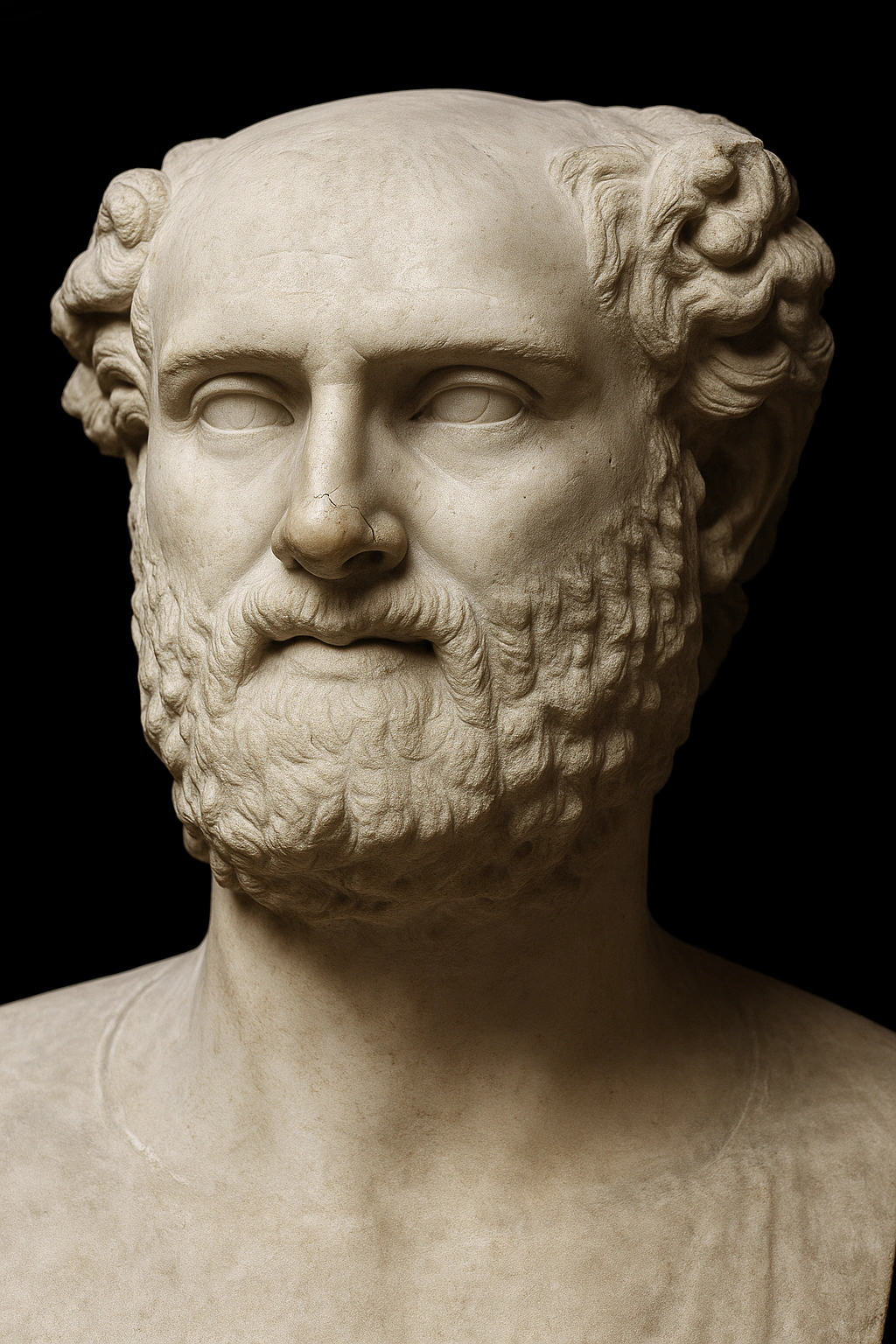
| 20 Quotes | |
| Occup. | Poet |
| From | Greece |
| Born | 448 BC Athens, Greece |
| Died | 380 BC Athens |
| Cite | |
Citation Formats
APA Style (7th ed.)
Aristophanes biography, facts and quotes. (2026, February 11). FixQuotes. https://fixquotes.com/authors/aristophanes/
Chicago Style
"Aristophanes biography, facts and quotes." FixQuotes. February 11, 2026. https://fixquotes.com/authors/aristophanes/.
MLA Style (9th ed.)
"Aristophanes biography, facts and quotes." FixQuotes, 11 Feb. 2026, https://fixquotes.com/authors/aristophanes/. Accessed 24 Mar. 2026.
Early Life and Background
Aristophanes was born around 448 BCE, probably in Athens, at the hinge of the citys greatest confidence and its coming catastrophe. He grew up in the afterglow of Periclean building and imperial pride, when the Acropolis still looked like a political argument in marble and the theater was civic business. Comedy was not a side show but a loud institution: at the Dionysia the polis listened to itself, and a poets chorus could praise, mock, or prosecute in public.His adulthood coincided with the Peloponnesian War (431-404 BCE), the years when plague, faction, and battlefield reversals exposed the fragility of Athenian self-rule. The violent oscillation between democracy and oligarchic coups (notably 411 and 404 BCE) made political speech both vital and dangerous. Aristophanes learned early what it meant to speak plainly under conditions that punished the wrong frankness - and to use laughter as cover while still aiming at real power.
Education and Formative Influences
Little is securely known about his schooling, but his plays presuppose elite literacy: a command of Homer and lyric poetry, an ear for tragic diction, and a sharp familiarity with contemporary intellectual fashions. He wrote for the highly formal competitions of Old Comedy, absorbing ritual, music, and choral discipline while also apprenticing himself to the citys living arguments - the rhetoric of assemblymen, the language of lawcourts, and the new talk of teachers and sophists. The theater trained him as a public psychologist: the crowd had to be flattered, offended, startled, then led.Career, Major Works, and Turning Points
Aristophanes began producing in the 420s BCE, winning early notice with Babylonians (426, now lost), a satire that reportedly angered the populist leader Cleon and drew political retaliation. He answered with an even bolder attack in Knights (424), then broadened his canvas: Wasps (422) skewers litigious addiction; Peace (421) imagines an exhausted polis yearning for relief; Clouds (first produced 423, revised later) lampoons intellectual pretension through a comic Socrates; Birds (414) builds a utopian city in the air even as Athens lunges toward the Sicilian disaster. Later, in the harsher postwar world, his comedies turned elegiac and reparative: Lysistrata (411) and Thesmophoriazusae (411) enlist women to expose male political failure; Frogs (405) stages a contest between Aeschylus and Euripides as Athens searches for moral ballast; Ecclesiazusae (c. 392) and Plutus (388) reflect a shift toward domestic plots and social ethics as Old Comedys direct chorus-politics waned. He died around 380 BCE, having watched the city he loved lose empire, regain democracy, and argue on.Philosophy, Style, and Themes
Aristophanes wrote with the ferocity of a conservative patriot and the curiosity of an artist intoxicated by possibility. His comedies insist that politics is character before it is policy, and he is merciless about demagogic style: “Characteristics of a popular politician: a horrible voice, bad breeding, and a vulgar manner”. The line is less snobbery than diagnosis - a fear that mass persuasion rewards performative coarseness and that the city, tired and angry, begins to prefer the sound of certainty to the labor of judgment.Yet he is no simple reactionary. He mocks sophists and innovators while also revealing how desperate the old certainties have become. His unbelieving characters and argumentative choruses keep dragging piety into court, not to abolish awe but to test it: “Shrines! Shrines! Surely you don't believe in the gods. What's your argument? Where's your proof?” This recurrent impulse - to interrogate inherited speech until it confesses its uses - makes him an ally of philosophy even when he caricatures philosophers. His Athens is a city where every claim, divine or civic, must survive cross-examination by laughter.
Under the obscenity and fantasy sits a moral grammar: actions have consequences, and the polis cannot vote itself out of cause and effect. “Evil events from evil causes spring”. In play after play, war profiteering breeds more war, legal spite breeds more suits, and intellectual vanity breeds confusion. Comedy becomes his method for telling a scared democracy the truth it refuses in prose: that hunger, desire, prestige, and fear rule men as surely as decrees do, and that the only durable reforms begin with self-knowledge.
Legacy and Influence
Of the poets of Old Comedy, Aristophanes is the one most fully preserved, and that survival has made him a permanent irritant and resource: a master of verbal music, parody, and grotesque invention, and also a primary witness to wartime Athens from inside its loudest room. His portrait of Socrates in Clouds helped shape later cultural memory even as Plato fought to correct it, demonstrating how comic images can outlive arguments. In later European theater, from Renaissance humanists to modern political satire, his techniques reappear: the chorus as public conscience, the utopia that exposes a present dystopia, the obscene joke that hides a civic wound. Aristophanes endures because he treated comedy as a serious civic instrument - not the opposite of thought, but a way to make thought audible to a crowd.Our collection contains 20 quotes written by Aristophanes, under the main topics: Witty One-Liners - Ethics & Morality - Wisdom - Friendship - Love.
Other people related to Aristophanes: Moses Hadas (Writer)
Frequently Asked Questions
- Aristophanes comedy: Old Comedy: chorus-driven satire, bold parody, bawdy humor, and fantastical plots
- Aristophanes famous works: Lysistrata; The Frogs; The Birds; The Clouds; The Wasps
- Aristophanes: books: The Complete Plays of Aristophanes; Lysistrata and Other Plays; The Birds and Other Plays; Loeb Classical Library editions
- What is Aristophanes known for: Athenian master of Old Comedy, famed for sharp political and social satire
- Aristophanes meaning: Greek name meaning 'best appearing/manifest' (from aristos + phanes)
- Plays by Aristophanes: The Acharnians; The Knights; The Clouds; The Wasps; Peace; The Birds; Lysistrata; Thesmophoriazusae; The Frogs; Ecclesiazusae (The Assemblywomen); Plutus (Wealth)
- Aristophanes pronunciation: uh-RIS-TOFF-uh-neez
Aristophanes Famous Works
- -388 Plutus (Wealth) (Play)
- -392 Ecclesiazusae (The Assemblywomen) (Play)
- -405 Frogs (Play)
- -411 Thesmophoriazusae (Play)
- -411 Lysistrata (Play)
- -414 The Birds (Play)
- -421 Peace (Play)
- -422 Wasps (Play)
- -423 Clouds (Play)
- -424 Knights (Play)
- -425 The Acharnians (Play)
Source / external links