
Arlie Russell Hochschild Biography Quotes 2 Report mistakes
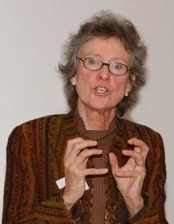
| 2 Quotes | |
| Occup. | Educator |
| From | USA |
| Born | January 15, 1940 Boston, Massachusetts |
| Age | 86 years |
| Cite | |
Citation Formats
APA Style (7th ed.)
Arlie russell hochschild biography, facts and quotes. (2026, February 11). FixQuotes. https://fixquotes.com/authors/arlie-russell-hochschild/
Chicago Style
"Arlie Russell Hochschild biography, facts and quotes." FixQuotes. February 11, 2026. https://fixquotes.com/authors/arlie-russell-hochschild/.
MLA Style (9th ed.)
"Arlie Russell Hochschild biography, facts and quotes." FixQuotes, 11 Feb. 2026, https://fixquotes.com/authors/arlie-russell-hochschild/. Accessed 28 Mar. 2026.
Early Life and Background
Arlie Russell Hochschild was born on January 15, 1940, in the United States, into a mobile, outward-facing family world shaped by the institutions of mid-century America. Her father, Francis Russell Hochschild, served as a U.S. diplomat, a profession that put national interest, etiquette, and emotional restraint at the center of daily life. Her mother, Ruth Libby Hochschild, moved within those same circles, where good manners and well-managed feeling were treated as civic virtues. The Cold War era made private life inseparable from public performance, and the child Hochschild absorbed that lesson early: what people felt and what they were permitted to show were rarely the same.That childhood vantage point - close to power yet sensitive to its human cost - helped form a lifelong interest in the hidden labor of social life. The postwar ideal of the nuclear family, the breadwinner-homemaker bargain, and the growing contradictions faced by women entering paid work provided the background music of her youth. Even before feminism became a mass politics, Hochschild was watching how status, gender, and institutional roles trained people to script themselves.
Education and Formative Influences
Hochschild studied at Swarthmore College and later earned her PhD in sociology at the University of California, Berkeley, where she joined a department alive with the era's upheavals and methodological debates. Berkeley in the 1960s and early 1970s was not only a site of political contest but also an intellectual laboratory: ethnography, symbolic interactionism, and feminist theory converged there, encouraging scholars to treat everyday life as a serious object of inquiry. Hochschild learned to listen for the rules beneath ordinary talk - the moral expectations, status bargains, and the quiet negotiations that keep institutions running.Career, Major Works, and Turning Points
At UC Berkeley, where she became a leading educator and public sociologist, Hochschild built a career around making the emotional and domestic economies visible. Her landmark books map a sequence of turning points in late-20th-century life: The Managed Heart (1983) named "emotional labor" and showed how service work commodifies feeling; The Second Shift (1989) documented the unequal division of housework and childcare among dual-earner couples; The Time Bind (1997) examined workplaces that feel like home and homes that feel like work; and later work such as Strangers in Their Own Land (2016) explored the emotional logic of political alienation. Across decades, she translated intensive interviews and close observation into concepts that traveled far beyond sociology.Philosophy, Style, and Themes
Hochschild's philosophy is a moral sociology of feeling: she treats emotion not as private overflow but as a social achievement guided by "feeling rules" and sustained by labor. Her style is diagnostic but intimate, built from interview scenes that reveal how people justify, minimize, or narrate inequity so they can live with it. In her work, the self is not a sealed individual but a negotiated arrangement between desire and duty, aspiration and constraint. She returns repeatedly to the question that haunts modern freedom: what happens when market logic and institutional pressure colonize the most personal parts of life - care, love, pride, shame.In her analysis of gender and home, Hochschild captures the psychological bind of women who are told they are equal citizens yet still carry the hidden load. “The influx of women into paid work and her increased power raise a woman's aspirations and hopes for equal treatment at home”. But the same structures that invite aspiration discipline expectation, producing a careful internal accounting of what is safe to demand, especially under economic vulnerability and marital instability. She also records the quiet drift from ideals to coping strategies: “Many women cut back what had to be done at home by redefining what the house, the marriage and, sometimes, what the child needs”. This is not mere resignation; it is adaptive meaning-making, a psychological recalibration that preserves dignity when bargaining power is thin and time is scarce.
Legacy and Influence
Hochschild's influence is both conceptual and practical: "emotional labor" became a foundational term for understanding service work, care work, gender inequality, and the mental health costs of performative employment, while "the second shift" entered everyday language as a shorthand for the after-hours labor that sustains families. As an educator, she helped legitimate the study of emotion, empathy, and moral reasoning as core sociological topics, shaping research in feminist sociology, organizational studies, psychology, and cultural analysis. Her enduring legacy lies in her insistence that private life is structured by public forces - and that the feelings people carry are often evidence of invisible work, not personal failure.Our collection contains 2 quotes written by Arlie, under the main topics: Equality - Husband & Wife.
Source / external links