
Arna Bontemps Biography Quotes 4 Report mistakes
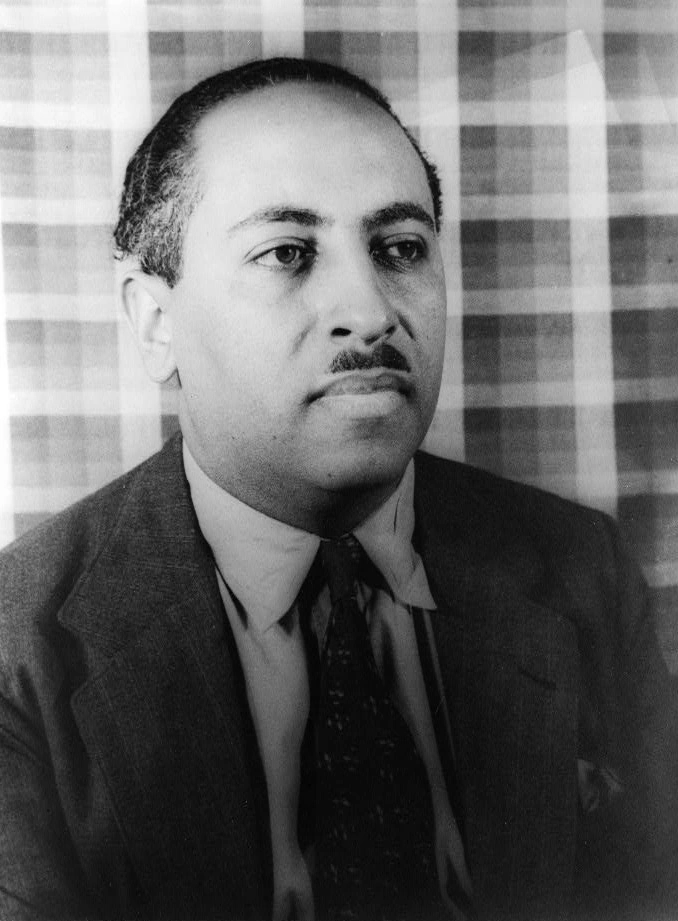
| 4 Quotes | |
| Born as | Arnaud Wendell Bontemps |
| Occup. | Poet |
| From | USA |
| Born | October 13, 1902 Alexandria, Louisiana |
| Died | June 4, 1973 Nashville, Tennessee |
| Aged | 70 years |
| Cite | |
Citation Formats
APA Style (7th ed.)
Arna bontemps biography, facts and quotes. (2026, February 11). FixQuotes. https://fixquotes.com/authors/arna-bontemps/
Chicago Style
"Arna Bontemps biography, facts and quotes." FixQuotes. February 11, 2026. https://fixquotes.com/authors/arna-bontemps/.
MLA Style (9th ed.)
"Arna Bontemps biography, facts and quotes." FixQuotes, 11 Feb. 2026, https://fixquotes.com/authors/arna-bontemps/. Accessed 31 Mar. 2026.
Early Life and Background
Arnaud Wendell Bontemps was born on October 13, 1902, in Alexandria, Louisiana, into a French Creole family whose history carried both pride and fracture. The early South he inherited was rigidly segregated, and the humiliations of Jim Crow sat beside a living inheritance of Black speech, church music, and oral storytelling. That doubleness - beauty under pressure - would become his lifelong subject, even when he wrote for children or in seemingly simple lyric forms.When he was still a boy, his family joined the Great Migration and settled in Los Angeles, where Black communities were smaller, more dispersed, and newly forming their institutions. The move widened his horizons while sharpening his sense of displacement: he was Southern by memory, Western by circumstance, and Black in a nation insisting on narrowing the meaning of that word. Those early relocations trained him to listen for continuity - the ways a people carry culture across distance - and to notice what gets lost when a life must begin again.
Education and Formative Influences
Bontemps attended public schools in Los Angeles and graduated from Pacific Union College (then in California) in 1923, a Seventh-day Adventist environment that reinforced discipline, moral argument, and the cadences of sermon and hymn. He read widely in Romantic and Victorian poetry as well as contemporary Black writing, but the more decisive influence was the period itself: post-World War I racial violence, the rise of Black newspapers and civic groups, and the first national visibility of the Harlem Renaissance. By the time he began teaching and publishing, he had absorbed both the genteel standards of formal verse and the urgency of racial self-definition, a tension that would power his best work.Career, Major Works, and Turning Points
In 1924 Bontemps moved to Harlem to teach at the Utopia Children House, stepping into the Renaissance at close range as magazines and salons turned Black art into a public argument about identity. His early poems gained attention quickly, and he published fiction and verse while working in classrooms, living the precarious double life of many Black writers. He wrote the novel God Sends Sunday (1931), later adapted into the film Hallelujah, and the historical novel Black Thunder (1936), his most acclaimed long fiction, which imaginatively re-created Gabriel Prosser's planned 1800 revolt. Political scrutiny and economic instability pushed him out of some teaching posts during the Depression years, and he increasingly oriented his craft toward history, education, and preservation. A decisive late turning point came through librarianship: after study in library science, he became a central builder of collections and curricula at Fisk University in Nashville, where he mentored younger writers and, with collaborators such as Langston Hughes, produced influential anthologies and children's books that carried Black history into classrooms. He died on June 4, 1973, having moved from the spotlight of the 1920s to the quieter, institution-building labor that makes a literature durable.Philosophy, Style, and Themes
Bontemps' inner life is marked by longing disciplined into form. Again and again he treats culture as a choreography of survival, something enacted rather than merely remembered; his lyric imagination urges continuity against erasure. “Let us keep the dance of rain our fathers kept and tread our dreams beneath the jungle sky”. The sentence reads like a vow: not nostalgia but a chosen ritual, an insistence that ancestral memory is active work. Even when his diction leans classical, the emotional engine is communal - he writes as a custodian of shared dream rather than an isolated genius.At the same time, he was unsentimental about the costs of migration and modernity, and he turned private unease into a public question. “Is there something we have forgotten? Some precious thing we have lost, wandering in strange lands?” In that doubt sits the psychology of a migrant poet: the fear that success in a new world can purchase forgetfulness. Yet he couples elegy with courage, framing sacrifice as a relay between generations: “Yet would we die as some have done, beating a way for the rising sun”. This blend of lament and resolve animates Black Thunder, his children's histories, and his poems alike - a style that favors clarity, narrative momentum, and ethical pressure over experimental obscurity.
Legacy and Influence
Bontemps' enduring influence lies as much in stewardship as in authorship: he helped secure the Harlem Renaissance as an archive, a syllabus, and a lineage, not just a moment of glamorous publication. His work bridged genres - poem, novel, biography, anthology, children's literature - and his institutional labor at Fisk strengthened the infrastructure that later writers depended on. As a poet and historian of feeling, he made memory into a craft discipline, showing that Black modernity could honor ancestral rhythm while facing the future without illusion.Our collection contains 4 quotes written by Arna, under the main topics: Poetry - Equality - Legacy & Remembrance - Nostalgia.
Arna Bontemps Famous Works
- 1973 The Old South (Screenplay)
- 1948 Story of the Negro (Book)
- 1942 The Fast Sooner Hound (Children's book)
- 1939 Drums At Dusk (Novel)
- 1936 Black Thunder (Novel)
- 1931 God Sends Sunday (Novel)
Source / external links