
Arne Jacobsen Biography Quotes 26 Report mistakes
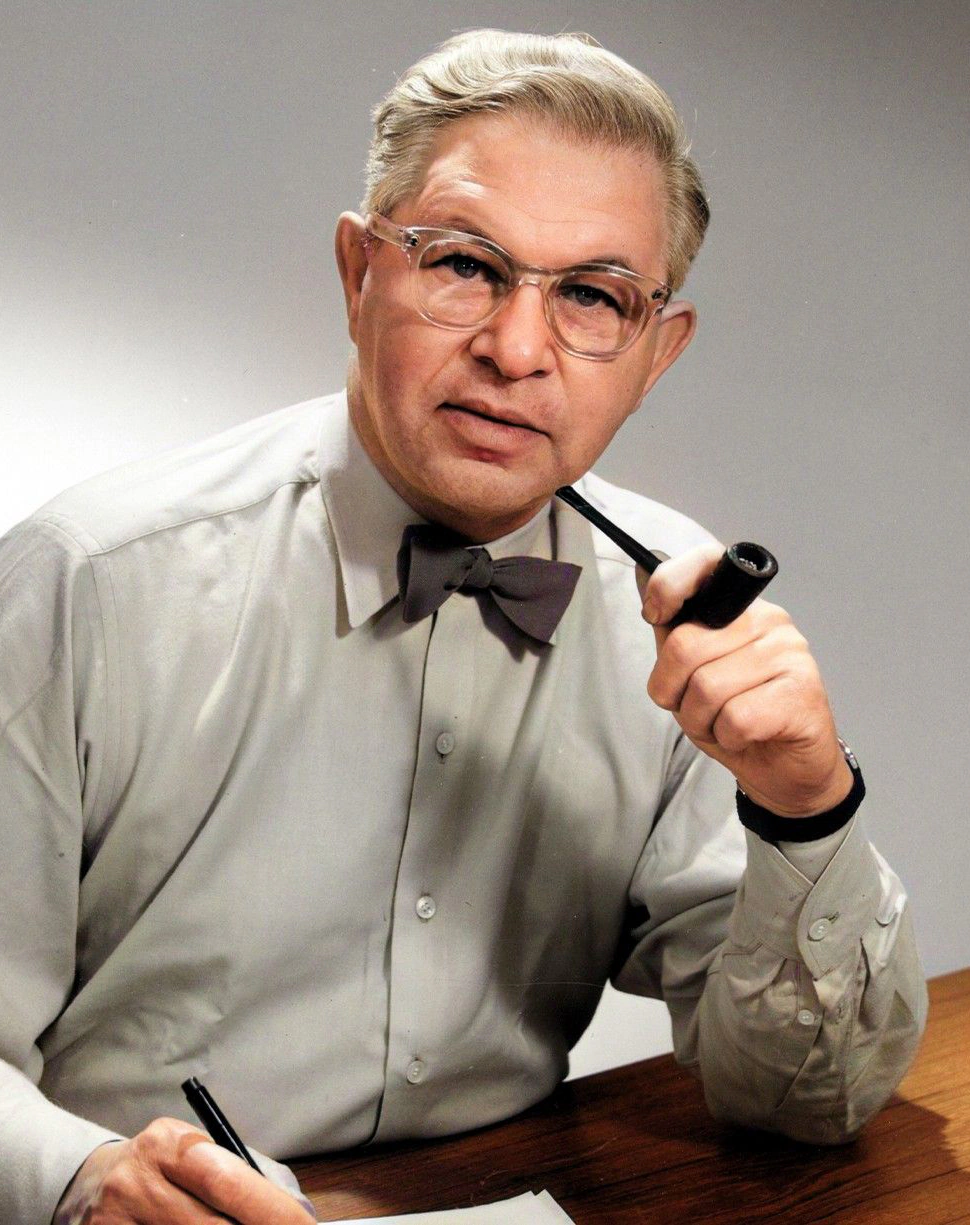
| 26 Quotes | |
| Born as | Arne Emil Jacobsen |
| Occup. | Architect |
| From | Denmark |
| Born | February 11, 1902 Copenhagen, Denmark |
| Died | March 24, 1971 Copenhagen, Denmark |
| Cause | Heart attack |
| Aged | 69 years |
| Cite | |
Citation Formats
APA Style (7th ed.)
Arne jacobsen biography, facts and quotes. (2026, February 11). FixQuotes. https://fixquotes.com/authors/arne-jacobsen/
Chicago Style
"Arne Jacobsen biography, facts and quotes." FixQuotes. February 11, 2026. https://fixquotes.com/authors/arne-jacobsen/.
MLA Style (9th ed.)
"Arne Jacobsen biography, facts and quotes." FixQuotes, 11 Feb. 2026, https://fixquotes.com/authors/arne-jacobsen/. Accessed 22 Mar. 2026.
Early Life and Background
Arne Emil Jacobsen was born on February 11, 1902, in Copenhagen, Denmark, into a bourgeois, cosmopolitan city that was steadily modernizing while still wrapped in the humane urban fabric of late-19th-century Scandinavia. His father, a wholesaler, belonged to the stable commercial class that could support a son with artistic ambitions, yet Jacobsen grew up in a culture where craft discipline mattered as much as inspiration. From the beginning he absorbed the Danish preference for restraint, quiet competence, and objects that justify their place through use.As a young man he moved easily between drawing and building-minded observation. Copenhagen offered him both: a tradition of brick and proportion, and an emerging appetite for new materials and new life patterns - bicycles, mass transit, apartments, offices. That tension between continuity and reform would become his lifelong engine. Even before he gained fame, acquaintances noted an inward, exacting temperament: the kind of personality that notices alignment, light, and surfaces, and cannot leave them alone once seen.
Education and Formative Influences
Jacobsen trained first as a mason and then studied at the Royal Danish Academy of Fine Arts in Copenhagen, graduating as an architect in 1927, when Nordic Classicism was giving way to Functionalism. Travel and exhibitions exposed him to European modernism - the rational clarity of Le Corbusier, the Bauhaus ethic of design as a total environment - but he filtered these through Danish building culture, which prized tactility and lived comfort. He began to understand architecture as a complete system: facade, plan, furniture, fixtures, graphics, even the way people would inhabit a room at different hours of the day.Career, Major Works, and Turning Points
In the late 1920s and 1930s Jacobsen emerged as a leading voice of Danish modern architecture, producing early functionalist works such as the Bellavista housing at Klampenborg (early 1930s) and the Bellevue Theatre (1936), where balconies, railings, and color operated like a coherent score. The German occupation (1940-45) disrupted practice and sharpened his sense of what the built world should protect: normal civic life. After the war he rose to international prominence through a sequence of public commissions and total-design interiors: Aarhus City Hall (completed 1941, with Erik Moller), the SAS Royal Hotel in Copenhagen (1960) as a near-total work of architecture, furniture, textiles, and lighting, and later major institutional projects including St Catherine's College, Oxford (1964). His furniture became inseparable from his buildings - the Ant chair (1952), Series 7 (1955), the Egg and Swan (1958) - each a turning point in industrialized craft, translating sculptural form into repeatable production without losing dignity.Philosophy, Style, and Themes
Jacobsen worked from an uncompromising belief that architecture is the art of living made visible: proportion, light, circulation, and the quiet authority of well-resolved detail. His modernism was never merely machine-like; it was sensual and disciplined, tuned to the body. He studied how air and light define volume, and he thought in classical terms even when drawing new forms: “Proportions are what makes the old Greek temples classic in their beauty. They are like huge blocks, from which the air has been literally hewn out between the columns”. That image - air carved as carefully as stone - describes his own interiors, where negative space is treated as a material with weight and value.Psychologically, Jacobsen was a totalizer: restless until every element agreed, sometimes to the frustration of collaborators, often to the delight of users who felt the coherence without naming it. “Architecture tends to consume everything else, it has become one's entire life”. Yet he also carried a sober knowledge of contingency and public judgment; he designed utility objects that must survive fashions, maintenance budgets, and changing habits. His answer was selection and refinement rather than flamboyance: “That is the artistic task: To choose the best from these solutions”. In practice this meant iterating a chair until it felt inevitable, or shaping a facade so that a modern grid could still read as calm, civic, and humane.
Legacy and Influence
Jacobsen died on March 24, 1971, having helped define what the world now recognizes as Danish modern: a marriage of engineering clarity, tactile pleasure, and ethical understatement. His buildings continue to be studied for their total composition, and his chairs remain in daily circulation, which is precisely the point - design as a public good rather than a rarefied signature. Later generations of Scandinavian architects and product designers inherited his conviction that modern life needs beauty that does not shout: spaces that organize light, objects that respect the hand, and a discipline of proportion that makes even the new feel quietly inevitable.Our collection contains 26 quotes written by Arne, under the main topics: Wisdom - Art - Friendship - Nature - Goal Setting.
Frequently Asked Questions
- Arne Jacobsen's notable projects: Some of Jacobsen's most famous projects include the SAS Royal Hotel in Copenhagen, Denmark, the National Bank of Denmark building, and St. Catherine's College in Oxford, UK.
- Arne Jacobsen Ant Chair: The Ant Chair is a minimalist, three-legged wooden chair designed by Arne Jacobsen in 1952, initially for the canteen at Danish company Novo Nordisk. It features a curved seat and backrest made from a single piece of wood, resembling an ant's body shape.
- How old was Arne Jacobsen? He became 69 years old
Source / external links