
Arnold J. Toynbee Biography Quotes 20 Report mistakes
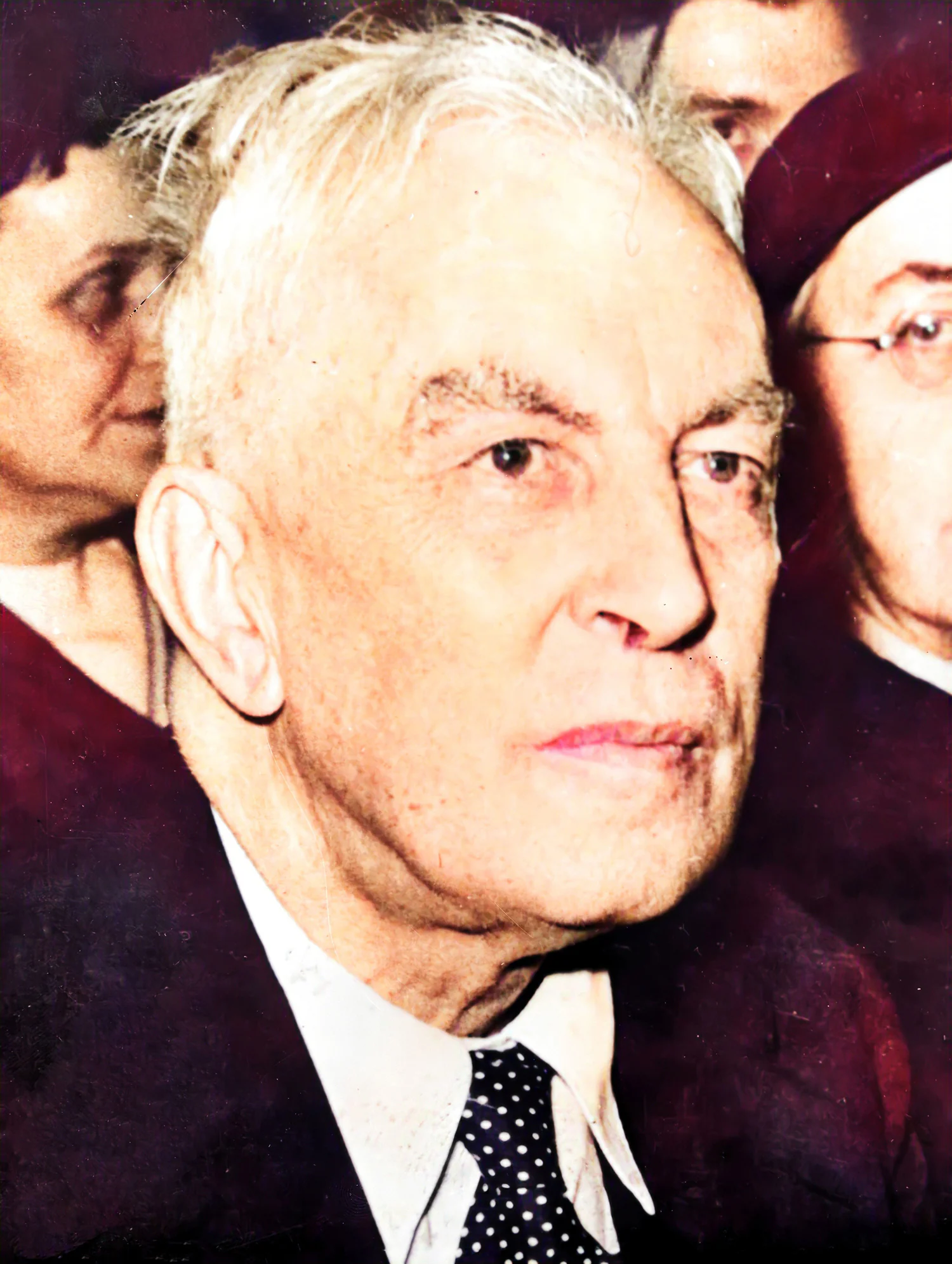
| 20 Quotes | |
| Born as | Arnold Joseph Toynbee |
| Occup. | Historian |
| From | United Kingdom |
| Born | April 14, 1889 London, England |
| Died | October 22, 1975 Yorkshire, England |
| Cause | Heart failure |
| Aged | 86 years |
| Cite | |
Citation Formats
APA Style (7th ed.)
Arnold j. toynbee biography, facts and quotes. (2026, February 1). FixQuotes. https://fixquotes.com/authors/arnold-j-toynbee/
Chicago Style
"Arnold J. Toynbee biography, facts and quotes." FixQuotes. February 1, 2026. https://fixquotes.com/authors/arnold-j-toynbee/.
MLA Style (9th ed.)
"Arnold J. Toynbee biography, facts and quotes." FixQuotes, 1 Feb. 2026, https://fixquotes.com/authors/arnold-j-toynbee/. Accessed 6 Mar. 2026.
Early Life and Background
Arnold Joseph Toynbee was born on April 14, 1889, in London, into a cultivated, reform-minded British milieu in which public service and scholarship were treated as moral callings rather than private achievements. The Toynbee name already carried civic resonance through his uncle, the economic historian Arnold Toynbee (1852-1883), whose work on the Industrial Revolution helped inspire Toynbee Hall in East London. That inheritance gave the younger Toynbee a sense that ideas should answer to lived social realities, not merely to academic fashion.He came of age at the hinge of eras: the late-Victorian confidence in progress giving way to the shocks of total war, revolution, and the unraveling of European empires. The pressures of the early 20th century - mass politics, mechanized killing, and the sense that "civilization" could regress - became his lifelong preoccupation. Behind his later panoramic histories lay a private urgency: to understand how communities lose nerve, how elites fail, and how spiritual fatigue can be disguised as material success.
Education and Formative Influences
Toynbee was educated at Winchester College and Balliol College, Oxford, where he read Classics and trained himself in the close reading of Greek and Latin texts, the comparative method, and the habit of seeing political events against long continuities. Hellenism and Near Eastern history remained touchstones, as did the moral seriousness of Victorian religion reshaped by modern doubt. The Great War and its aftermath pulled him from purely academic concerns toward policy-relevant history: he learned to treat diplomacy, national myth, and economic dislocation as forces that could make or unmake whole societies.Career, Major Works, and Turning Points
After early teaching, Toynbee worked during World War I in British government service, later attending the Paris Peace Conference, experiences that sharpened his skepticism toward punitive settlements and short-term statecraft. He became a central figure at Chatham House (the Royal Institute of International Affairs), serving for decades as director of studies and producing the influential annual Survey of International Affairs, which trained him to synthesize fast-moving events without losing structural perspective. His defining achievement was the multi-volume A Study of History (published in stages from 1934 to 1961), a vast comparative analysis of civilizations built around patterns of "challenge and response", creative minorities, breakdown, and disintegration. In later years, works such as Civilization on Trial and his autobiographical reflections widened his audience beyond specialists, even as critics attacked his grand scale, moral vocabulary, and willingness to generalize across cultures.Philosophy, Style, and Themes
Toynbee wrote as a historian of motion rather than monuments - a stylist of sweeping analogy disciplined by a classicist's sense of form. He treated civilizations as living processes that can ascend, stall, and decay, insisting that the decisive causes are often inward: the loss of imagination among leaders, the hardening of institutions, and the temptation to replace moral effort with coercion. “Civilization is a movement and not a condition, a voyage and not a harbor”. The line captures his psychological baseline: restlessness, an impatience with self-congratulation, and a conviction that prosperity is not proof of health.His themes were also spiritual, though not narrowly sectarian. Toynbee looked for meaning in the long run without reducing history to economics or technology alone, and he framed freedom as the pivot of decline or renewal. “As human beings, we are endowed with freedom of choice, and we cannot shuffle off our responsibility upon the shoulders of God or nature. We must shoulder it ourselves. It is our responsibility”. This insistence on responsibility was not abstract ethics - it was his diagnosis of civilizational breakdown, when societies externalize blame and abandon self-critique. Hence his most famous warning, less a slogan than a theory of collapse: “Civilizations die from suicide, not by murder”. He meant that conquest and catastrophe usually finish what inner failure begins: moral complacency, sterile leadership, and the substitution of force for creativity.
Legacy and Influence
Toynbee remains one of the 20th century's most debated historians: admired for audacity and synthesis, faulted for overreach, and continually revived whenever global crises make narrow narratives feel insufficient. His "challenge and response" framework influenced comparative civilization studies, international relations thinkers, and public moralists, and it offered a rival to linear progress stories at a time when European supremacy was collapsing. Even where scholars reject his typologies, his enduring contribution is the insistence that history is not merely what happens to societies but what they do with what happens to them - a standard that keeps his work alive in debates about modernity, empire, and the fragility of cultural confidence.Our collection contains 20 quotes written by Arnold, under the main topics: Witty One-Liners - Motivational - Ethics & Morality - Wisdom - Nature.
Other people related to Arnold: Daisaku Ikeda (Writer), Polly Toynbee (Journalist)
Source / external links